Introduction
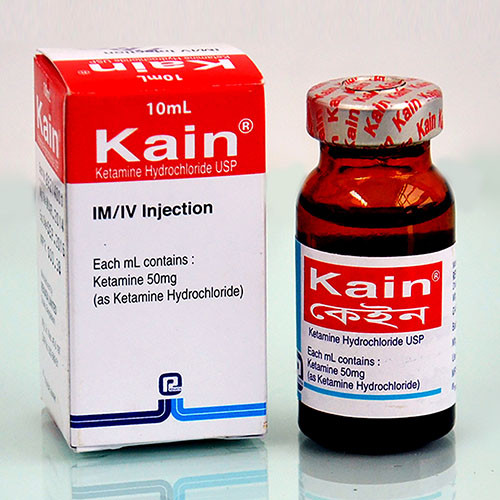
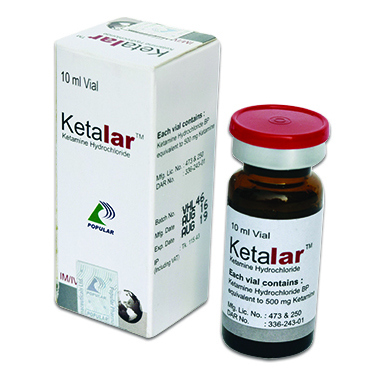
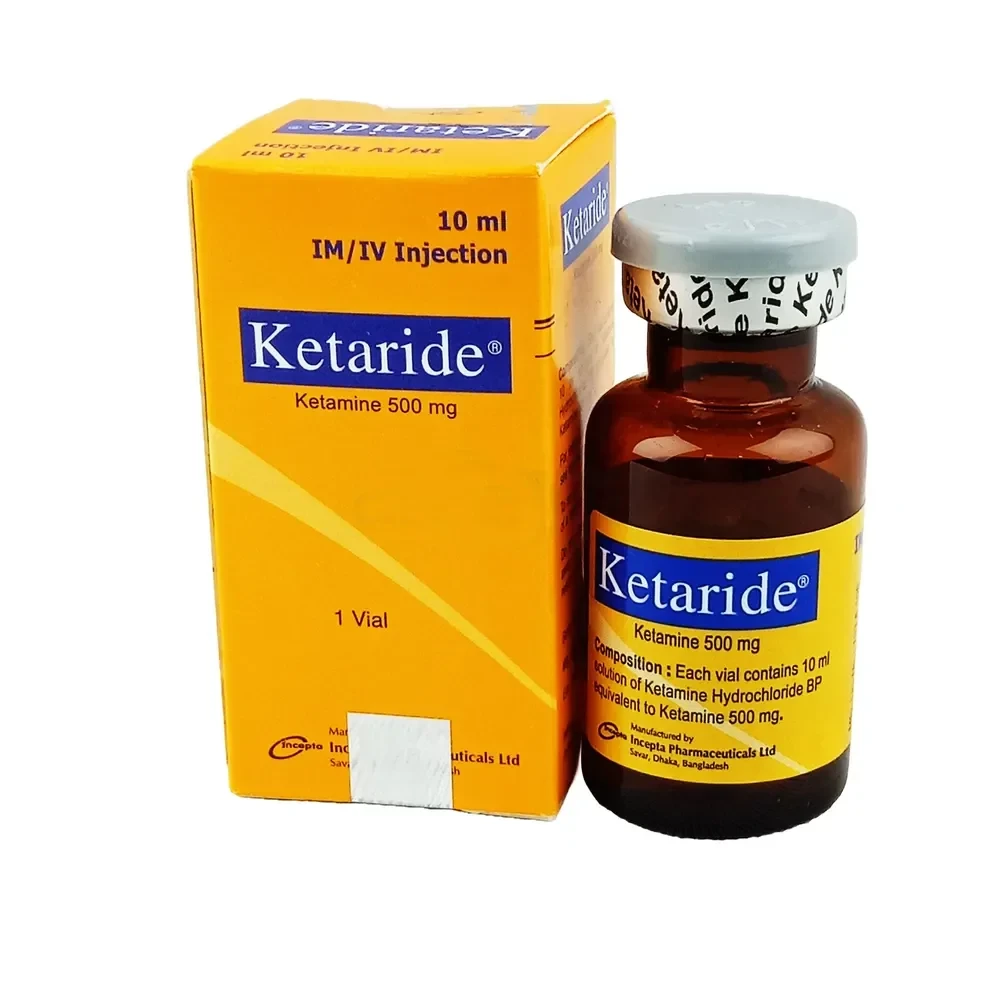
G-Ketamine IM/IV Injection 50 mg/ml is an NMDA receptor antagonist with a potent anesthetic effect. It was developed in 1963 as a replacement for phencyclidine (PCP) by Calvin Stevens at Parke Davis Laboratories. It started being used for veterinary purposes in Belgium and in 1964 was proven that compared to PCP, it produced minor hallucinogenic effects and shorter psychotomimetic effects. It was FDA approved in 1970, and from there, it has been used as an anesthetic for children or patients undergoing minor surgeries but mainly for veterinary purposes.
Uses
G-Ketamine IM/IV Injection 50 mg/ml is a rapid-acting general anesthetic and NMDA receptor antagonist used for induction of anesthesia diagnostic and surgical procedures typically in combination with a muscle relaxant.
G-Ketamine IM/IV Injection 50 mg/ml is indicated as an anesthetic agent for recommended diagnostic and surgical procedures. If skeletal muscle relaxation is needed, it should be combined with a muscle relaxant. If the surgical procedure involves visceral pain, it should be supplemented with an agent that obtunds visceral pain. G-Ketamine IM/IV Injection 50 mg/ml can be used for induction of anesthesia prior other general anesthetic agents and as a supplement of low potency agents.
Reports have indicated a potential use of ketamine as a therapeutic tool for the management of depression when administered in lower doses. These reports have increased the interest for ketamine in this area and several clinical trials are launched for this indication.
Associated Conditions
Pharmacodynamics
G-Ketamine IM/IV Injection 50 mg/ml is a rapid-acting general anesthetic producing an anesthetic state characterized by profound analgesia, normal pharyngeal-laryngeal reflexes, normal or slightly enhanced skeletal muscle tone, cardiovascular and respiratory stimulation, and occasionally a transient and minimal respiratory depression. The anesthetic state produced by G-Ketamine IM/IV Injection 50 mg/ml has been termed as "dissociative anesthesia" in that it appears to selectively interrupt association pathways of the brain before producing somesthetic sensory blockade. It may selectively depress the thalamoneocortical system before significantly obtunding the more ancient cerebral centers and pathways (reticular-activating and limbic systems).
G-Ketamine IM/IV Injection 50 mg/ml enhances descending inhibiting serotoninergic pathways and can exert antidepressive effects. These effects are seen in concentrations ten times lower than the needed concentration for anesthetic proposes. The effect of ketamine can be described as analgesic by the prevention of central sensitization in dorsal horn neurons as well as by the inhibition on the synthesis of nitric oxide. G-Ketamine IM/IV Injection 50 mg/ml can present cardiovascular changes and bronchodilatation.
Mechanism of Action
G-Ketamine IM/IV Injection 50 mg/ml interacts with N-methyl-D-aspartate (NMDA) receptors, opioid receptors, monoaminergic receptors, muscarinic receptors and voltage sensitive Ca ion channels. Unlike other general anaesthetic agents, ketamine does not interact with GABA receptors.
Absorption
G-Ketamine IM/IV Injection 50 mg/ml absorption is very rapid and the bioavailability is around 93%. After the first pass metabolism, only 17% of the administered dose is absorbed. It distributes very rapidly and presents a distribution half-life of 1.95 min. The Cmax levels at peak reach 0.75 mcg/ml in plasma and 0.2 mcg/ml in cerebrospinal fluid.
Volume of Distribution
The apparent volume of distribution of the central compartment and at steady-state are 371.3 ml/kg and 4060.3 ml/kg, respectively.
Protein Binding
The plasma protein binding of ketamine accounts for 53.5% of the administered dose.
Route of Elimination
Pharmacokinetic studies have resulted in the recovery of 85-95% of the administered dose in urine mainly in the form of metabolites. Some other routes of elimination of ketamine are bile and feces. When administered intravenously the resultant recovery is distributed by 91% of the administered dose in urine and 3% in feces.
Half Life
The reported half-life in preclinical studies for ketamine is 186 min.
Clearance
The clearance rate of ketamine is high and of around 95 L/h/70kg.
Toxicity
Preclinical studies related to the blocking of NMDA receptors have shown an increase in apoptosis in the developing brain which results in cognitive deficits when used for longer than 3 hours. Toxicity studies regarding carcinogenesis have not been performed. Regarding mutagenesis and fertility, ketamine showed to be clastogenic and to not have effects on fertility.
Food Interactions
- Avoid alcohol.