Introduction
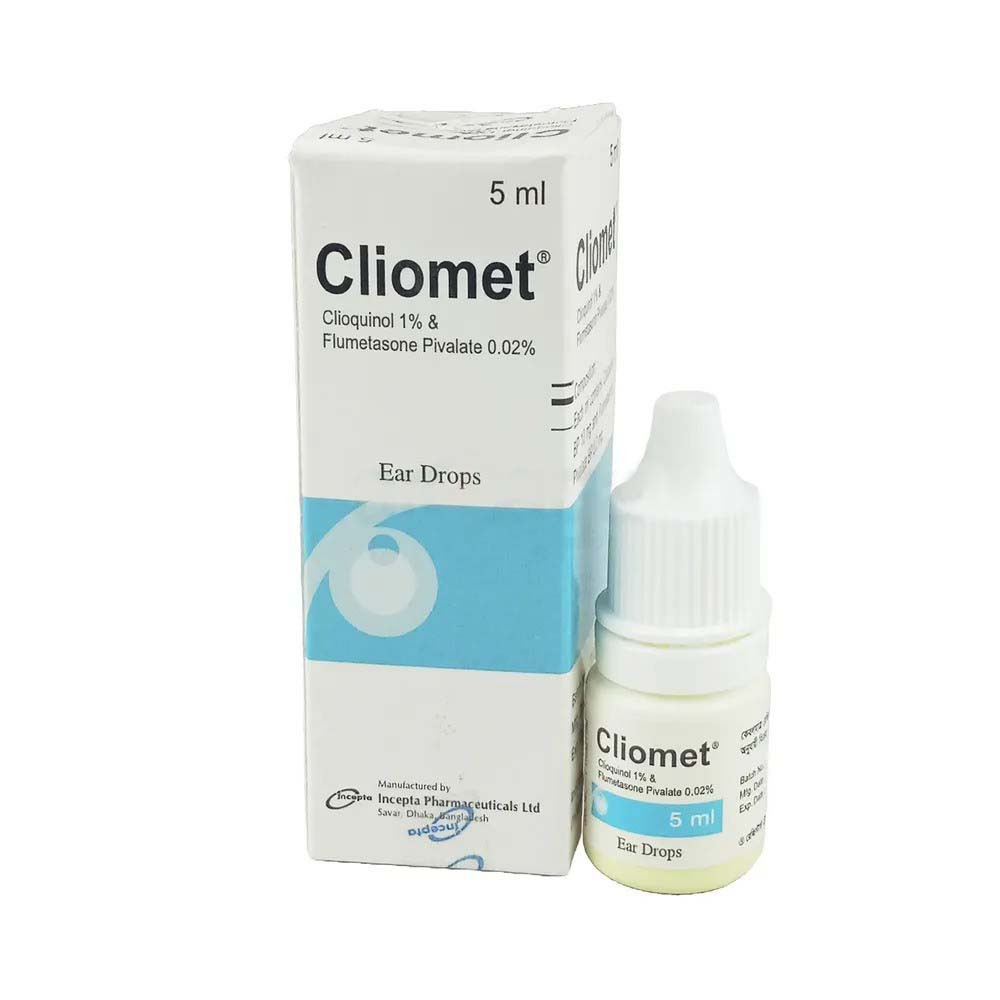
Flumetanol Ear Drop 1%+0.02% is a combination of an antifungal agent and a corticosteroid. Clioquinol is an antifungal that treats infections caused by fungi, while Flumetasone Pivalate is a corticosteroid that reduces inflammation and alleviates symptoms associated with inflammatory skin conditions.
Uses
This combination is used for:
- Treating fungal infections of the skin that are accompanied by inflammation or itching.
- Providing relief from symptoms such as redness, swelling, and itching in inflammatory skin conditions.
Mechanism of Action
The mechanism of action for each component is as follows:
- Clioquinol: Works by binding to and inhibiting the function of fungal cell membranes, which disrupts fungal cell growth and replication.
- Flumetasone Pivalate: Reduces inflammation by inhibiting the release of inflammatory mediators and suppressing immune responses in the skin.
How Long Does It Take to Work?
Relief from symptoms can be observed as follows:
- Clioquinol: Improvement in fungal infection symptoms typically begins within a few days of application, though complete resolution may take several weeks depending on the infection's severity.
- Flumetasone Pivalate: Symptoms such as itching and redness usually improve within a few days of application.
Absorption
For topical use:
- Clioquinol: Absorption through the skin is minimal, making systemic side effects unlikely when used as directed.
- Flumetasone Pivalate: Also has minimal systemic absorption when applied topically, but absorption can be increased if applied to broken skin or used excessively.
Route of Elimination
Elimination routes for each component are as follows:
- Clioquinol: Metabolized in the liver and excreted primarily through urine.
- Flumetasone Pivalate: Metabolized in the liver and excreted through urine and bile.
Dosage
Dosage recommendations are:
- Topical Application: Typically, apply a thin layer to the affected area 2-3 times a day or as directed by a healthcare provider. Dosage may vary based on the severity of the condition.
Administration
Administer as follows:
- Topical: Apply directly to the affected skin area. Avoid contact with eyes, mucous membranes, and open wounds. Wash hands after application.
Side Effects
Common side effects include:
- Clioquinol: Skin irritation, dryness, or rash at the site of application.
- Flumetasone Pivalate: Skin thinning, burning, itching, or redness at the site of application.
Serious side effects are rare but may include:
- Clioquinol: Severe allergic reactions or widespread skin irritation.
- Flumetasone Pivalate: Symptoms of systemic absorption such as Cushing's syndrome, especially with prolonged use or application to large areas of skin.
Toxicity
Toxicity concerns include:
- Clioquinol: Generally low risk of systemic toxicity with topical use; severe adverse reactions are rare.
- Flumetasone Pivalate: Risk of systemic toxicity if used excessively or applied to large areas of the skin, particularly in long-term treatment.
Precautions
Precautions include:
- Do not use if allergic to Clioquinol, Flumetasone Pivalate, or any other components of the formulation.
- Avoid applying to large areas of skin or broken skin unless directed by a healthcare provider.
- Monitor for signs of adverse reactions, particularly with prolonged use.
Interaction
Drug interactions may include:
- Clioquinol: Minimal interactions when used topically, but systemic interactions may occur if used in high doses.
- Flumetasone Pivalate: Potential interactions with other corticosteroids or medications affecting skin integrity.
Disease Interaction
Use with caution in individuals with:
- Pre-existing skin conditions that may be exacerbated by corticosteroids or antifungal treatments.
- Liver disease, as it may affect drug metabolism and increase systemic exposure.
Drug Interaction
Potential drug interactions include:
- Clioquinol: Limited systemic interactions but may interact with other antifungal agents if used in high doses.
- Flumetasone Pivalate: May interact with other corticosteroids or drugs affecting skin permeability.
Food Interactions
No significant food interactions are known for this combination when used topically.
Pregnancy Use
Generally used with caution during pregnancy. Consult a healthcare provider for specific recommendations, especially for prolonged or high-dose applications.
Lactation Use
Typically considered safe for use during lactation. Consult a healthcare provider if applying to large areas or using high doses.
Acute Overdose
In case of acute overdose:
- Clioquinol: Discontinue use and seek medical advice. Topical overdose may cause increased local irritation.
- Flumetasone Pivalate: Discontinue use and seek medical advice if symptoms of systemic corticosteroid exposure occur, such as severe mood changes or significant fluid retention.
Contraindication
Contraindicated in individuals with:
- Known hypersensitivity to Clioquinol, Flumetasone Pivalate, or any other components of the formulation.
- Untreated bacterial or viral infections that may be aggravated by corticosteroid use.
Use Direction
Use as directed by the product label or a healthcare provider. Apply a thin layer to the affected area as needed. Avoid applying to large areas or broken skin unless directed by a healthcare provider.
Storage Conditions
Store at room temperature, away from direct sunlight and moisture. Keep out of reach of children. Follow specific storage instructions provided with the product.
Volume of Distribution
For topical use, the volume of distribution is localized to the area of application:
- Clioquinol: Minimal systemic distribution when used topically.
- Flumetasone Pivalate: Minimal systemic distribution with topical use; increased distribution possible with excessive use.
Half Life
The half-life for each component is:
- Clioquinol: Half-life is not well-defined for topical use; minimal systemic exposure.
- Flumetasone Pivalate: Approximately 2-4 hours; longer half-life may be observed with systemic exposure.
Clearance
Clearance for each component:
- Clioquinol: Metabolized primarily in the liver and excreted through urine.
- Flumetasone Pivalate: Metabolized in the liver and excreted through urine and bile.