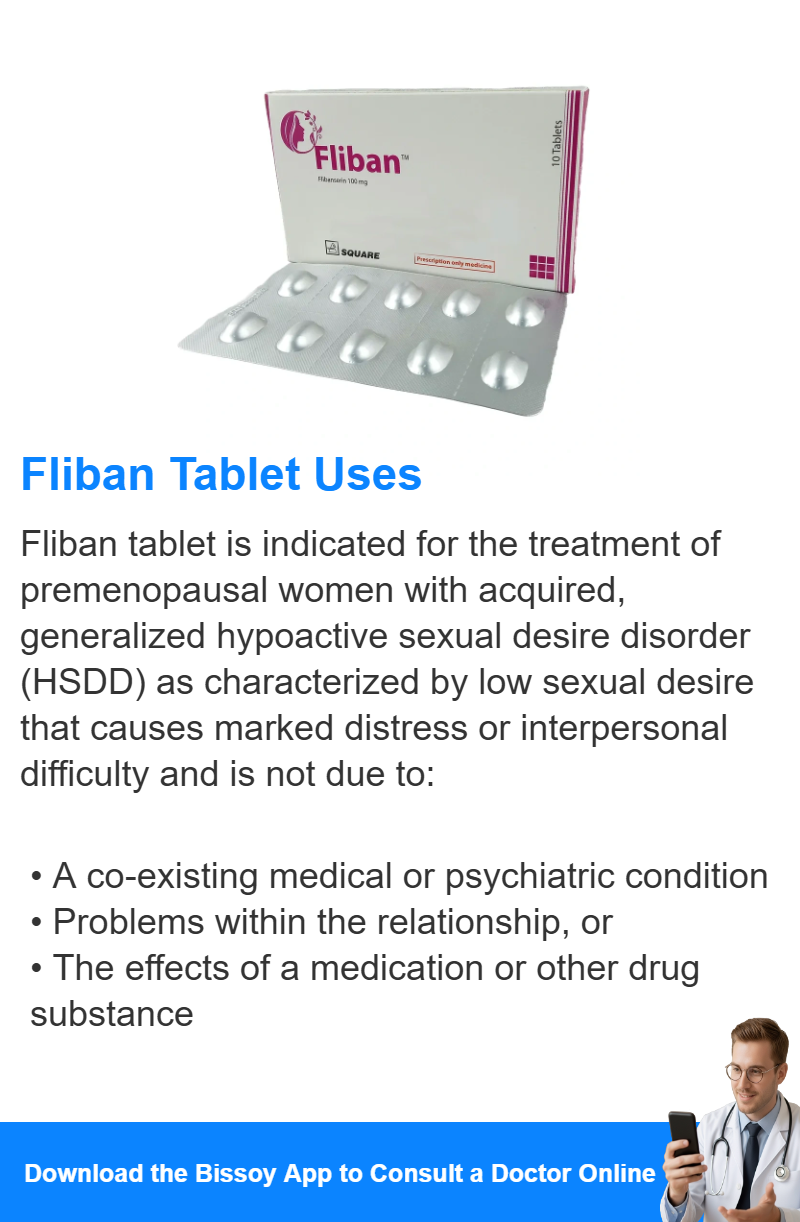
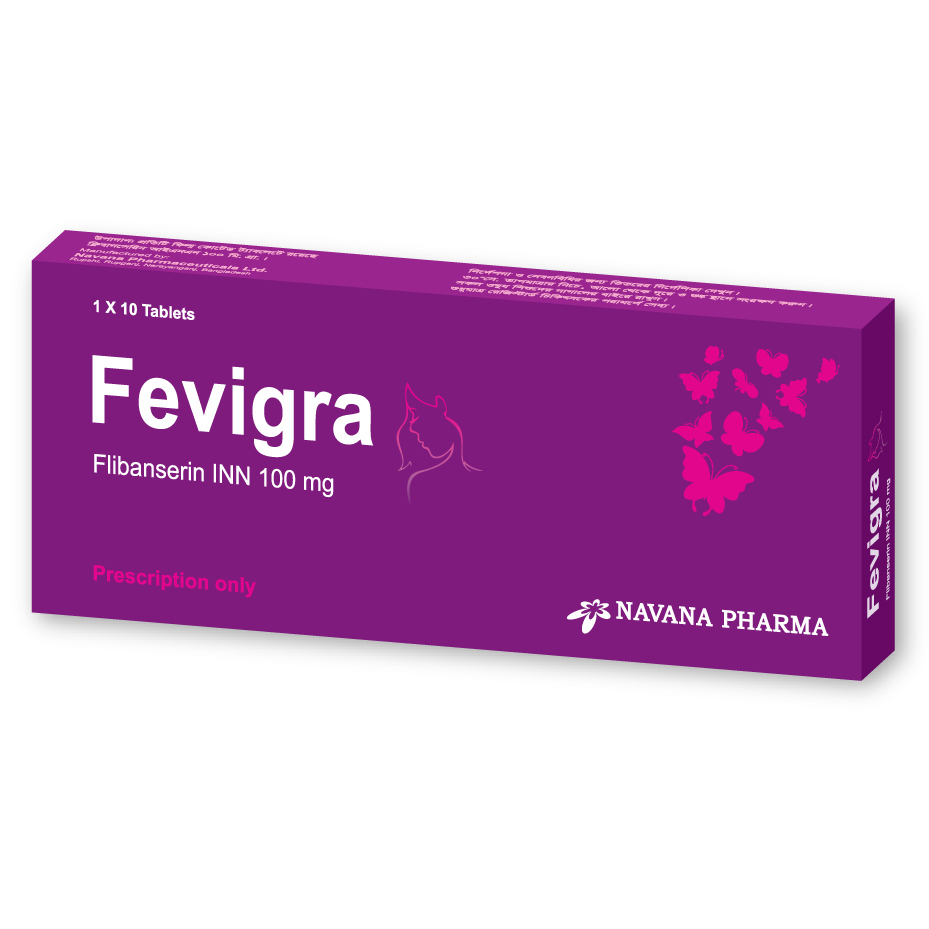
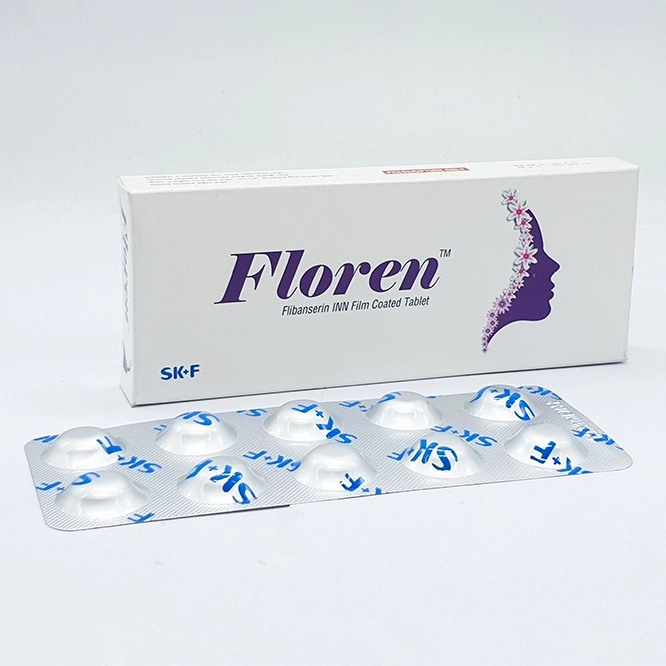
Fliban Tablet 100 mg is a medication used for the treatment of hypoactive sexual desire disorder (HSDD) in premenopausal women. It is a non-hormonal drug that was developed to address sexual desire issues and is marketed under the brand name Addyi.
Fliban Tablet 100 mg is prescribed for the treatment of hypoactive sexual desire disorder (HSDD) in premenopausal women. It is intended for use in women who have a low sexual desire that causes marked distress or interpersonal difficulties and is not due to other medical or psychiatric conditions.
| Brand Name | Fliban |
|---|---|
| Type | Tablet |
| Weight | 100 mg |
| Generic | Flibanserin |
| Manufacturer | Square Pharmaceuticals Ltd. |
| Available in | English বাংলা |
Fliban Tablet 100 mg acts as a serotonin receptor agonist and antagonist. It primarily works by modulating neurotransmitters in the brain, including serotonin, dopamine, and norepinephrine. This action helps to increase sexual desire and arousal by restoring the balance of these neurotransmitters.
The therapeutic effects of Fliban Tablet 100 mg may take several weeks to become noticeable. Patients typically start to see improvements in sexual desire and related symptoms within 4-8 weeks of initiating treatment.
Fliban Tablet 100 mg is rapidly absorbed after oral administration, with peak plasma concentrations occurring approximately 0.5-1 hour after ingestion. Food intake can affect the drug's absorption, with higher fat meals potentially increasing its bioavailability.
Fliban Tablet 100 mg is metabolized primarily by the liver, with its metabolites excreted in the urine. The drug undergoes extensive first-pass metabolism, and the majority of the drug is eliminated via the renal route.
The recommended dosage of Fliban Tablet 100 mg is 100 mg taken orally once daily at bedtime. It is important to follow the prescribed dosage and not to exceed the recommended dose to minimize the risk of side effects and interactions.
Fliban Tablet 100 mg should be taken orally, with or without food, preferably at bedtime to reduce the risk of side effects such as dizziness and hypotension. Consistent daily use is essential for optimal results.
Common side effects of Fliban Tablet 100 mg include dizziness, fatigue, nausea, and headache. Other potential side effects include dry mouth, insomnia, and hypotension. Some individuals may also experience syncope or fainting.
Overdose of Fliban Tablet 100 mg may lead to severe hypotension, sedation, or syncope. Treatment involves supportive care and symptomatic management. It is crucial to avoid alcohol consumption while taking Fliban Tablet 100 mg to minimize the risk of severe side effects.
Precautions should be taken in patients with liver impairment, as Fliban Tablet 100 mg is metabolized by the liver. It should be used with caution in individuals with a history of depression or other psychiatric disorders. Monitoring for potential side effects is important during treatment.
Fliban Tablet 100 mg has significant interactions with alcohol, which can increase the risk of severe hypotension and syncope. It may also interact with other central nervous system depressants and should be used cautiously in combination with such drugs.
Fliban Tablet 100 mg should be used with caution in patients with liver disease or significant hepatic impairment. It may not be suitable for individuals with severe hepatic impairment, as it can exacerbate side effects and increase the risk of toxicity.
Fliban Tablet 100 mg interacts with certain medications, including alcohol, which can enhance its sedative effects and increase the risk of hypotension. It is also important to consider interactions with other medications that affect the central nervous system or liver metabolism.
Food, especially high-fat meals, can increase the absorption of Fliban Tablet 100 mg. However, it is generally recommended to take the medication at bedtime regardless of food intake to minimize side effects.
Fliban Tablet 100 mg is classified as a Category X drug for pregnancy, meaning it should not be used during pregnancy due to potential risks to the fetus. It is important to use effective contraception while taking this medication.
The effects of Fliban Tablet 100 mg on breastfeeding are not well-documented. Due to potential risks, it is advisable to avoid breastfeeding while on this medication or consult with a healthcare provider for alternatives.
Acute overdose may result in severe hypotension, sedation, and syncope. Management involves supportive care, monitoring vital signs, and treating symptoms as they arise. Avoiding alcohol and other depressants is crucial in overdose situations.
Fliban Tablet 100 mg is contraindicated in individuals with severe liver impairment, those who are pregnant or breastfeeding, and those with a history of alcohol abuse or who are consuming alcohol. It is also contraindicated in patients with active depression or suicidal thoughts.
Fliban Tablet 100 mg should be taken exactly as prescribed. Do not exceed the recommended dosage and avoid alcohol consumption. Consistent daily use at bedtime is crucial for effectiveness and safety.
Store Fliban Tablet 100 mg at room temperature, away from light and moisture. Keep the medication out of reach of children and dispose of any unused or expired medication properly.
The volume of distribution for Fliban Tablet 100 mg is approximately 70-80 liters, reflecting its extensive distribution in the body tissues.
The half-life of Fliban Tablet 100 mg is approximately 11-15 hours, which is indicative of the time required for the drug's plasma concentration to decrease by half.
Fliban Tablet 100 mg clearance is primarily hepatic, with a significant portion of the drug being metabolized in the liver. The clearance rate can be affected by liver function and other factors influencing metabolism.
See in details version Fliban Tablet 100 mg also Fliban Tablet 100 mg in bangla