Introduction
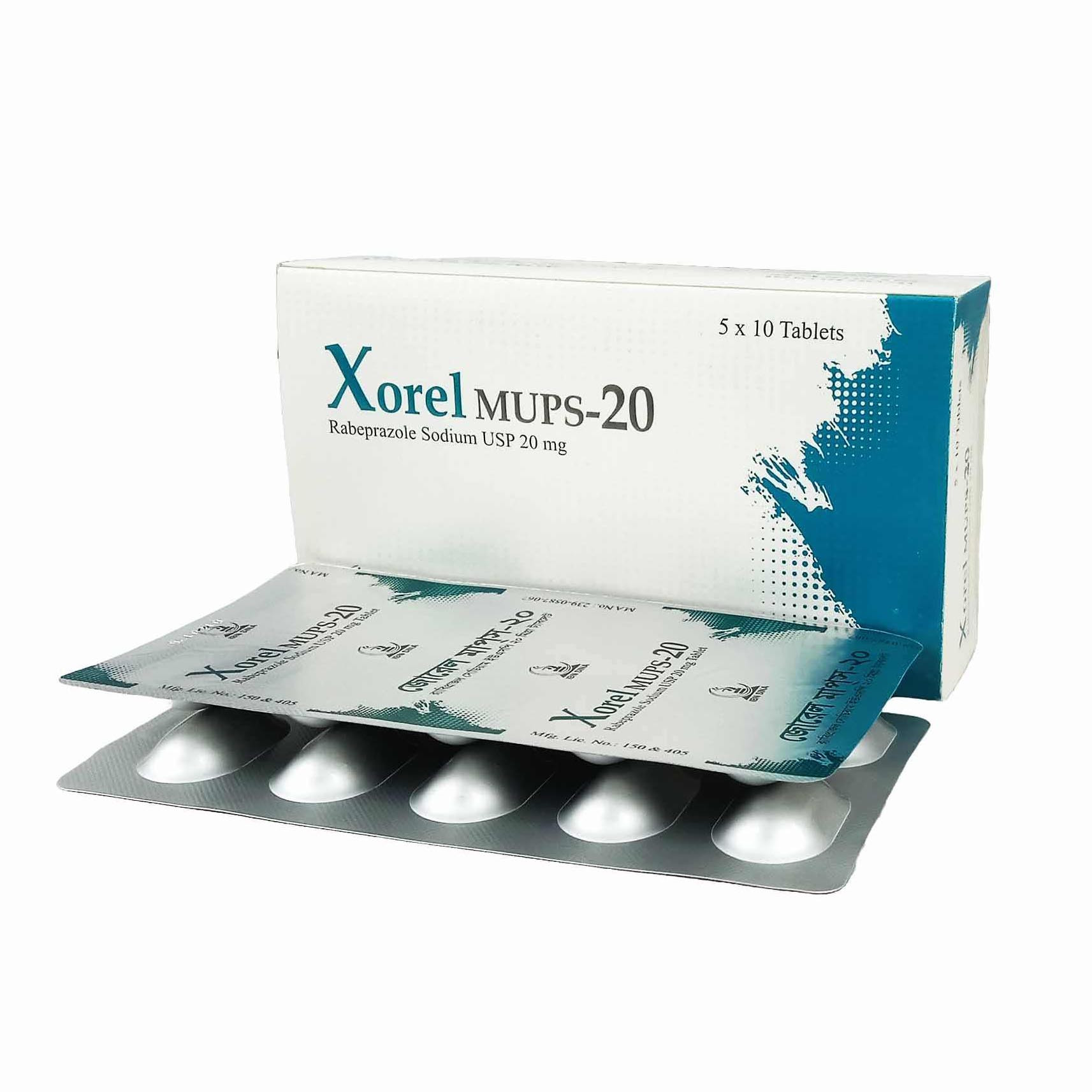
Rabeprazole is an antiulcer drug in the class of proton pump inhibitors. It is a prodrug - in the acid environment of the parietal cells it turns into active sulphenamide form. Rabeprazole inhibits the H+, K+ATPase of the coating gastric cells and dose-dependent oppresses basal and stimulated gastric acid secretion.
Uses
Rabeprazole is a proton pump inhibitor used to help gastrointestinal ulcers heal, to treat symptoms of gastroesophageal reflux disease (GERD), to eradicate Helicobacter pylori, and to treat hypersecretory conditions such as Zollinger-Ellison Syndrome.
For the treatment of acid-reflux disorders (GERD), peptic ulcer disease, H. pylori eradication, and prevention of gastroinetestinal bleeds with NSAID use.
Associated Conditions
Pharmacodynamics
Rabeprazole prevents the production of acid in the stomach. It reduces symptoms and prevents injury to the esophagus or stomach in patients with gastroesophageal reflux disease (GERD) or ulcers. Rabeprazole is also useful in conditions that produce too much stomach acid such as Zollinger-Ellison syndrome. Rabeprazole may also be used with antibiotics to get rid of bacteria that are associated with some ulcers. Rabeprazole is a selective and irreversible proton pump inhibitor, suppresses gastric acid secretion by specific inhibition of the H+, K+ -ATPase, which is found at the secretory surface of parietal cells. In doing so, it inhibits the final transport of hydrogen ions (via exchange with potassium ions) into the gastric lumen.
Mechanism of Action
Rabeprazole belongs to a class of antisecretory compounds (substituted benzimidazole proton-pump inhibitors) that do not exhibit anticholinergic or histamine H2-receptor antagonist properties, but suppress gastric acid secretion by inhibiting the gastric H+/K+ATPase (hydrogen-potassium adenosine triphosphatase) at the secretory surface of the gastric parietal cell. Because this enzyme is regarded as the acid (proton) pump within the parietal cell, rabeprazole has been characterized as a gastric proton-pump inhibitor. Rabeprazole blocks the final step of gastric acid secretion. In gastric parietal cells, rabeprazole is protonated, accumulates, and is transformed to an active sulfenamide. When studied in vitro, rabeprazole is chemically activated at pH 1.2 with a half-life of 78 seconds.
Absorption
Absolute bioavailability is approximately 52%.
Protein Binding
96.3% (bound to human plasma proteins)
Route of Elimination
Following a single 20 mg oral dose of 14C-labeled rabeprazole, approximately 90% of the drug was eliminated in the urine, primarily as thioether carboxylic acid; its glucuronide, and mercapturic acid metabolites.
Half Life
1-2 hours (in plasma)
Food Interactions
- Take with or without food. Food delays drug absorption, but not to a clinically significant extent.
Dosage
Erosive or Ulcerative Gastro-Esophageal Reflux Disease (GERD): The recommended oral dose for this condition is 20 mg to be taken once daily for four to eight weeks.
Gastro-Esophageal Reflux Disease Long-term Management (GERD Maintenance): For long-term management, a maintenance dose of rabeprazole sodium 20 mg or 10 mg once daily can be used depending upon patient response.
Symptomatic treatment of moderate to very severe Gastro-Esophageal Reflux Disease (symptomatic GERD): 10 mg once daily in patients without oesophagitis. If symptom control has not been achieved during four weeks, the patient should be further investigated. Once symptoms have resolved, subsequent symptom control can be achieved using an on-demand regimen taking 10 mg once daily when needed.
Treatment of GERD in pediatric patients 1 to 11 years of age (Less than 15 kg): 5 mg once daily for 12 weeks with the option to increase to 10 mg if inadequate response.
Treatment of GERD in pediatric patients 1 to 11 years of age (15 kg or more): 10 mg once daily for 12 weeks.
Zollinger-Ellison Syndrome: The recommended adult starting dose is 60 mg once a day. The dose may be titrated upwards to 120 mg/day based on individual patient needs. Single daily doses up to 100 mg/day may be given. 120 mg dose may require divided doses, 60 mg twice daily. Treatment should continue for as long as clinically indicated.
Eradication of H. pylori: Patients with H. pylori infection should be treated with eradication therapy. The following combination given for 7 days is recommended. Rabeprazole sodium 20 mg twice daily, clarithromycin 500 mg twice daily and amoxicillin 1g twice daily.