Introduction
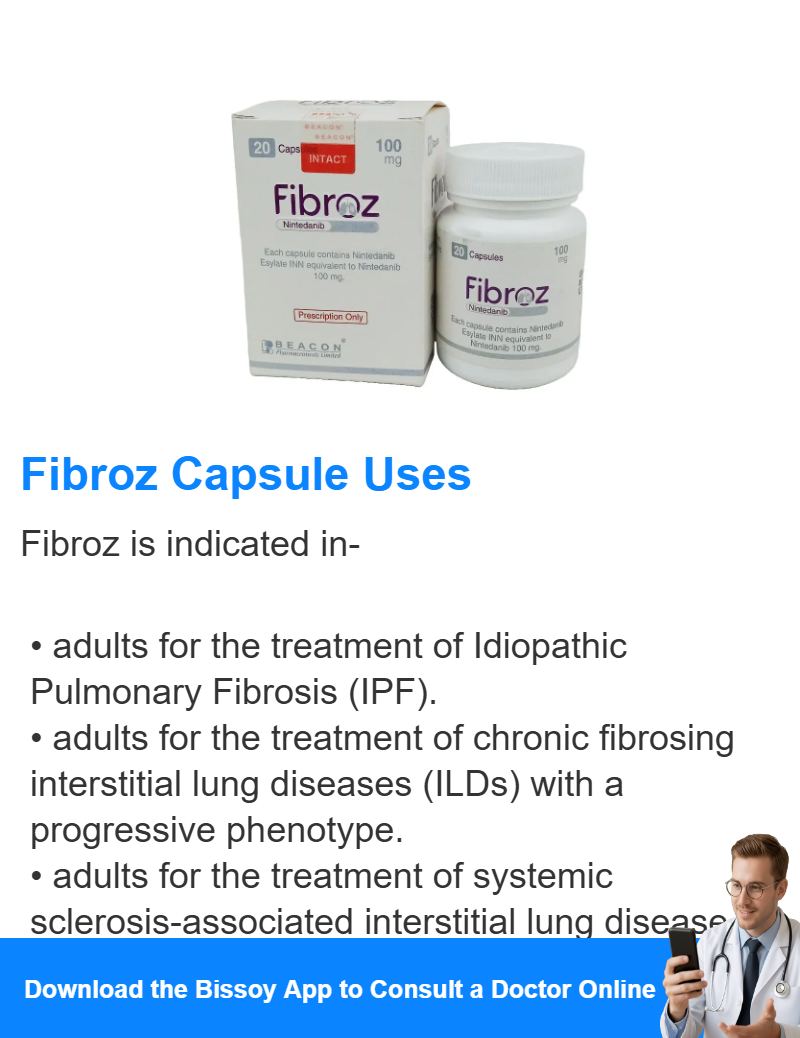
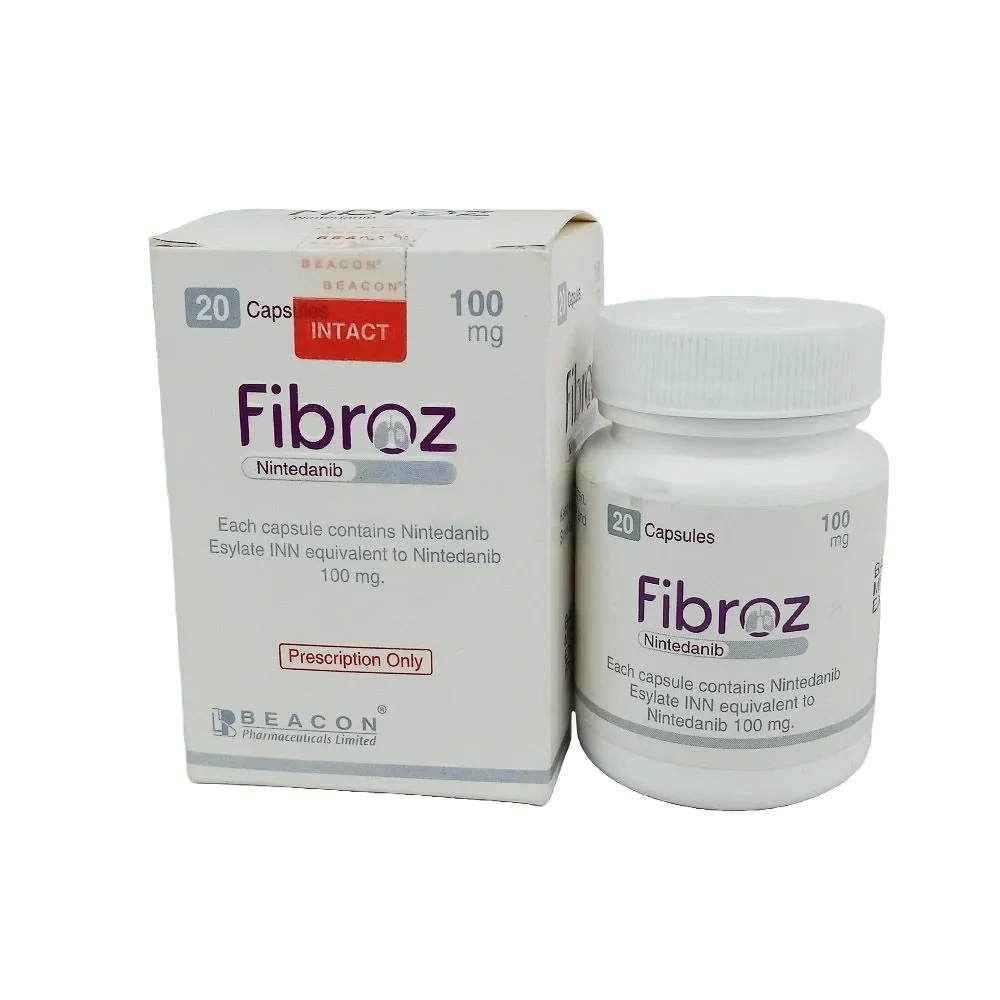
Fibroz Capsule 100 mg is a small molecule kinase inhibitor used in the treatment of pulmonary fibrosis, systemic sclerosis-associated interstitial lung disease, and non-small cell lung cancer (NSCLC). It was first approved for use in the United States in 2014. Within the spectrum of idiopathic pulmonary fibrosis treatment options, nintedanib is currently one of only two disease-modifying therapies available and indicated for the condition (the other being Pirfenidone) and as such is used as a first-line treatment following diagnosis to slow down the progressive loss of lung function. As a chemotherapeutic agent for NSCLC, nintedanib, in combination with Docetaxel, is reserved for patients who have tried and failed first-line chemotherapeutic options.
Uses
Fibroz Capsule 100 mg is a triple angiokinase inhibitor indicated for the treatment of idiopathic pulmonary fibrosis, systemic sclerosis-associated interstitial lung disease, and in combination with docetaxel for non-small cell lung cancer.
In the US, nintedanib is indicated for the treatment of idiopathic pulmonary fibrosis (IPF) and to slow declining pulmonary function in patients with systemic sclerosis-associated interstitial lung disease. In the EU, nintedanib is indicated in combination with docetaxel for the treatment of adult patients with metastatic, locally advanced, or locally recurrent non-small cell lung cancer of adenocarcinoma histology who have already tried first-line therapy.
Associated Conditions
Pharmacodynamics
Fibroz Capsule 100 mg is a small molecule kinase inhibitor that inhibits upstream kinase activity to ultimately inhibit lung fibroblast proliferation and migration, as well as signalling pathways that promote the proliferation and survival of endothelial and perivascular cells in tumour tissues.
Fibroz Capsule 100 mg poses a risk of drug-induced liver injury, especially within the first three months of therapy. Liver function tests should be conducted at baseline prior to beginning therapy, at regular intervals for the first three months of therapy, and as indicated thereafter in patients exhibiting symptoms of hepatic injury such as jaundice or right upper quadrant pain. It is not recommended to be used in patients with pre-existing moderate to severe hepatic impairment (Child Pugh class B or C).
Mechanism of Action
Fibroz Capsule 100 mg is a small molecule, competitive, triple angiokinase inhibitor that targets multiple receptor tyrosine kinases (RTKs) and non-receptor tyrosine kinases (nRTKs). Many of these RTKs are implicated in lung fibrosis and tumour angiogenesis, so nintedanib is therefore used in the treatment of proliferative diseases such as idiopathic pulmonary fibrosis, non-small cell lung cancer, and systemic sclerosis-associated interstitial lung disease. The specific RTKs that nintedanib inhibits are platelet-derived growth factor (PDGFR) α and β, fibroblast growth factor receptor (FGFR) 1-3, vascular endothelial growth factor receptor (VEGFR) 1-3, and Fns-Like tyrosine kinase-3 (FLT3). Fibroz Capsule 100 mg binds to the ATP-binding pocket of these receptors and inhibits their activity, thereby blocking signalling cascades that result in the proliferation and migration of lung fibroblasts. Fibroz Capsule 100 mg also inhibits kinase signalling pathways in various cells within tumour tissues, including endothelial cells, pericytes, smooth muscle cells, and cells contributing to angiogenesis, culminating in an inhibition of cell proliferation and apoptosis of affected tumour cells.
In addition to RTK inhibition, nintedanib also prevents the actions of the nRTKs Lck, Lyn, and Src. The contribution of the inhibition of Lck and Lyn towards the therapeutic efficacy of nintedanib is unclear, but inhibition of the Src pathway by nintedanib has been shown to reduce lung fibrosis.
Absorption
The absolute bioavailability of nintedanib is low at approximately 4.7%, likely owing to substantial first-pass metabolism and the effects of p-glycoprotein (P-gp) transporters. Tmax following oral administration is reached after approximately 2 hours in fasted patients and approximately 4 hours in fed patients, regardless of the food consumed. Administration of nintedanib following a high-fat, high-calorie meal resulted in an increase in Cmax by approximately 15% and an increase in AUC by approximately 20%. Age, body weight, and smoking status have been found to alter exposure to nintedanib, but these effects are not significant enough to warrant dose alterations.
Volume of Distribution
Fibroz Capsule 100 mg appears to follow biphasic disposition kinetics - the observed volume of distribution following intravenous administration is 1050 L, indicating extensive distribution into peripheral tissues. In rats, nintedanib was shown to rapidly and homogeneously distribute into peripheral tissues with the exception of the CNS, suggestive of an inability of nintedanib to cross the blood-brain barrier.
Protein Binding
Plasma protein binding of nintedanib is high, with a bound fraction of 97.8%. Albumin is thought to be the major binding protein.
Route of Elimination
Fibroz Capsule 100 mg is eliminated primarily via fecal and biliary excretion, with 93.4% of radio labelled nintedanib found in feces within 120 hours following administration. Renal clearance accounts for a small portion of nintedanib's elimination, approximately 0.65% of the total dose, and excretion of unchanged nintedanib 48 hours after oral and intravenous doses was 0.05% and 1.4%, respectively.
Half Life
The terminal elimination half-life of nintedanib is approximately 10-15 hours. In patients with idiopathic pulmonary fibrosis, the effective half-life of nintedanib has been estimated to be approximately 9.5 hours.
Clearance
Fibroz Capsule 100 mg is has a high total plasma clearance of approximately 1390 mL/min and a renal clearance of 20 mL/min.
Toxicity
Experience with nintedanib overdose is limited, but patients who inadvertently received higher-than-intended doses during initial trials experienced adverse effects consistent with the known safety profile of nintedanib, for example elevated liver enzymes and significant gastrointestinal effects.
There are no specific guidelines for the treatment of nintedanib overdose - in this case, therapy should be interrupted and general supportive measures employed as indicated.
Food Interactions
- Take with food. Co-administration with food improves absorption.
Dosage
Posology: The recommended dose is 150 mg Fibroz Capsule 100 mg twice daily administered approximately 12 hours apart. The 100 mg twice daily dose is only recommended to be used in patients who do not tolerate the 150 mg twice daily dose. If a dose is missed, administration should resume at the next scheduled time at the recommended dose. If a dose is missed the patient should not take an additional dose. The recommended maximum daily dose of 300 mg should not be exceeded.
For NSCLC:
- The recommended dose of nintedanib is 200 mg twice daily administered approximately 12 hours apart, on days 2 to 21 of a standard 21 day docetaxel treatment cycle.
- Fibroz Capsule 100 mg must not be taken on the same day of docetaxel chemotherapy administration (= day 1). If a dose of nintedanib is missed, administration should resume at the next scheduled time at the recommended dose. The individual daily doses of nintedanib should not be increased beyond the recommended dose to make up for missed doses. The recommended maximum daily dose of 400 mg should not be exceeded.
- Patients may continue therapy with nintedanib after discontinuation of docetaxel for as long as clinical benefit is observed or until unacceptable toxicity occurs.
- Dose adjustments: In addition to symptomatic treatment if applicable, the management of adverse reactions to Fibroz Capsule 100 mg could include dose reduction and temporary interruption until the specific adverse reaction has resolved to levels that allow continuation of therapy. Fibroz Capsule 100 mg treatment may be resumed at the full dose (150 mg twice daily) or a reduced dose (100 mg twice daily). If a patient does not tolerate 100 mg twice daily, treatment with Fibroz Capsule 100 mg should be discontinued.
- In case of interruptions due to aspartate aminotransferase (AST) or alanine aminotransferase (ALT) elevations > 3x upper limit of normal (ULN), once transaminases have returned to baseline values, treatment with Fibroz Capsule 100 mg may be reintroduced at a reduced dose (100 mg twice daily) which subsequently may be increased to the full dose (150 mg twice daily).