Introduction
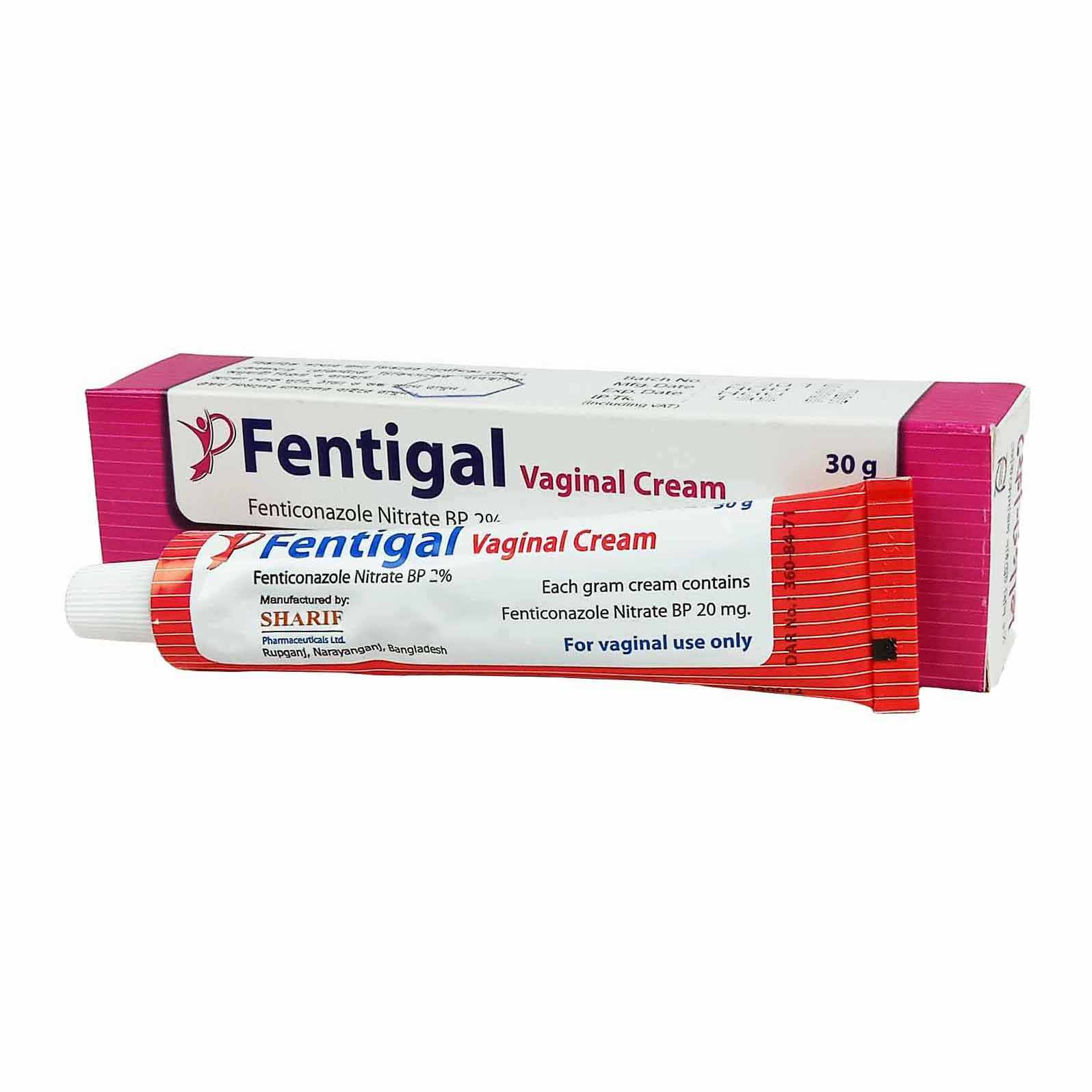
Fenticonazole nitrate is an antifungal medication used in the form of a vaginal cream to treat fungal infections. It is specifically used for the treatment of vaginal yeast infections (vulvovaginal candidiasis) caused by Candida species. Fenticonazole is a member of the imidazole class of antifungals, which are known for their broad-spectrum activity against various fungi.
Uses
Fenticonazole nitrate is primarily used to treat:
- Vulvovaginal candidiasis (vaginal yeast infections) caused by Candida species.
- Fungal infections of the vaginal mucosa, which may result from imbalances in normal vaginal flora.
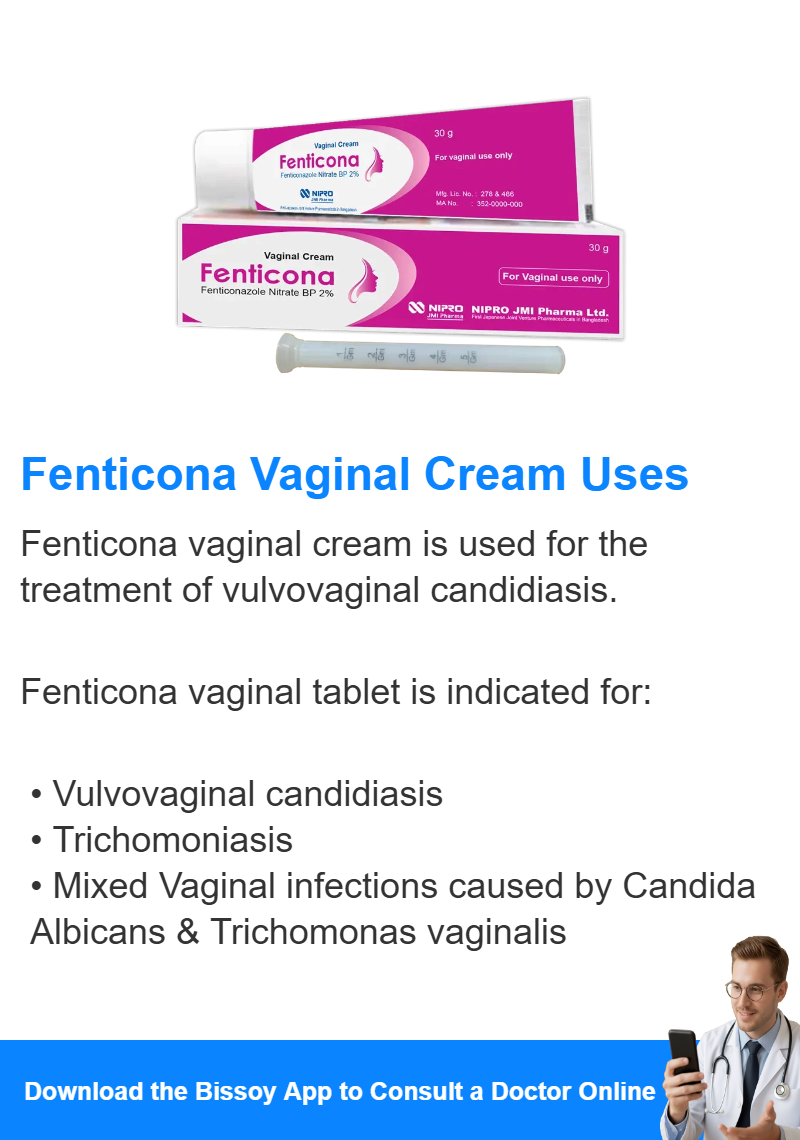
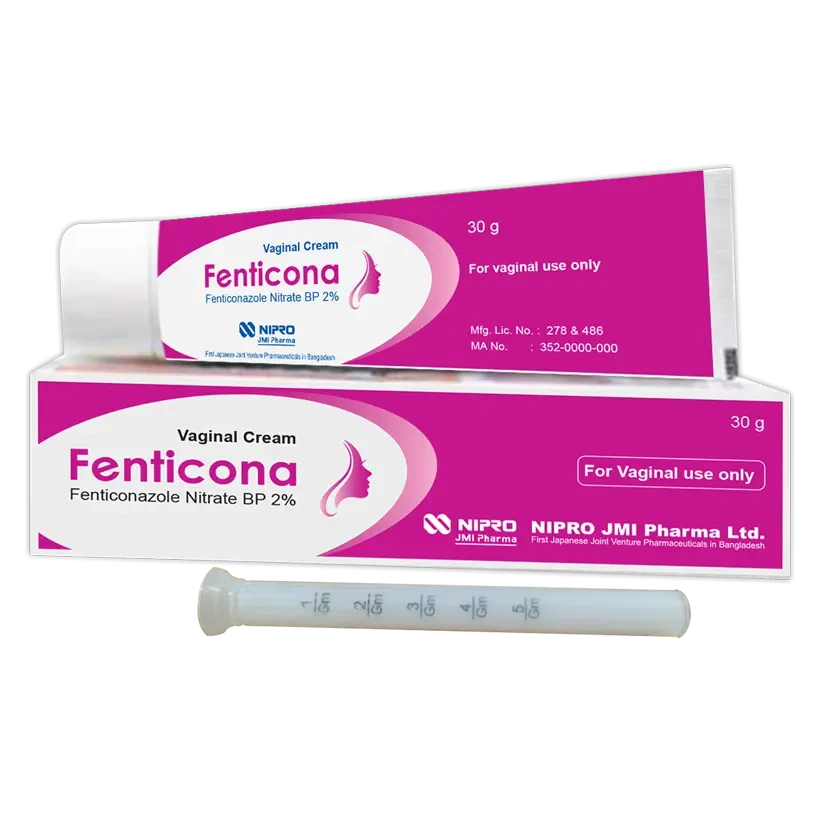
| Brand Name | Fenticona |
|---|---|
| Type | Vaginal Cream |
| Weight | 2% w/w |
| Generic | Fenticonazole Nitrate [Vaginal Cream] |
| Manufacturer | NIPRO JMI Pharma Ltd. |
| Available in | English বাংলা |
Mechanism of Action
Fenticonazole nitrate works by inhibiting the synthesis of ergosterol, a crucial component of fungal cell membranes. By disrupting ergosterol production, fenticonazole damages the fungal cell membrane, leading to cell death. This action effectively eradicates the infection by compromising the integrity of the fungal cell wall.
How Long Does It Take to Work?
Relief from symptoms such as itching and discharge typically begins within a few days of starting treatment. Complete resolution of the infection may take up to one week, depending on the severity of the infection and individual response to the medication. Adherence to the full course of treatment is essential for optimal results.
Absorption
When applied vaginally, fenticonazole nitrate is minimally absorbed into the systemic circulation. Its primary action is localized to the vaginal area, where it exerts its antifungal effects. This localized application reduces the risk of systemic side effects and interactions.
Route of Elimination
The elimination of fenticonazole nitrate occurs primarily through the vaginal secretions. Since the medication is not significantly absorbed systemically, it does not have a notable route of elimination through urine or feces.
Dosage
The standard dosage for fenticonazole nitrate vaginal cream is one application per day. Typically, the cream is used in the evening before bedtime. The usual treatment duration is 3 to 7 days, depending on the product instructions and the severity of the infection.
Administration
For administration, insert the applicator provided with the cream into the vagina and dispense the prescribed amount of medication. Ensure proper hygiene before and after application. Follow the instructions provided with the product for correct usage.
Side Effects
Common side effects may include:
- Local irritation or burning sensation in the vaginal area.
- Itching or discomfort.
- Vaginal discharge or mild bleeding.
Severe side effects are rare but may include allergic reactions or significant irritation. If such symptoms occur, discontinue use and consult a healthcare provider.
Toxicity
Topical use of fenticonazole nitrate is generally well-tolerated with minimal risk of systemic toxicity. Overuse or misuse may result in increased local irritation or allergic reactions. If large amounts are accidentally ingested or excessively applied, seek medical advice.
Precautions
Precautions include:
- Avoid use during menstruation unless specifically instructed by a healthcare provider.
- Do not use if you have a known hypersensitivity to fenticonazole nitrate or other imidazole antifungals.
- Use with caution if you have recurrent infections or if symptoms persist despite treatment.
Interaction
Topical fenticonazole nitrate has minimal risk of drug interactions due to its localized application. Avoid using other vaginal medications concurrently unless approved by a healthcare provider to prevent potential interactions.
Disease Interaction
Use with caution in individuals with severe vaginal infections, significant mucosal damage, or immunocompromised conditions. Consult a healthcare provider if you have underlying health conditions that may affect the treatment.
Drug Interaction
Drug interactions are unlikely due to the localized application of fenticonazole nitrate. However, avoid using other vaginal products simultaneously unless advised by a healthcare provider to avoid potential interactions.
Food Interactions
There are no known food interactions with fenticonazole nitrate as it is applied vaginally and does not affect or interact with food intake.
Pregnancy Use
Fenticonazole nitrate is generally considered safe for use during pregnancy when used as directed. Consult a healthcare provider before using this medication if pregnant to ensure its safety and appropriateness based on individual circumstances.
Lactation Use
Topical use of fenticonazole nitrate is generally considered safe during lactation. There is minimal risk of systemic absorption and excretion in breast milk. Consult a healthcare provider for specific guidance if breastfeeding.
Acute Overdose
Acute overdose is unlikely with topical use. In case of accidental ingestion or excessive application, seek medical advice. Symptoms of overdose would generally involve increased local irritation or potential systemic effects if absorbed in significant amounts.
Contraindication
Contraindications include hypersensitivity to fenticonazole nitrate or other imidazole antifungals. Avoid use if there is a history of severe allergic reactions to similar medications or if systemic infections are present that require different treatments.
Use Direction
Follow the product instructions for use. Typically, apply the cream once daily, usually before bedtime. Ensure proper insertion and application techniques. Avoid unprotected sexual intercourse during treatment to prevent interactions or contamination.
Storage Conditions
Store the medication in a cool, dry place away from direct sunlight and moisture. Keep the product tightly closed and out of reach of children. Follow any additional storage instructions provided with the product.
Volume of Distribution
The volume of distribution is not a primary consideration for topical formulations like fenticonazole nitrate. The medication is applied locally with minimal systemic distribution.
Half Life
The half-life of fenticonazole nitrate is not typically reported for vaginal formulations. The drug’s action is localized, and systemic half-life data is not a major concern for this type of application.
Clearance
Clearance is minimal for topical applications. Fenticonazole nitrate is primarily acted upon locally in the vaginal area with negligible systemic clearance.
See in details version Fenticona Vaginal Cream 2% w/w also Fenticona Vaginal Cream 2% w/w in bangla
Social card
Some Frequently Asked Questions About Fenticona Vaginal Cream 2% w/w


Dr. S. M. Delowar Hossain
Cardiology (Heart Diseases, Hypertension & Rheumatic Fever) Specialist