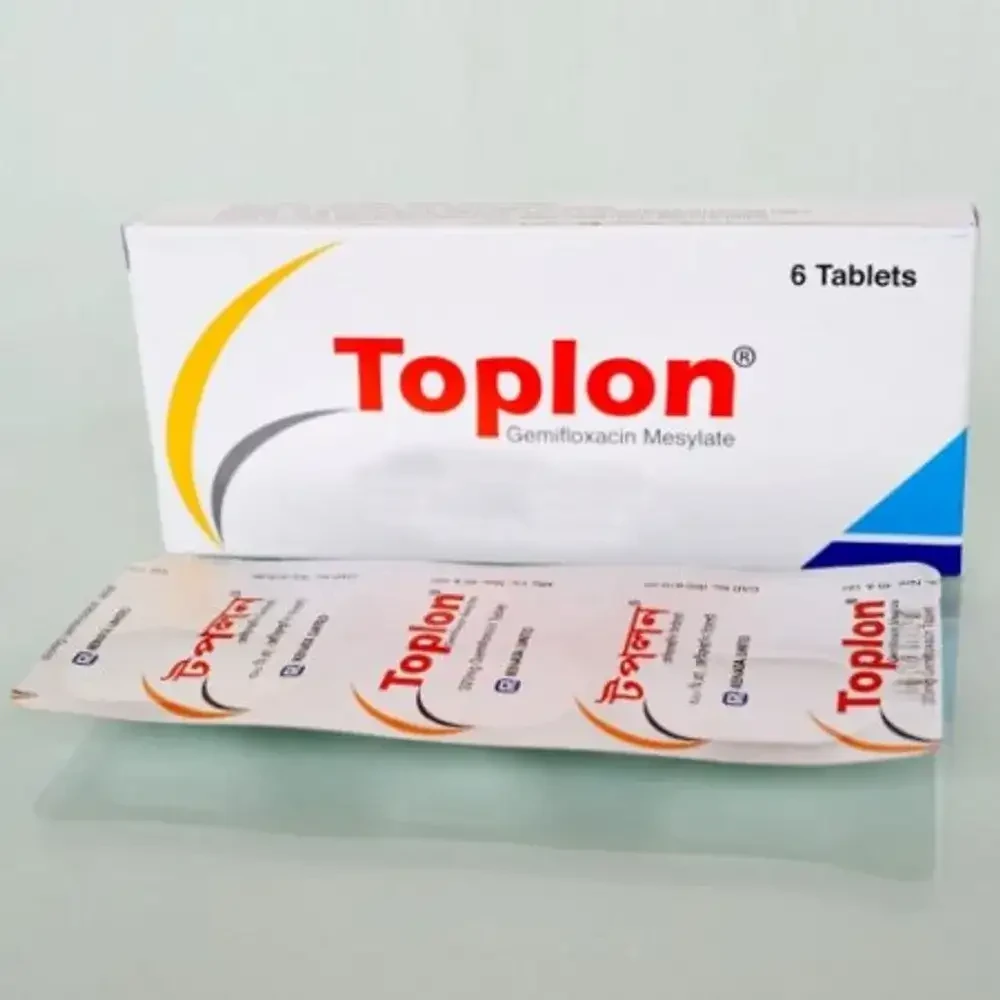
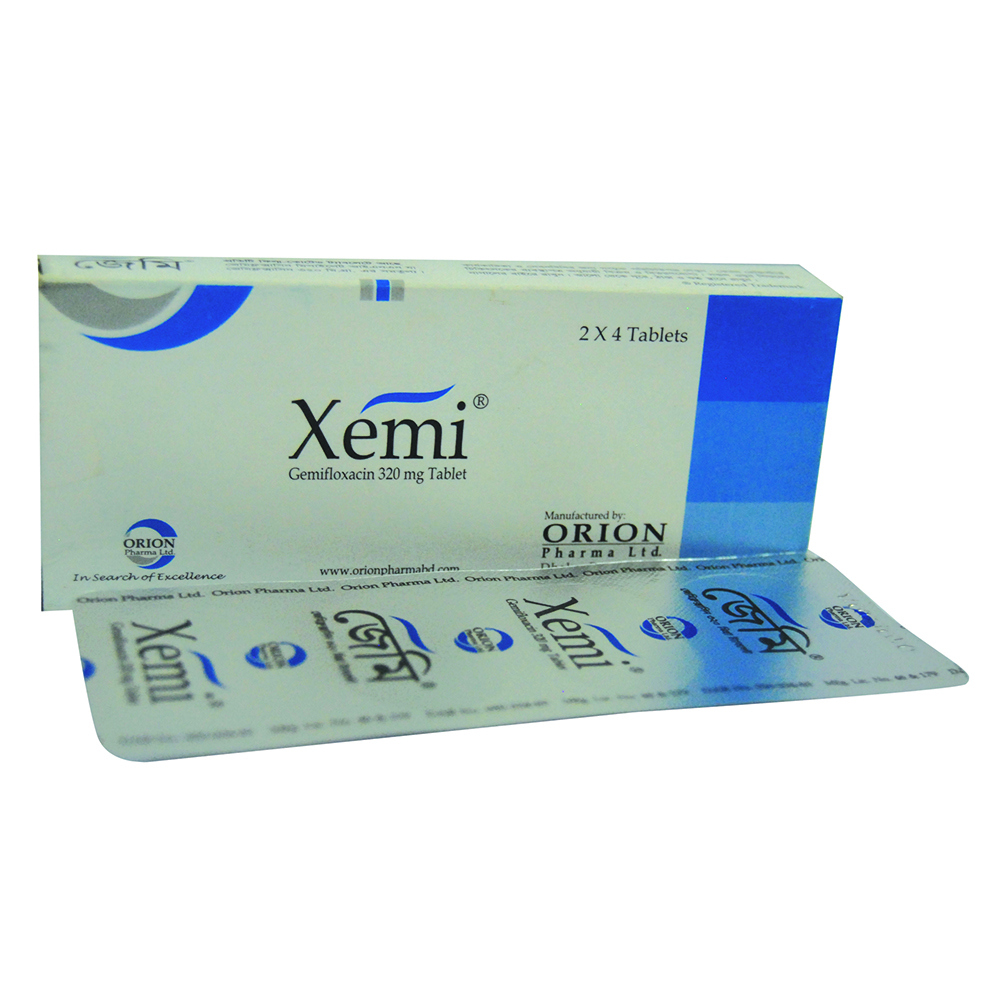
Introduction
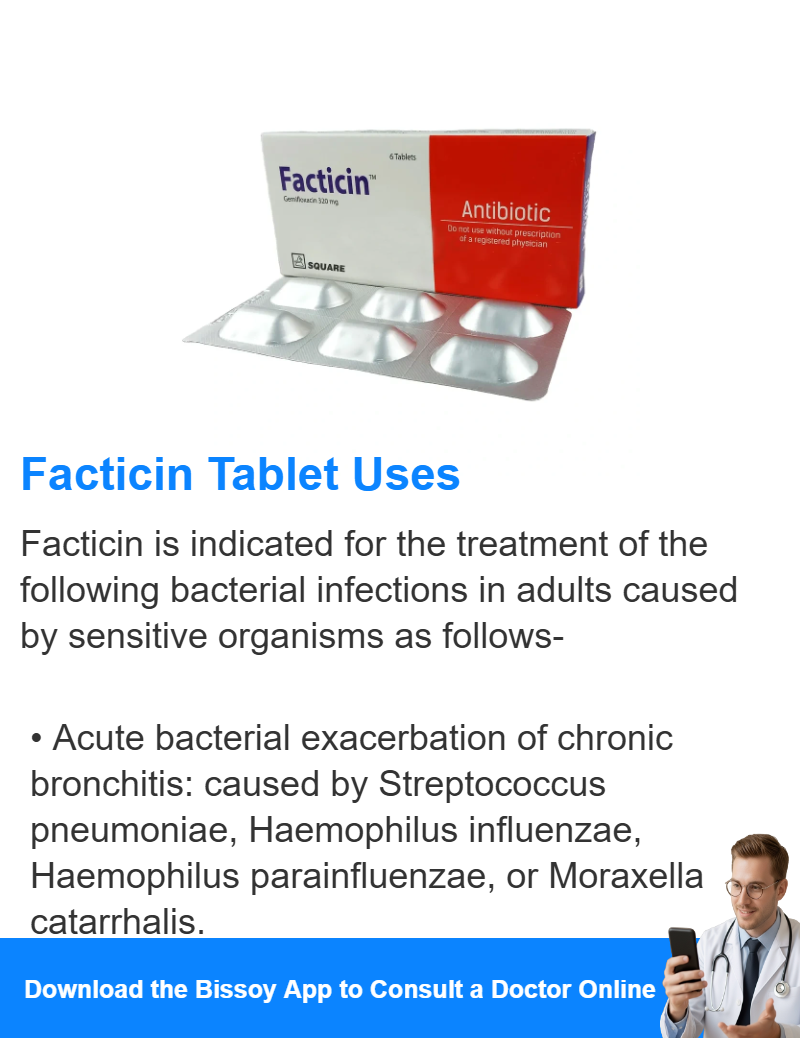
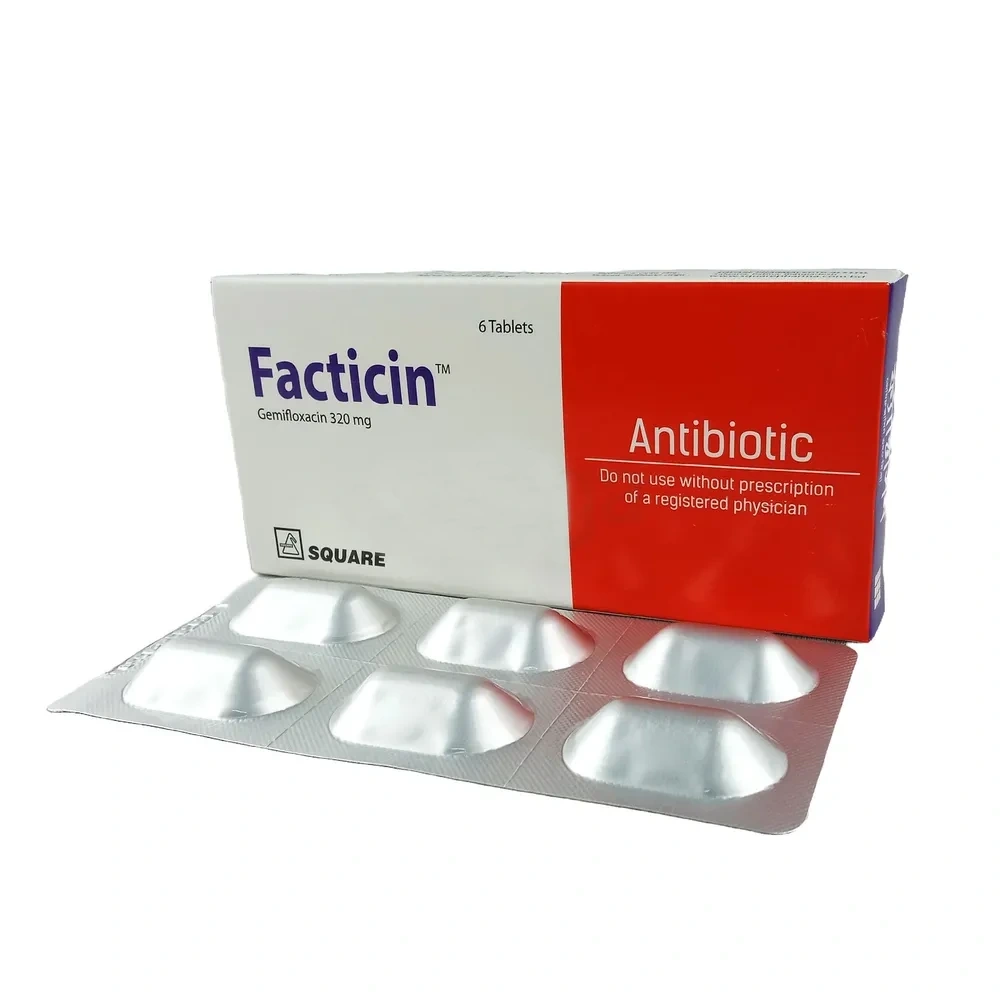
Facticin Tablet 320 mg is a quinolone antibacterial agent with a broad-spectrum activity that is used in the treatment of acute bacterial exacerbation of chronic bronchitis and mild-to-moderate pneumonia. It is available in oral formulations. Facticin Tablet 320 mg acts by inhibiting DNA synthesis through the inhibition of both DNA gyrase and topoisomerase IV, which are essential for bacterial growth.
Uses
Facticin Tablet 320 mg is a quinolone antibacterial agent used for the treatment of acute bacterial exacerbation of chronic bronchitis and mild to moderate community-acquired pneumonia caused by susceptible bacteria.
For the treatment of bacterial infection caused by susceptible strains such as S. pneumoniae, H. influenzae, H. parainfluenzae, or M. catarrhalis, S. pneumoniae (including multi-drug resistant strains [MDRSP]), M. pneumoniae, C. pneumoniae, or K. pneumoniae.
Associated Conditions
Pharmacodynamics
Facticin Tablet 320 mg is a quinolone/fluoroquinolone antibiotic. Facticin Tablet 320 mg is bactericidal and its mode of action depends on blocking of bacterial DNA replication by binding itself to an enzyme called DNA gyrase, which allows the untwisting required to replicate one DNA double helix into two. Notably the drug has 100 times higher affinity for bacterial DNA gyrase than for mammalian. Facticin Tablet 320 mg is a broad-spectrum antibiotic that is active against both Gram-positive and Gram-negative bacteria.
Mechanism of Action
The bactericidal action of gemifloxacin results from inhibition of the enzymes topoisomerase II (DNA gyrase) and topoisomerase IV, which are required for bacterial DNA replication, transcription, repair, and recombination.
Absorption
Rapidly absorbed from the gastrointestinal tract. The absolute bioavailability averages approximately 71%.
Volume of Distribution
- 1.66 to 12.12 L/kg
Protein Binding
60-70%
Route of Elimination
Facticin Tablet 320 mg and its metabolites are excreted via dual routes of excretion.Following oral administration of gemifloxacin to healthy subjects, a mean (± SD) of 61 ± 9.5% of the dose was excreted in the feces and 36 ± 9.3% in the urine as unchanged drug and metabolites. The mean (± SD) renal clearance following repeat doses of 320 mg was approximately 11.6 ± 3.9 L/hr (range 4.6-6 L/hr), which indicates active secretion is involved in the renal excretion of gemifloxacin.
Half Life
7 (± 2) hours
Clearance
- renal cl=11.6+/- 3.9 L/hr [Healthy subjects receiving repeat doses of 320 mg orally]
Food Interactions
- Take with or without food. The absorption is unaffected by food.
Dosage
Community-acquired pneumonia (Mild to moderate severity):
- Due to known or suspected S. pneumoniae, H. influenzae, M. pneumoniae, or C. pneumoniae infection: One 320 mg tablet daily for 5 days.
- Due to known or suspected multi-drug resistant Streptococcus pneumoniae, K.pneumoniae, or M. catarrhalis infection: One 320 mg tablet daily for 7 days.