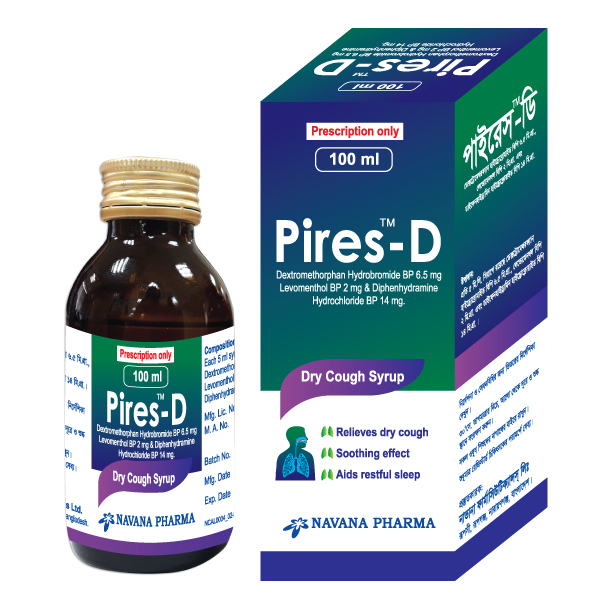
Introduction
This combination of Diphenhydramine, Dextromethorphan, and Levomenthol is commonly used in over-the-counter (OTC) cold and cough medications. Diphenhydramine is an antihistamine, Dextromethorphan is a cough suppressant, and Levomenthol provides a cooling sensation to soothe the throat. Together, they help relieve symptoms associated with cold, allergies, and coughs.
Uses
This combination is used for:
- Relief of coughs caused by common cold, bronchitis, or other respiratory illnesses.
- Reduction of allergic symptoms such as runny nose, sneezing, and itching due to Diphenhydramine.
- Soothing of the throat through the cooling effect of Levomenthol.
- Temporarily alleviating minor throat irritation.
Mechanism of Action
The mechanism of action involves:
- Diphenhydramine: An antihistamine that blocks H1 receptors, reducing histamine-mediated symptoms like itching, runny nose, and sneezing.
- Dextromethorphan: A cough suppressant that acts on the cough center in the brain to reduce the urge to cough.
- Levomenthol: Provides a cooling sensation in the throat and has mild local anesthetic and counterirritant properties, which help soothe throat irritation.
How Long Does It Take to Work?
Diphenhydramine typically starts working within 15 to 30 minutes, while Dextromethorphan can take about 30 minutes to take effect. Levomenthol provides immediate relief with its cooling sensation.
Absorption
Diphenhydramine and Dextromethorphan are well absorbed from the gastrointestinal tract. Diphenhydramine reaches peak plasma concentration within 2 hours, and Dextromethorphan reaches peak levels within 2-3 hours. Levomenthol is absorbed topically but mainly provides local effects in the mouth and throat.
Route of Elimination
Diphenhydramine is primarily metabolized by the liver and excreted via urine. Dextromethorphan is metabolized by the liver (via cytochrome P450 enzymes) and excreted in the urine as metabolites. Levomenthol is excreted through urine and exhalation.
Dosage
Adults and children over 12 years: 2 teaspoonfuls of syrup 4 times a day or as directed by the physicians. Do not take more than 8 teaspoonfuls of syrup in 24 hours.Use in children & Adolescents: The efficacy and safely of Dextromethorphan Hydrobromide have not been established in pediatric patients and adolescents.
The typical dosage for adults and children over 12 years:
- 1-2 teaspoons (5-10 mL) every 4-6 hours as needed, not exceeding 4 doses in 24 hours.
- 1 teaspoon (5 mL) every 4-6 hours as needed, not exceeding 4 doses in 24 hours.
Administration
This combination is usually administered orally in the form of a liquid syrup. Shake the bottle well before each use, and measure the dose carefully using a dosing spoon or cup. Avoid using household spoons to measure the dosage.
Side Effects
Common side effects may include:
- Drowsiness (due to Diphenhydramine)
- Dry mouth, nose, or throat
- Constipation or upset stomach
- Blurred vision
- Hallucinations or confusion (especially with high doses of Diphenhydramine)
- Severe dizziness or difficulty breathing
- Urinary retention
Toxicity
Toxicity may result from excessive use or overdose, particularly of Diphenhydramine and Dextromethorphan. Symptoms of toxicity include:
- Severe drowsiness, confusion, or hallucinations
- Tachycardia (rapid heartbeat)
- Seizures or convulsions
- Respiratory depression
Precautions
Precautions include:
- Avoiding alcohol or other central nervous system (CNS) depressants, as they can increase drowsiness and other side effects.
- Not using in children under 6 years of age unless directed by a healthcare provider.
- Avoiding driving or operating heavy machinery due to the sedative effects of Diphenhydramine.
- Using caution in elderly patients, as they may be more sensitive to side effects such as confusion and dizziness.
Interaction
Potential interactions include:
- MAO inhibitors: Using Dextromethorphan with monoamine oxidase inhibitors (MAOIs) can cause serious interactions, including serotonin syndrome.
- Other CNS depressants: Combining with alcohol, sedatives, or tranquilizers can enhance drowsiness.
- Anticholinergic drugs: Diphenhydramine can increase anticholinergic effects (e.g., dry mouth, urinary retention) when taken with other anticholinergic medications.
Disease Interaction
This combination should be used cautiously in patients with:
- Asthma or other respiratory conditions
- Glaucoma, as Diphenhydramine can increase intraocular pressure
- Urinary retention or prostate problems
- Severe hypertension or heart disease
Drug Interaction
Drug interactions may occur with:
- MAO inhibitors: Combining with Dextromethorphan can lead to severe side effects, including serotonin syndrome.
- Other sedatives: Alcohol, benzodiazepines, and opioids can increase the sedative effects of Diphenhydramine.
Food Interactions
There are no significant food interactions, but alcohol should be avoided as it can increase drowsiness and CNS depression.
Pregnancy Use
This combination should only be used during pregnancy if clearly needed and prescribed by a healthcare provider. Diphenhydramine crosses the placenta and may cause sedation in the fetus if used in high doses or for prolonged periods.
Lactation Use
Diphenhydramine and Dextromethorphan are excreted in breast milk in small amounts. It is generally safe for short-term use, but prolonged use or high doses should be avoided as they can affect the nursing infant.
Acute Overdose
Symptoms of overdose may include:
- Severe drowsiness or confusion
- Agitation or hallucinations
- Seizures or convulsions
- Respiratory depression
Contraindication
Contraindications include:
- Hypersensitivity to Diphenhydramine, Dextromethorphan, Levomenthol, or any other ingredients in the formulation
- Concurrent use of MAO inhibitors
- Severe hypertension or heart disease
- Severe respiratory insufficiency
Use Direction
Use the medication as directed by the packaging or a healthcare provider. Do not exceed the recommended dosage or frequency. Measure doses carefully and avoid taking other medications containing Diphenhydramine or Dextromethorphan concurrently unless advised by a healthcare provider.
Storage Conditions
Store at room temperature (15°C to 25°C) away from direct sunlight and moisture. Keep the bottle tightly closed and out of the reach of children.
Volume of Distribution
The volume of distribution of Diphenhydramine is approximately 3-7 L/kg, reflecting its wide distribution in body tissues. Dextromethorphan also has extensive tissue distribution due to its lipophilic nature.
Half Life
The half-life of Diphenhydramine is about 4-9 hours in adults, while Dextromethorphan has a half-life of 2-4 hours. Levomenthol is metabolized and eliminated relatively quickly.
Clearance
Diphenhydramine is cleared via hepatic metabolism and renal excretion, with an estimated clearance of 600 mL/min. Dextromethorphan is metabolized in the liver and excreted as metabolites in the urine.