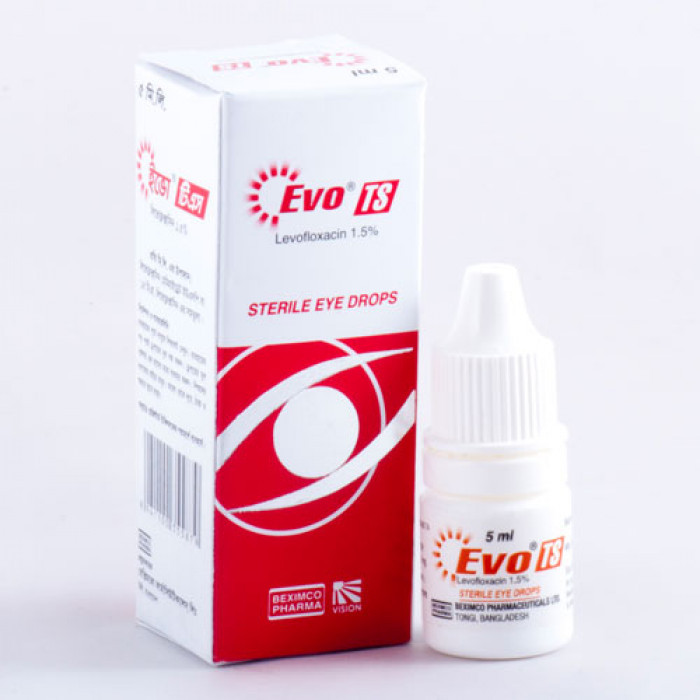
Evo TS Ophthalmic Solution 1.5% Introduction

Evo TS Ophthalmic Solution 1.5% is an antibiotic that belongs to the family of medications known as quinolones. It is used to treat a variety of bacterial infections including, chest and urinary tract infections. It works by stopping the growth of bacteria.

Uses for Evo TS Ophthalmic Solution 1.5%

Evo TS Ophthalmic Solution 1.5% is used to treat a variety of bacterial infections, including:

  • respiratory tract infections
  • urinary tract infections, including prostatitis
  • skin and soft tissue infections
  • acute bacterial sinusitis
  • complicated intra-abdominal infections
  • chronic bacterial prostatitis
Brand Name Evo TS
Type Ophthalmic Solution
Weight 1.5%
Generic Levofloxacin
Manufacturer Beximco Pharmaceuticals Ltd.
Available in English বাংলা

Mechanism of Action

Evo TS Ophthalmic Solution 1.5% works by interfering with bacterial DNA synthesis. It inhibits the action of an enzyme called DNA gyrase, so that the bacteria can no longer reproduce. This stops the bacteria from growing and allows the body’s natural defences to fight the infection.

How Long Does it Take to Work?

Evo TS Ophthalmic Solution 1.5% typically starts to work within 48-72 hours, although this can vary depending on the severity and type of infection.

Absorption

Evo TS Ophthalmic Solution 1.5% is rapidly and almost completely absorbed from the gastrointestinal tract.

Route of Elimination

Evo TS Ophthalmic Solution 1.5% is eliminated largely in the urine, with smaller amounts eliminated in the feces. It is eliminated primarily by the kidneys.

Dosage

The dosage of Evo TS Ophthalmic Solution 1.5% will vary depending on the type and severity of the infection being treated. The usual dose for adults is 250-500mg per day, taken once or twice daily. For children, the dose may be lower depending on the child's weight and age.

Administration

Evo TS Ophthalmic Solution 1.5% should be taken with plenty of fluids. It should not be taken with alcohol, as this may increase the risk of side effects. It should be taken on an empty stomach, at least one hour before food, or two hours after food.

Side Effects

The most common side effects associated with Evo TS Ophthalmic Solution 1.5% include nausea, vomiting, diarrhea, abdominal pain, headache, dizziness, insomnia, fatigue, and rash. More serious side effects may include allergic reactions, tendon or joint pain, muscle weakness, seizures, and liver damage.

Toxicity

At therapeutic doses, Evo TS Ophthalmic Solution 1.5% is generally well-tolerated. The most serious adverse reaction is liver injury, which can occur at high doses. Other less serious but more commonly reported adverse reactions include nausea, vomiting, diarrhea, abdominal pain, headache, dizziness, insomnia, fatigue, and rash.

Precautions

Before using Evo TS Ophthalmic Solution 1.5%, talk to your healthcare provider about any allergies, your medical history, and any other medications you may be taking. Tell your healthcare provider if you have ever had any kidney or liver problems, G6PD deficiency, any joint or tendon problems, or any mental health issues including depression or suicidal thoughts. Let your healthcare provider know if you are pregnant or breastfeeding before using Evo TS Ophthalmic Solution 1.5%.

Interactions

Evo TS Ophthalmic Solution 1.5% can interact with other medications, vitamins, and herbal supplements. Tell your healthcare provider about all other medications you are taking before taking Evo TS Ophthalmic Solution 1.5%. Some medications that may interact with Evo TS Ophthalmic Solution 1.5% include blood thinners, anti-seizure medications, and certain antibiotics.

Disease Interactions

Evo TS Ophthalmic Solution 1.5% should not be used by patients with a known hypersensitivity to quinolone antibiotics. Patients with a history of tendon disorders should also not use Evo TS Ophthalmic Solution 1.5%. Patients with any kidney or liver disease should use this medication with caution.

Drug Interactions

Evo TS Ophthalmic Solution 1.5% can interact with other medications, vitamins, and herbal supplements. Tell your healthcare provider about all other medications you are taking before taking Evo TS Ophthalmic Solution 1.5%. Some medications that may interact with Evo TS Ophthalmic Solution 1.5% include blood thinners, anti-seizure medications, and certain antibiotics.

Food Interactions

Evo TS Ophthalmic Solution 1.5% should be taken on an empty stomach. Avoid taking it with alcohol, as this may increase the risk of side effects.

Pregnancy Use

Evo TS Ophthalmic Solution 1.5% should not be used during pregnancy, as it may cause birth defects. Tell your healthcare provider if you are pregnant before taking Evo TS Ophthalmic Solution 1.5%.

Lactation Use

Evo TS Ophthalmic Solution 1.5% is not recommended for use in breastfeeding women, as it may pass into breast milk and cause harm to a nursing baby. Tell your healthcare provider if you are breastfeeding before taking Evo TS Ophthalmic Solution 1.5%.

Acute Overdose

Symptoms of an acute overdose of Evo TS Ophthalmic Solution 1.5% include confusion, tremors, restlessness, nausea, and vomiting. Seek medical attention immediately if you think you have taken too much Evo TS Ophthalmic Solution 1.5%.

Contraindication

Evo TS Ophthalmic Solution 1.5% should not be used by patients with a known hypersensitivity to quinolones. Patients with a history of tendon disorders should also not use Evo TS Ophthalmic Solution 1.5%. Patients with any kidney or liver disease should use this medication with caution.

Use Direction

Evo TS Ophthalmic Solution 1.5% should be taken exactly as prescribed by your healthcare provider. Do not take more or less of the medication than prescribed. Take the medication on an empty stomach at least one hour before food, or two hours after food. Take Evo TS Ophthalmic Solution 1.5% with plenty of fluids. Do not take with alcohol, as this may increase the risk of side effects. Do not stop taking the medication early, or skip doses, even if you feel better.

Storage Condition

Evo TS Ophthalmic Solution 1.5% should be stored at room temperature, away from heat and direct light. Keep the medication in the original container, and keep it tightly closed. Do not store the medication in the bathroom or near a sink. Keep all medication out of sight and reach of children.

Volume of Distribution

Evo TS Ophthalmic Solution 1.5% is highly soluble in water and is widely distributed throughout the body. It has a volume of distribution of 0.77-1.5 L/kg.

Half Life

The half-life of Evo TS Ophthalmic Solution 1.5% is about 8 hours, but may be longer in patients with reduced renal function.

Clearance

Renal clearance of Evo TS Ophthalmic Solution 1.5% is approximately 25 mL/min. Liver metabolism is not significant.

See in details version Evo TS Ophthalmic Solution 1.5% also Evo TS Ophthalmic Solution 1.5% in bangla

Social card

Uses

Some Frequently Asked Questions About Evo TS Ophthalmic Solution 1.5%

1. What is levofloxacin?

Evo TS Ophthalmic Solution 1.5% is a broad-spectrum antibiotic in the fluoroquinolone class, used to treat bacterial infections by inhibiting bacterial DNA replication.

2. What is levofloxacin used for?

It is used to treat:

  • Pneumonia
  • Urinary tract infections (UTIs)
  • Sinusitis
  • Skin infections
  • Chronic bronchitis exacerbations
  • 3. How does levofloxacin work?

    It stops bacteria from multiplying by interfering with enzymes (DNA gyrase and topoisomerase IV) needed for DNA replication and repair.

    4. Is levofloxacin a prescription drug?

    Yes, it is available only with a doctor’s prescription.

    5. Who can take levofloxacin?

    It’s prescribed for adults with bacterial infections, but not for children, pregnant women, or those with certain conditions (e.g., tendon issues) unless absolutely necessary.

    6. How is levofloxacin taken?

    It is taken orally as a tablet or liquid, or administered intravenously (IV) in a hospital setting.

    7. What is the typical dosage of levofloxacin?

    Dosage varies by infection:

  • For pneumonia: 500-750 mg once daily for 7-14 days
  • For UTIs: 250-500 mg once daily for 3-10 days
  • Adjusted for kidney function
  • 8. How long does levofloxacin take to work?

    Symptoms may improve within 1-3 days, but the full course must be completed to prevent resistance.

    9. Can levofloxacin be taken long-term?

    No, it’s typically used for short-term treatment (3-14 days) due to side effect risks.

    10. Does levofloxacin treat viral infections?

    No, it only works against bacterial infections, not viruses like the flu or common cold.

    11. What are the common side effects of levofloxacin?

    Common side effects include:

  • Nausea
  • Diarrhea
  • Headache
  • Dizziness
  • 12. Can levofloxacin cause tendon damage?

    Yes, it carries a risk of tendonitis or tendon rupture, especially in older adults or those on corticosteroids.

    13. Does levofloxacin affect mental health?

    Rarely, it may cause confusion, anxiety, or hallucinations. Report these to your doctor immediately.

    14. Can levofloxacin be taken with food?

    Yes, but avoid taking it with dairy or calcium-fortified products, as they can reduce absorption.

    15. What happens if I miss a dose of levofloxacin?

    Take it as soon as you remember unless it’s near the next dose; then skip it. Don’t double up.

    16. Can I overdose on levofloxacin?

    Yes, an overdose can cause seizures, confusion, or heart rhythm issues. Seek emergency help if suspected.

    17. Is levofloxacin safe during pregnancy?

    It’s not recommended (Category C) due to potential risks to the fetus. Consult a doctor for alternatives.

    18. Can breastfeeding mothers take levofloxacin?

    No, it may pass into breast milk and harm the baby. Avoid or discuss alternatives with your doctor.

    19. Does levofloxacin interact with other medications?

    Yes, it can interact with:

  • Antacids (reduce absorption)
  • NSAIDs (increase seizure risk)
  • Warfarin (enhances bleeding risk)
  • 20. Can I drink alcohol while taking levofloxacin?

    It’s best to avoid alcohol, as it may worsen side effects like dizziness or nausea.

    21. Is levofloxacin safe for people with kidney disease?

    Yes, but the dose must be adjusted based on kidney function to prevent toxicity.

    22. Can levofloxacin be used in liver disease?

    It’s generally safe for mild liver issues but used cautiously in severe cases.

    23. How should levofloxacin be stored?

    Store tablets at room temperature, away from moisture and heat. IV forms are stored per hospital guidelines.

    24. Does levofloxacin expire?

    Yes, check the expiration date. Expired levofloxacin may be less effective.

    25. Can levofloxacin cause photosensitivity?

    Yes, it can make skin more sensitive to sunlight, increasing burn risk. Use sunscreen and avoid tanning.

    26. Is levofloxacin the same as ciprofloxacin?

    No, both are fluoroquinolones, but levofloxacin has a broader spectrum and different dosing.

    27. Can levofloxacin treat MRSA?

    It’s not a first-line treatment for MRSA (methicillin-resistant Staphylococcus aureus) and may not be effective against it.

    28. Does levofloxacin cause yeast infections?

    Yes, it can disrupt normal flora, leading to yeast infections like thrush or vaginal candidiasis.

    29. Can levofloxacin cause heart problems?

    Rarely, it may prolong the QT interval, increasing the risk of irregular heartbeats. Avoid if you have heart conditions.

    30. Is levofloxacin gluten-free?

    Most formulations are gluten-free, but confirm with the manufacturer.

    31. Can levofloxacin be crushed?

    Tablets should not be crushed unless specified by your doctor, as it may affect absorption.

    32. What if I’m allergic to levofloxacin?

    Allergic reactions (rash, swelling, breathing issues) are rare but serious. Stop use and seek help.

    33. Can levofloxacin cause drowsiness?

    It may cause dizziness or fatigue in some people, so avoid driving until you know how it affects you.

    34. Does levofloxacin affect blood sugar?

    Rarely, it can cause low or high blood sugar, especially in diabetics. Monitor levels closely.

    35. Can levofloxacin treat ear infections?

    It’s not typically used for ear infections unless caused by susceptible bacteria, and oral use isn’t common for this.

    36. Is levofloxacin safe for elderly patients?

    Yes, but they’re at higher risk for tendon issues and side effects, so use with caution.

    37. Can levofloxacin cause weight gain?

    No, weight gain is not a known side effect.

    38. Does levofloxacin need refrigeration?

    No, tablets are stored at room temperature. Liquid forms may require refrigeration—check the label.

    39. Can levofloxacin treat strep throat?

    It’s not a first-line choice for strep throat; penicillin or amoxicillin is preferred.

    40. What’s the difference between levofloxacin and amoxicillin?

    Evo TS Ophthalmic Solution 1.5% is a fluoroquinolone with a broader spectrum, while amoxicillin is a narrower-spectrum penicillin antibiotic.

    41. Can levofloxacin cause joint pain?

    Yes, it may cause joint pain or swelling due to tendon or cartilage effects.

    42. Is levofloxacin available as a generic?

    Yes, generic levofloxacin is widely available, though branded Levaquin may still be sold.

    43. Can levofloxacin be taken at night?

    Yes, it can be taken at any time, but maintain consistent timing daily.

    44. Does levofloxacin affect the liver?

    Rarely, it may cause liver enzyme elevation. Report yellowing skin to your doctor.

    45. Can levofloxacin be used for tooth infections?

    It’s not a first-line choice but may be used if the infection involves resistant bacteria.

    46. What should I do if I experience tendon pain?

    Stop levofloxacin and contact your doctor immediately, as it could signal tendon damage.

    47. Can levofloxacin cause diarrhea?

    Yes, it’s a common side effect and may rarely lead to C. difficile infection.

    48. Does levofloxacin interact with caffeine?

    No significant interaction, but caffeine may amplify side effects like nervousness.

    49. Can levofloxacin be stopped early?

    No, finish the full course to prevent bacterial resistance, even if you feel better.

    *** Taking medicines without doctor's advice can cause long-term problems.
    Dr. S.M. Ishtiaque Ali Rubel

    Dr. S.M. Ishtiaque Ali Rubel

    General, Laparoscopic. Colorectal. Breast & Trauma Surgeon

    Call Doctor
    Dr. Roseyat Perveen

    Dr. Roseyat Perveen

    Cardiology & Medicine Specialist

    Call Doctor
    Dr. Jasmin Manzoor

    Dr. Jasmin Manzoor

    Dermatology (Skin, Allergy, Hair, Nail) Specialist & Laser Surgeon

    Call Doctor
    Related Medicines