Introduction
The conjugated estrogens are noncrystalline mixtures of purified female sex hormones obtained either by its isolation from the urine of pregnant mares or by synthetic generation from vegetal material. Both of these products are later conjugated to natrium sulfate by ester bonds in order to make them more water soluble.
The conjugated estrogen product contains a mix of estrogen from which about 50% is represented by estrone sulfate followed by 25% of equilin sulfate, 15% of 17-alpha-dehydroequilenin sulfate, 3% of equilenin sulfate, 5% of 17-alpha and 17-beta-dihydroequilenin sulfate, 2% of 17-alpha-estradiolsulfate and 3% of 17-beta-estradiolsulfate. It also presents a large number of unidentified molecules with weak estrogenic activity as well as non-human molecules when it is obtained from pregnant mares urine.
The conjugated estrogen mixture was approved for marketing in US in 1942 based on the efficacy against certain conditions. However, until 1986 official clinical trials were performed and this product was determined to be effective for the treatment of osteoporosis. The currently approved product of conjugated estrogens was developed by Wyeth Ayerst and FDA approved in 2003.
Uses
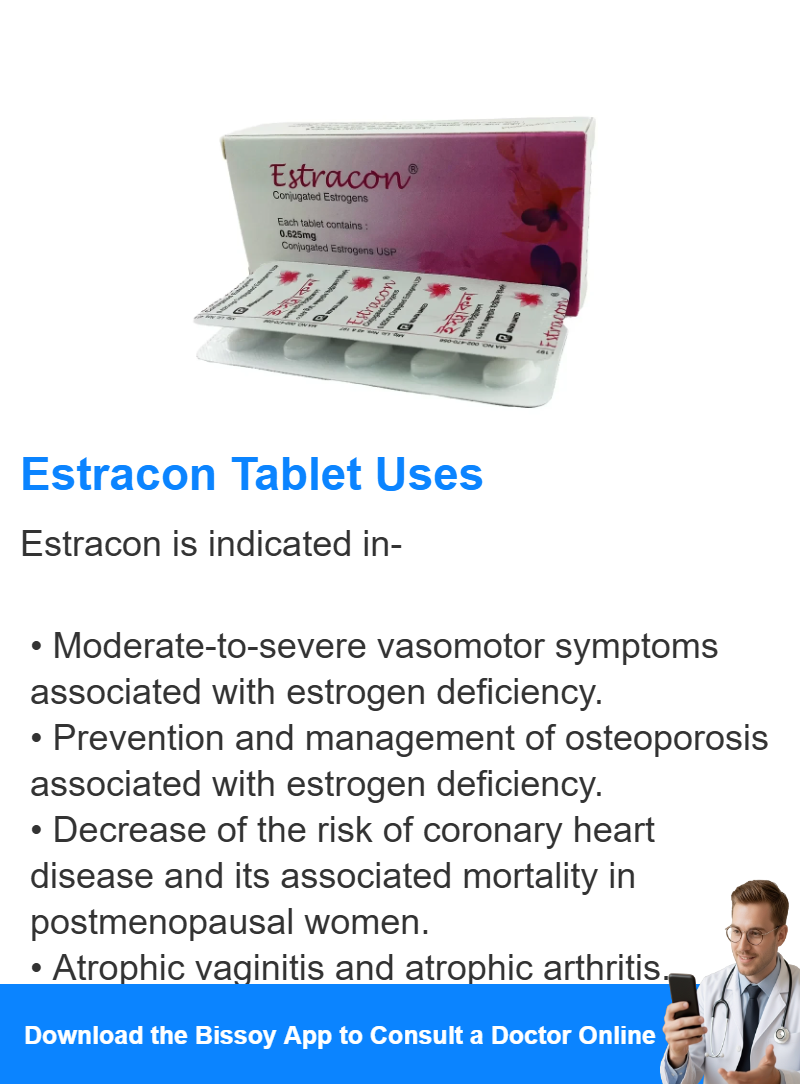
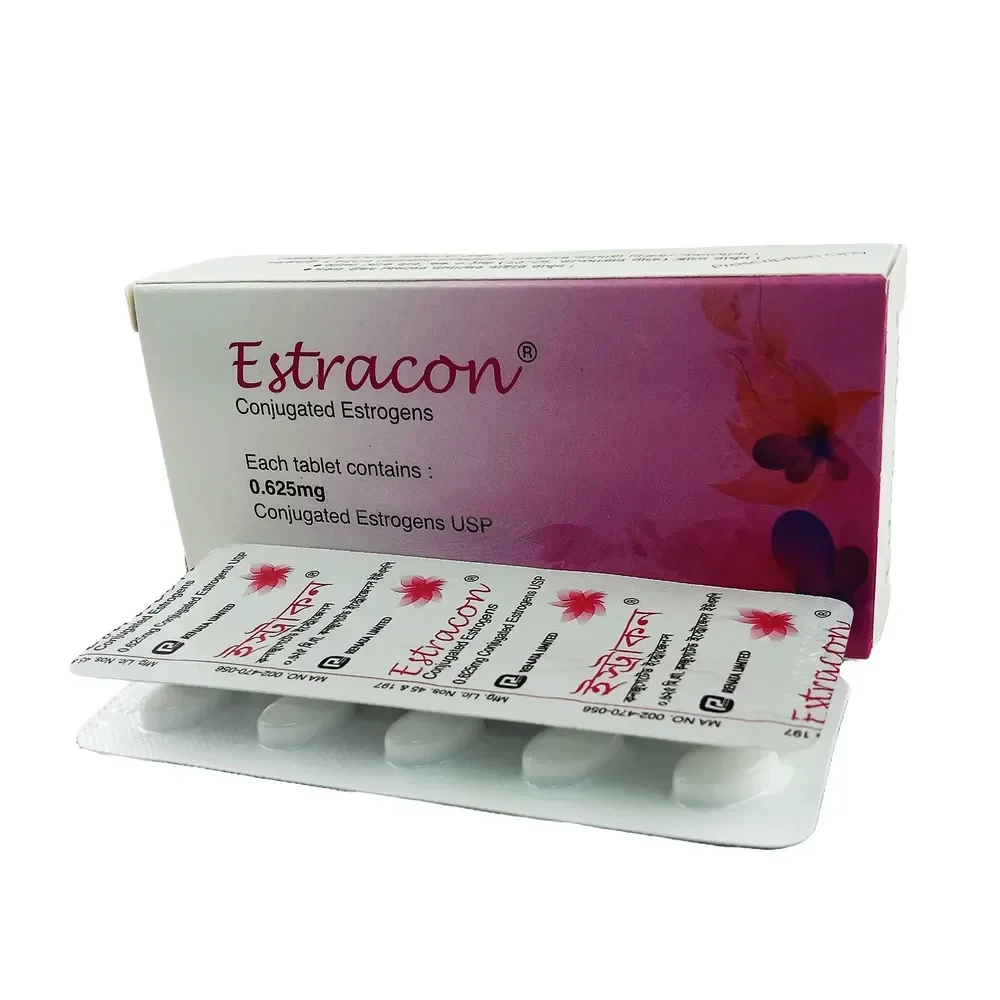
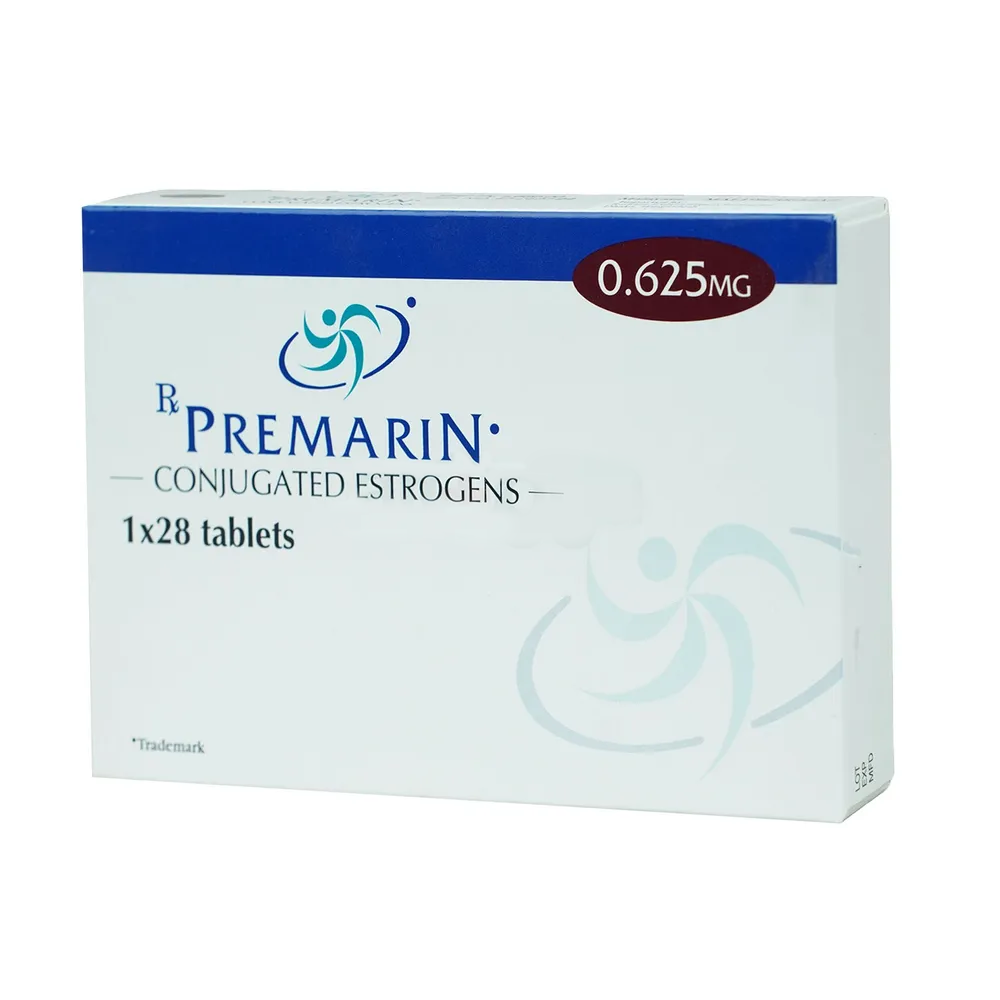
Conjugated estrogens is a mixture of estrogens used in estrogen replacement therapy for menopause and hypoestrogenism, used in the treatment of various malignancies, and used in the treatment of postmenopausal osteoporosis.
The conjugated estrogens are indicated for several different conditions including:
- Treatment of moderate to severe vasomotor symptoms due to menopause.
- Treatment of moderate to severe symptoms of vulvar and vaginal atrophy due to menopause.
- Treatment of hypoestrogenism due to hypogonadism, castration or primary ovarian failure.
- Palliative treatment of breast cancer in appropriately selected patients with metastatic disease.
- Palliative treatment of androgen-dependent carcinoma of the prostate.
- Preventive therapy of postmenopausal osteoporosis.
Associated Conditions
Pharmacodynamics
The binding of estrogens to the estrogen receptor produces the activation of nuclear receptors in order to bind to estrogen response elements in certain target genes. This mechanistic cascade results in histone acetylation, alteration of chromatin conformation and the initiation of transcription of certain specific drugs.
In preclinical studies, the conjugated estrogens are known to have a similar estrogenic potency than estrone and the equilin components of the conjugated estrogens have similar potency in the liver when compared to bioidentical estradiol. It has also been tested and confirmed that conjugated estrogens present a selective estrogen receptor modulator profile which allows it to have a large beneficial effect on the bone and cardiovascular system.
Clinically, the administration of conjugated estrogens is known to promote vasomotor stability, maintain genitourinary function, and normal growth and development of female sex hormones. It has also been shown to prevent accelerated bone loss by inhibiting bone resorption and restoring the balance of bone resorption. In the hormonal area, it is shown to inhibit luteinizing hormone and decrease the serum concentration of testosterone.
Mechanism of Action
The conjugated estrogens, equally to the normal physiological estrogen, work by agonistically binding to the estrogen receptors alpha and beta. The estrogen receptors vary in quantity and proportion according to the tissues and hence, the activity of this conjugated estrogens is very variable.
The activity made by the conjugated estrogens is driven by the increase in the synthesis of DNA, RNA and various proteins in responsive tissues which in order will reduce the release of gonadotropin-releasing hormone, follicle-stimulating hormone and leuteinizing hormone.
The specific mechanism of action cannot be described only in terms of total estrogenic action as the pharmacokinetic profile, the tissue specificity and the tissue metabolism is different for each component of the product.
Absorption
The conjugated estrogens are well absorbed in the gastrointestinal tract and the maximum plasma concentration of the conjugated estrogens is reached after 7 hours depending on the estrone component. The maximal plasma concentration of conjugated estrogens after multiple doses of 0.45 mg is reported to be of 2.6 ng/ml with an AUC in the steady state of 35 ng.h/ml. Unconjugated estrogens are known to be cleared from the circulation at a faster rate than their ester forms.
Volume of Distribution
The physiological distribution of estrogens in the body is very similar to what is seen in endogenous estrogens and hence, it is widely distributed. The conjugated estrogens are mainly found in the sex hormone target organs.
Protein Binding
Conjugated estrogens are bound to plasma proteins and this bound state can represent around 50-80% of the administered dose. It circulates in the blood mainly bound to sex-hormone binding globulin and albumin.
Route of Elimination
The conjugated estrogens are eliminated mainly in the urine. In this renal elimination, it is possible to find 17 beta-estradiol, estrone, estriol, as well as the glucuronide and sulfate conjugates of the estrogens.
Half Life
The median half-life of the conjugated estrogens is reported to be of 17 hours.
Clearance
The reported normal clearance rate for estrogens is of approximately 615 L/m2.
Toxicity
The reported oral LD50 in the rat is of more than 5000 mg/kg. Serious overdosage symptoms have not been reported. There have been only reports of nausea, vomiting, and withdrawal in bleeding in females.
Long-term continuous administration of estrogens is correlated to increased risk on the incidence of carcinomas of the breast, uterus, cervix, vagina, testis, and liver.
Food Interactions
- Take with or without food. Consult individual product monograph for specific instructions.