Introduction

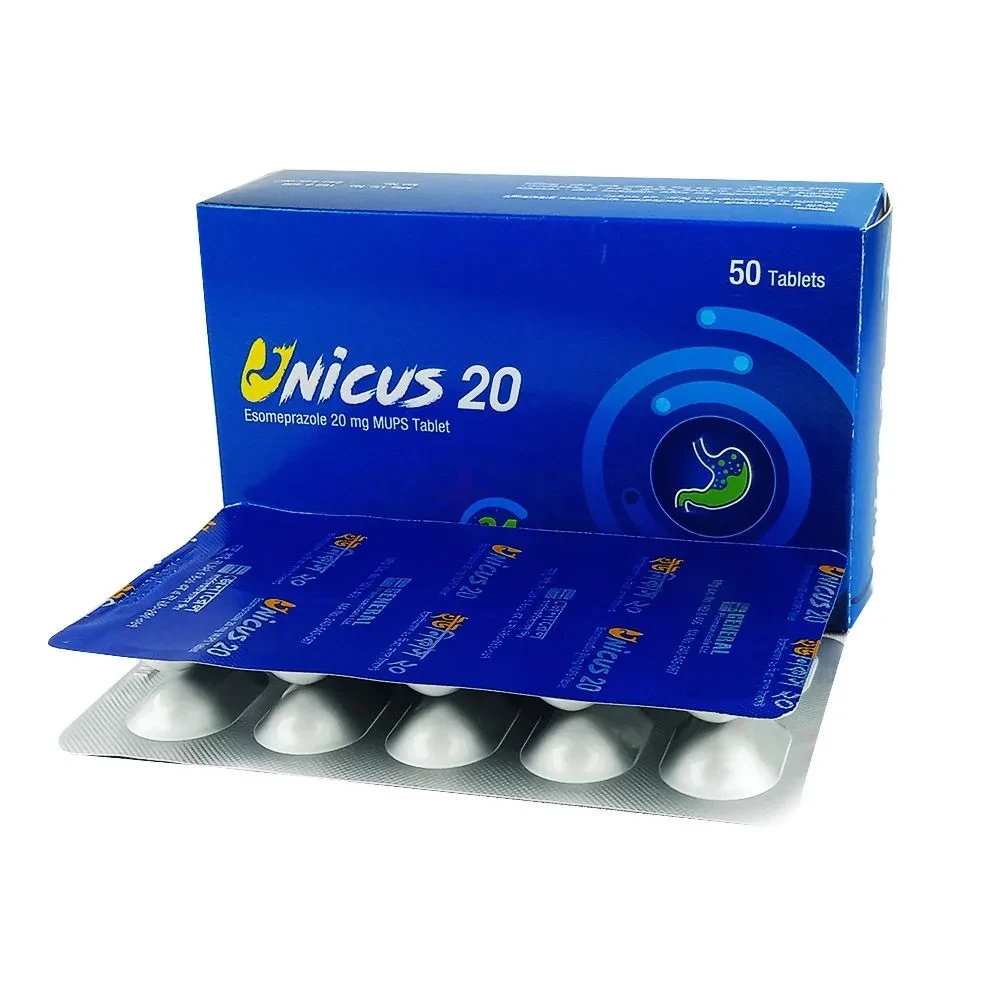
Esomeprazole is a proton pump inhibitor (PPI) used to reduce stomach acid production. The MUPS (Modified Release Tablet) preparation of Esomeprazole provides a controlled release of the drug over time, enhancing its effectiveness and allowing for once-daily dosing. It is commonly used to treat conditions related to excessive stomach acid, such as gastroesophageal reflux disease (GERD) and peptic ulcers.

Uses

Esofour MUPS MUPS Tablet 20 mg is primarily used for:

  • Gastroesophageal reflux disease (GERD)
  • Peptic ulcers
  • Helicobacter pylori eradication (in combination with antibiotics)
  • Prevention of gastric ulcers associated with non-steroidal anti-inflammatory drug (NSAID) use
  • Zollinger-Ellison syndrome
Brand Name Esofour MUPS
Type MUPS Tablet
Weight 20 mg
Generic Esomeprazole (MUPS preparation)
Manufacturer Albion Laboratories Limited
Available in English বাংলা

Mechanism of Action

Esomeprazole works by inhibiting the proton pump in the stomach lining's parietal cells. The proton pump is responsible for secreting hydrogen ions into the gastric lumen, which are the final step in acid production. By blocking this pump, Esomeprazole effectively reduces the amount of stomach acid produced, thereby alleviating symptoms associated with excessive acid secretion and allowing healing of acid-related damage.

How Long Does It Take to Work?

Esomeprazole typically starts to work within 1 to 2 hours of administration, with peak effects usually observed within 4 days of daily dosing. The full therapeutic benefit, such as relief from GERD symptoms, may take 1 to 2 weeks of continuous use to achieve maximum effectiveness.

Absorption

Esomeprazole is well absorbed after oral administration, with peak plasma concentrations reached within 1 to 2 hours. The MUPS formulation allows for a gradual release of the drug, maintaining effective plasma levels over a longer period compared to immediate-release formulations.

Route of Elimination

Esomeprazole is primarily metabolized in the liver by cytochrome P450 enzymes, mainly CYP2C19. The drug and its metabolites are then excreted in the urine, with a small portion eliminated in the feces.

Dosage

Erosive esophagitis-
  • Adult (≥18 years): 40 mg once daily for 4 weeks.
  • Children & adolescents (12-18 years): 40 mg once daily for 4 weeks.
Maintenance of healing of erosive esophagitis-
  • Adult (≥18 years): 20 mg once daily.
  • Children & adolescents (12-18 years): 20 mg once daily.
Risk reduction in NSAID associated gastric ulcer-
  • Adult (≥18 years): 20 mg once daily for 4-8 weeks.
H. pylori eradication (Esomeprazole MUPS tablet with 1000 mg Amoxicillin and 500 mg Clarithromycin)-
  • Adult (≥18 years): 20 mg twice daily for 7 days.
  • Children & adolescents (12-18 years): 20 mg twice daily for 7 days.
Zollinger-Ellison syndrome and idiopathic hypersecretion-
  • Adult (≥18 years): 40-80 mg twice daily.

Children 1-11 years:
  • Erosive esophagitis: Weight <20 kg: 10 mg once daily for 8 weeks. Weight ≥20 kg: 10 mg or 20 mg once daily for 8 weeks
  • Maintenance of healing of erosive esophagitis: 10 mg once daily

Children below the age of 1 year: Esomeprazole MUPS tablet is not approved for use in children younger than 1 year.

Typical dosages of Esofour MUPS MUPS Tablet 20 mg are as follows:

  • GERD: 20 mg to 40 mg once daily for 4 to 8 weeks, depending on the severity and response to treatment.
  • Peptic Ulcers: 40 mg once daily for 4 to 8 weeks.
  • Helicobacter pylori Eradication: 20 mg to 40 mg once daily in combination with appropriate antibiotics, for 10 to 14 days.
  • NSAID-Induced Ulcer Prevention: 20 mg to 40 mg once daily, depending on individual risk factors.
  • Zollinger-Ellison Syndrome: 40 mg twice daily or as directed by a healthcare provider based on individual needs.

Dosage adjustments may be required based on the patient's response and tolerability.

Administration

Esofour MUPS MUPS Tablet 20 mg should be taken orally, swallowed whole with a glass of water. The tablets should not be chewed, crushed, or broken to ensure proper release and absorption. It can be taken with or without food, but it is typically recommended to take it at the same time each day for consistent results.

Side Effects

Common side effects include:

  • Headache
  • Diarrhea
  • Nausea
  • Abdominal pain
  • Flatulence

Serious side effects are less common but may include:

  • Allergic reactions (e.g., rash, itching, swelling)
  • Severe stomach pain
  • Signs of liver dysfunction (e.g., jaundice)
  • Severe kidney issues

If any severe or persistent side effects occur, medical attention should be sought immediately.

Toxicity

Overdose of Esomeprazole may lead to symptoms such as nausea, vomiting, abdominal pain, and diarrhea. In severe cases, it could result in confusion or dizziness. Treatment typically involves symptomatic care and supportive measures. Activated charcoal may be used if the overdose is recent.

Precautions

Precautions should be taken in patients with:

  • Severe liver impairment
  • Renal impairment
  • History of gastric malignancy (long-term use should be monitored)
  • Bone fractures (PPI use has been associated with an increased risk of fractures)

Interaction

Drug Interactions

Esomeprazole may interact with certain drugs, including:

  • Clopidogrel (may reduce its effectiveness)
  • Warfarin (increased risk of bleeding)
  • Ketoconazole or itraconazole (may decrease their absorption)
  • Diazepam (may increase plasma concentrations of the drug)

Always inform your healthcare provider of all medications you are taking to avoid potential interactions.

Food Interactions

Food does not significantly affect the absorption of Esomeprazole. However, it is advisable to avoid alcohol and caffeine, which can exacerbate acid-related symptoms and may counteract the benefits of the medication.

Disease Interactions

Patients with liver disease should use Esomeprazole with caution and may require dose adjustments. Long-term use should be monitored to avoid potential complications.

Pregnancy Use

Esomeprazole is categorized as a Category C drug during pregnancy, meaning that risk to the fetus cannot be ruled out. It should only be used during pregnancy if the potential benefits outweigh the risks and under the guidance of a healthcare provider.

Lactation Use

Esomeprazole is excreted in breast milk in small amounts. While it is generally considered safe during lactation, it should be used only if clearly needed and under the supervision of a healthcare provider. Alternative medications or breastfeeding modifications may be considered if necessary.

Acute Overdose

In the case of acute overdose, symptoms may include nausea, vomiting, and abdominal pain. Treatment involves symptomatic management and supportive care. Activated charcoal may be administered if the overdose is recent.

Contraindication

Esomeprazole is contraindicated in patients with:

  • Hypersensitivity to Esomeprazole or any of its components
  • Severe liver disease (adjustments may be needed)

Use Direction

Esofour MUPS MUPS Tablet 20 mg should be taken as directed by a healthcare provider. It is important to follow the prescribed dosage and avoid altering the form of the tablet. Regular monitoring and follow-up are advised to assess the efficacy and adjust the treatment if needed.

Storage Conditions

Store Esomeprazole tablets at room temperature (15°C to 30°C), away from light and moisture. Keep the medication in its original container and out of reach of children.

Volume of Distribution

The volume of distribution of Esomeprazole is approximately 16 L, indicating moderate tissue distribution, with significant accumulation in the gastric mucosa.

Half-Life

The plasma half-life of Esomeprazole is approximately 1 to 1.5 hours. However, the clinical effects persist longer due to the inhibition of acid secretion, which can last for up to 24 hours.

Clearance

Esomeprazole is primarily cleared through hepatic metabolism, with approximately 80% of the drug excreted in the urine as metabolites. The clearance rate can be affected by liver function and other factors, requiring dose adjustments in some cases.

See in details version Esofour MUPS MUPS Tablet 20 mg also Esofour MUPS MUPS Tablet 20 mg in bangla

Some Frequently Asked Questions About Esofour MUPS MUPS Tablet 20 mg

1. What is esomeprazole (MUPS preparation)?

Esofour MUPS MUPS Tablet 20 mg is a delayed-release formulation of esomeprazole, a proton pump inhibitor (PPI), designed as multiple small pellets within a tablet to reduce stomach acid production.

2. What is esomeprazole (MUPS preparation) used for?

It is used to treat:

  • Gastroesophageal reflux disease (GERD)
  • Peptic ulcers
  • Heartburn
  • Zollinger-Ellison syndrome
  • *H. pylori* infections (with antibiotics)
  • 3. How does esomeprazole (MUPS preparation) work?

    It inhibits proton pumps in the stomach lining, reducing acid secretion, with the MUPS design ensuring gradual release in the intestine.

    4. Is esomeprazole (MUPS preparation) a prescription drug?

    It’s typically available by prescription, though lower-dose esomeprazole is OTC in some regions; MUPS is usually prescription-only.

    5. Who can take esomeprazole (MUPS preparation)?

    It’s suitable for adults and children (with medical supervision), but not for those with severe liver disease or PPI allergies.

    6. How is esomeprazole (MUPS preparation) taken?

    It is taken orally as a tablet, swallowed whole with water, typically before a meal.

    7. What is the typical dosage of esomeprazole (MUPS preparation)?

    Dosage varies:

  • For GERD: 20-40 mg once daily
  • For ulcers: 20-40 mg daily for 4-8 weeks
  • For *H. pylori*: 20 mg twice daily with antibiotics
  • 8. How long does esomeprazole (MUPS preparation) take to work?

    It reduces acid within 1-2 hours, with symptom relief often within 1-4 days.

    9. Can esomeprazole (MUPS preparation) be taken long-term?

    Yes, for chronic conditions like GERD, but long-term use requires monitoring due to risks like nutrient deficiencies.

    10. What does MUPS mean in esomeprazole (MUPS preparation)?

    MUPS stands for Multiple-Unit Pellet System, a design with small enteric-coated pellets that release esomeprazole gradually in the intestine.

    11. What are the common side effects of esomeprazole (MUPS preparation)?

    Common side effects include:

  • Headache
  • Nausea
  • Diarrhea
  • Abdominal pain
  • 12. Can esomeprazole (MUPS preparation) cause weight gain?

    It’s not directly linked to weight gain, but improved digestion might increase appetite.

    13. Does esomeprazole (MUPS preparation) affect bones?

    Long-term use may increase fracture risk due to reduced calcium absorption.

    14. Can esomeprazole (MUPS preparation) be taken with food?

    It’s best taken 30-60 minutes before a meal for optimal effect.

    15. What happens if I miss a dose of esomeprazole (MUPS preparation)?

    Take it as soon as you remember unless it’s near the next dose; then skip it. Don’t double up.

    16. Can I overdose on esomeprazole (MUPS preparation)?

    Overdose is rare but may cause drowsiness, confusion, or rapid heartbeat. Seek help if suspected.

    17. Is esomeprazole (MUPS preparation) safe during pregnancy?

    It’s Category B; generally safe, but consult a doctor due to limited data.

    18. Can breastfeeding mothers take esomeprazole (MUPS preparation)?

    Yes, it’s considered safe in small amounts in breast milk, but confirm with a doctor.

    19. Does esomeprazole (MUPS preparation) interact with other medications?

    Yes, it interacts with:

  • Clopidogrel (reduces effectiveness)
  • Warfarin (increases bleeding risk)
  • Methotrexate (increases levels)
  • 20. Can I drink alcohol while taking esomeprazole (MUPS preparation)?

    Yes, but alcohol may worsen acid reflux or stomach irritation.

    21. Is esomeprazole (MUPS preparation) safe for people with kidney disease?

    Yes, it’s generally safe, though monitoring is advised in severe cases.

    22. Can esomeprazole (MUPS preparation) be used in liver disease?

    Use with caution in severe liver disease, as it’s metabolized by the liver.

    23. How should esomeprazole (MUPS preparation) be stored?

    Store at room temperature, away from moisture and heat; protect from humidity due to the pellet system.

    24. Does esomeprazole (MUPS preparation) expire?

    Yes, check the expiration date; expired tablets may lose potency.

    25. Can esomeprazole (MUPS preparation) cause drowsiness?

    It’s uncommon, but some report fatigue or dizziness.

    26. How is esomeprazole (MUPS preparation) different from regular esomeprazole?

    The MUPS form uses multiple pellets for more consistent release and absorption compared to single-unit capsules or tablets.

    27. Can esomeprazole (MUPS preparation) treat heartburn?

    Yes, it’s effective for frequent heartburn, though OTC versions are typically not MUPS.

    28. Does esomeprazole (MUPS preparation) cause diarrhea?

    Yes, diarrhea is a common side effect, especially initially.

    29. Can esomeprazole (MUPS preparation) help with bloating?

    It doesn’t directly treat bloating but may ease acid-related discomfort.

    30. Is esomeprazole (MUPS preparation) gluten-free?

    Most formulations are gluten-free, but confirm with the manufacturer.

    31. Can esomeprazole (MUPS preparation) be crushed or chewed?

    No, it must be swallowed whole; crushing disrupts the delayed-release pellets.

    32. What if I’m allergic to esomeprazole (MUPS preparation)?

    Rare allergic reactions (rash, swelling) may occur. Stop use and seek help.

    33. Can esomeprazole (MUPS preparation) cause vitamin deficiencies?

    Long-term use may reduce absorption of vitamin B12, magnesium, and calcium.

    34. Does esomeprazole (MUPS preparation) affect blood pressure?

    No direct effect on blood pressure is noted.

    35. Can esomeprazole (MUPS preparation) treat gastritis?

    Yes, it reduces acid to help heal gastritis, often with other treatments.

    36. Is esomeprazole (MUPS preparation) safe for children?

    Yes, for children over 1 year with a doctor’s prescription, dosed by weight.

    37. Can esomeprazole (MUPS preparation) cause headaches?

    Yes, headaches are a common, usually mild side effect.

    38. Does esomeprazole (MUPS preparation) need refrigeration?

    No, store at room temperature; avoid moisture exposure.

    39. Can esomeprazole (MUPS preparation) be used for nausea?

    It’s not a nausea treatment but may help if acid reflux causes it.

    40. What’s the difference between esomeprazole (MUPS preparation) and omeprazole?

    Esomeprazole is the S-isomer of omeprazole, potentially more potent; MUPS is a specific delivery form.

    41. Can esomeprazole (MUPS preparation) cause kidney problems?

    Rarely, long-term use has been linked to kidney damage; monitor with a doctor.

    42. Is esomeprazole (MUPS preparation) available as a generic?

    Yes, generic esomeprazole MUPS tablets are available, alongside brands like Nexium MUPS.

    43. Can esomeprazole (MUPS preparation) be taken at night?

    It’s usually taken in the morning, but a doctor may adjust timing for nighttime symptoms.

    44. Does esomeprazole (MUPS preparation) affect the liver?

    Rarely, it may elevate liver enzymes; report yellowing skin to a doctor.

    45. Can esomeprazole (MUPS preparation) be used for acid reflux?

    Yes, it’s a primary treatment for acid reflux and GERD.

    46. What should I do if it doesn’t work?

    Consult your doctor; the dose may need adjustment or another condition may be present.

    47. Can esomeprazole (MUPS preparation) cause constipation?

    Yes, though less common than diarrhea, it’s a possible side effect.

    48. Does esomeprazole (MUPS preparation) interact with caffeine?

    No significant interaction, but caffeine may worsen reflux symptoms.

    49. Can esomeprazole (MUPS preparation) be stopped abruptly?

    Stopping may cause rebound acid production; taper off under medical advice for long-term use.

    *** Taking medicines without doctor's advice can cause long-term problems.
    Dr. Md. Mahbubul Alam

    Dr. Md. Mahbubul Alam

    Child Diseases Specialist

    Call Doctor
    Prof. Dr. Basana Muhuri

    Prof. Dr. Basana Muhuri

    Child Diseases, Autism & Pediatric Nephrology Specialist

    Call Doctor
    Related Medicines