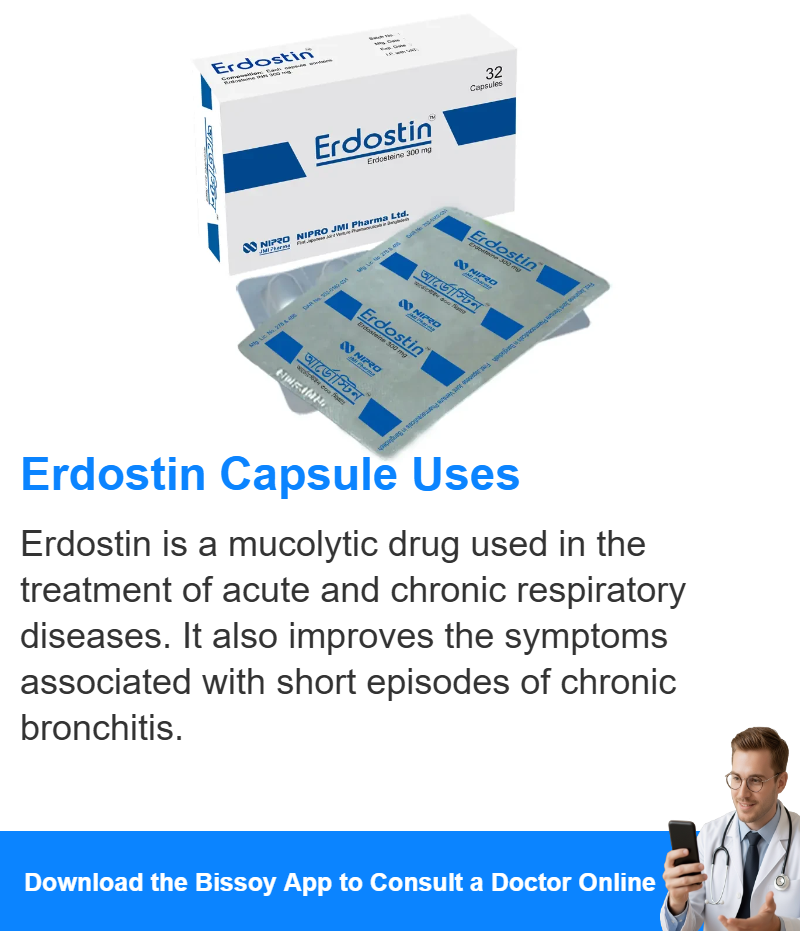
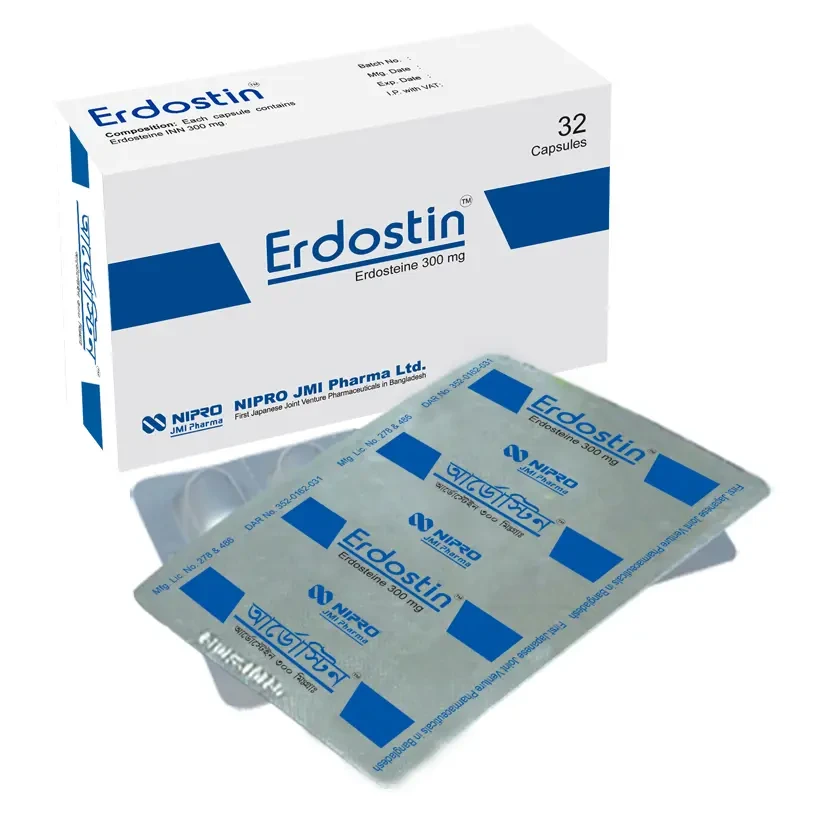
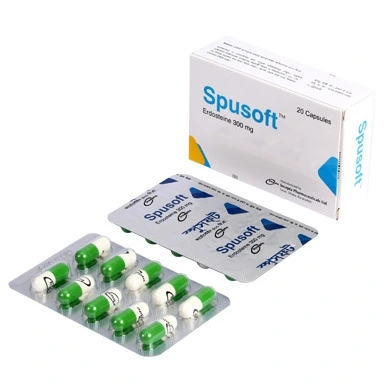
Erdostin Capsule 300 mg is a mucolytic agent used to manage chronic obstructive pulmonary disease (COPD), bronchitis, and other respiratory conditions characterized by excessive mucus production. It helps in thinning and loosening mucus in the airways, making it easier to cough up and clear from the lungs.
Erdostin Capsule 300 mg is primarily used in the treatment of chronic bronchitis, COPD, and other respiratory conditions where mucus production is a concern. It is effective in reducing the viscosity of mucus and improving mucus clearance, which helps in alleviating symptoms such as coughing and difficulty breathing.
| Brand Name | Erdostin |
|---|---|
| Type | Capsule |
| Weight | 300 mg |
| Generic | Erdosteine |
| Manufacturer | NIPRO JMI Pharma Ltd. |
| Available in | English বাংলা |
Erdostin Capsule 300 mg works by breaking down the disulfide bonds in mucus, which decreases its viscosity and elasticity. This process helps to thin the mucus, making it less sticky and easier to expel from the respiratory tract. Additionally, Erdostin Capsule 300 mg has antioxidant properties that help protect the respiratory tissues from oxidative damage.
The onset of action of Erdostin Capsule 300 mg can vary among individuals, but it generally starts to work within a few days of treatment. The full therapeutic effects, including improved mucus clearance and reduced respiratory symptoms, may become more evident after a week or two of consistent use.
Erdostin Capsule 300 mg is well absorbed from the gastrointestinal tract after oral administration. Peak plasma concentrations are typically reached within 1 to 2 hours. The bioavailability of Erdostin Capsule 300 mg is influenced by food intake, and it is usually recommended to take it on an empty stomach for optimal absorption.
Erdostin Capsule 300 mg is primarily metabolized in the liver. The drug and its metabolites are excreted mainly through the urine. The elimination process involves hepatic metabolism followed by renal excretion, which helps in clearing the drug from the body.
The typical dosage of Erdostin Capsule 300 mg for adults is 300 mg taken orally twice daily. The dosage may be adjusted based on the severity of the condition and the patient’s response to treatment. For chronic conditions, treatment may continue for several weeks to achieve the best results. Always follow the specific dosing instructions provided by a healthcare provider.
Erdostin Capsule 300 mg is administered orally, usually in the form of tablets or capsules. It should be taken with a full glass of water. For optimal results, Erdostin Capsule 300 mg is best taken on an empty stomach, at least 30 minutes before a meal, to enhance absorption.
Common side effects of Erdostin Capsule 300 mg may include gastrointestinal disturbances such as nausea, vomiting, and diarrhea. Some individuals may experience abdominal pain or discomfort. Rarely, allergic reactions such as rash or itching may occur. If any severe or persistent side effects are experienced, medical attention should be sought.
Acute overdose of Erdostin Capsule 300 mg is rare but may result in gastrointestinal symptoms such as severe nausea and vomiting. Treatment for overdose typically involves supportive care, including symptomatic management and monitoring. There is no specific antidote for Erdostin Capsule 300 mg overdose, so treatment focuses on alleviating symptoms and providing supportive care.
Precautions should be taken in patients with liver impairment or a history of gastrointestinal disorders, as Erdostin Capsule 300 mg can affect liver function and cause gastrointestinal disturbances. It is also important to monitor for any allergic reactions or adverse effects during treatment. Consult with a healthcare provider before starting Erdostin Capsule 300 mg, especially if other medications or health conditions are present.
Erdostin Capsule 300 mg may interact with other medications, particularly those affecting liver metabolism. It is important to inform healthcare providers of all other medications being taken to avoid potential interactions. Avoid combining Erdostin Capsule 300 mg with drugs that may cause gastrointestinal irritation or other adverse effects.
Use Erdostin Capsule 300 mg with caution in patients with liver disease or gastrointestinal disorders. The drug’s metabolism and effects may be altered in these conditions, requiring close monitoring and potential dosage adjustments. Ensure that the healthcare provider is aware of any pre-existing health conditions.
Drug interactions with Erdostin Capsule 300 mg can occur with medications that are metabolized by the liver or those that have similar side effects, such as gastrointestinal irritants. It is important to discuss all medications being taken with a healthcare provider to manage potential interactions effectively.
Food intake can affect the absorption of Erdostin Capsule 300 mg. It is recommended to take Erdostin Capsule 300 mg on an empty stomach to ensure optimal absorption. Consuming food shortly before or after taking the medication may reduce its effectiveness.
Erdostin Capsule 300 mg is classified as Category C for pregnancy, indicating that risk to the fetus cannot be ruled out. It should be used during pregnancy only if the potential benefits outweigh the risks. Consult with a healthcare provider to evaluate the need for treatment and consider alternative therapies if necessary.
The safety of Erdostin Capsule 300 mg during lactation is not fully established. It is advised to use caution and consider the benefits and risks of treatment when breastfeeding. Alternative treatments may be considered, and the infant should be monitored for any potential adverse effects if Erdostin Capsule 300 mg is used.
In case of acute overdose, symptoms may include severe gastrointestinal disturbances such as nausea and vomiting. Treatment involves supportive care, including monitoring of vital signs and symptomatic management. There is no specific antidote for Erdostin Capsule 300 mg overdose.
Erdostin Capsule 300 mg is contraindicated in patients with known hypersensitivity to the drug or any of its components. It should also be avoided in patients with severe liver impairment or active gastrointestinal bleeding.
Use Erdostin Capsule 300 mg exactly as prescribed by a healthcare provider. Follow the recommended dosage and administration instructions carefully. Avoid taking it with food to maximize absorption, and consult with a healthcare provider for any questions or concerns regarding the use of this medication.
Store Erdostin Capsule 300 mg at room temperature, away from moisture and direct light. Keep the medication in its original packaging and out of reach of children. Do not use the medication past its expiration date, and follow any additional storage instructions provided by the manufacturer or healthcare provider.
The volume of distribution of Erdostin Capsule 300 mg is approximately 0.7 to 1.5 L/kg, indicating that the drug is distributed throughout the body’s tissues and fluids, which is necessary for its therapeutic effects in the respiratory tract.
The elimination half-life of Erdostin Capsule 300 mg is approximately 2 to 4 hours. This short half-life necessitates frequent dosing to maintain effective therapeutic levels in the body and ensure continuous mucus thinning and clearance.
Erdostin Capsule 300 mg is primarily cleared through hepatic metabolism and renal excretion. The clearance rate can be influenced by liver function and other factors, which may require adjustments in dosing for patients with hepatic or renal impairment.
See in details version Erdostin Capsule 300 mg also Erdostin Capsule 300 mg in bangla