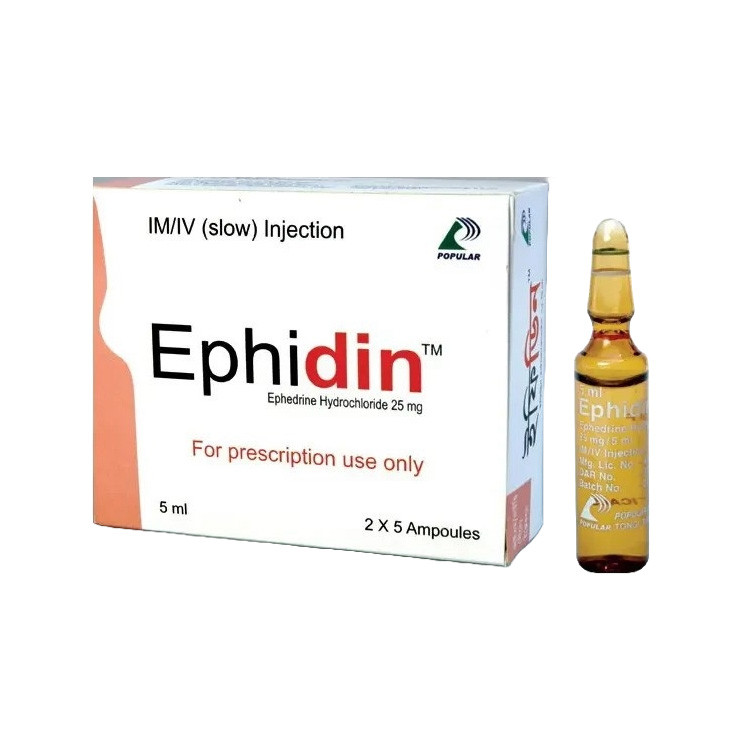
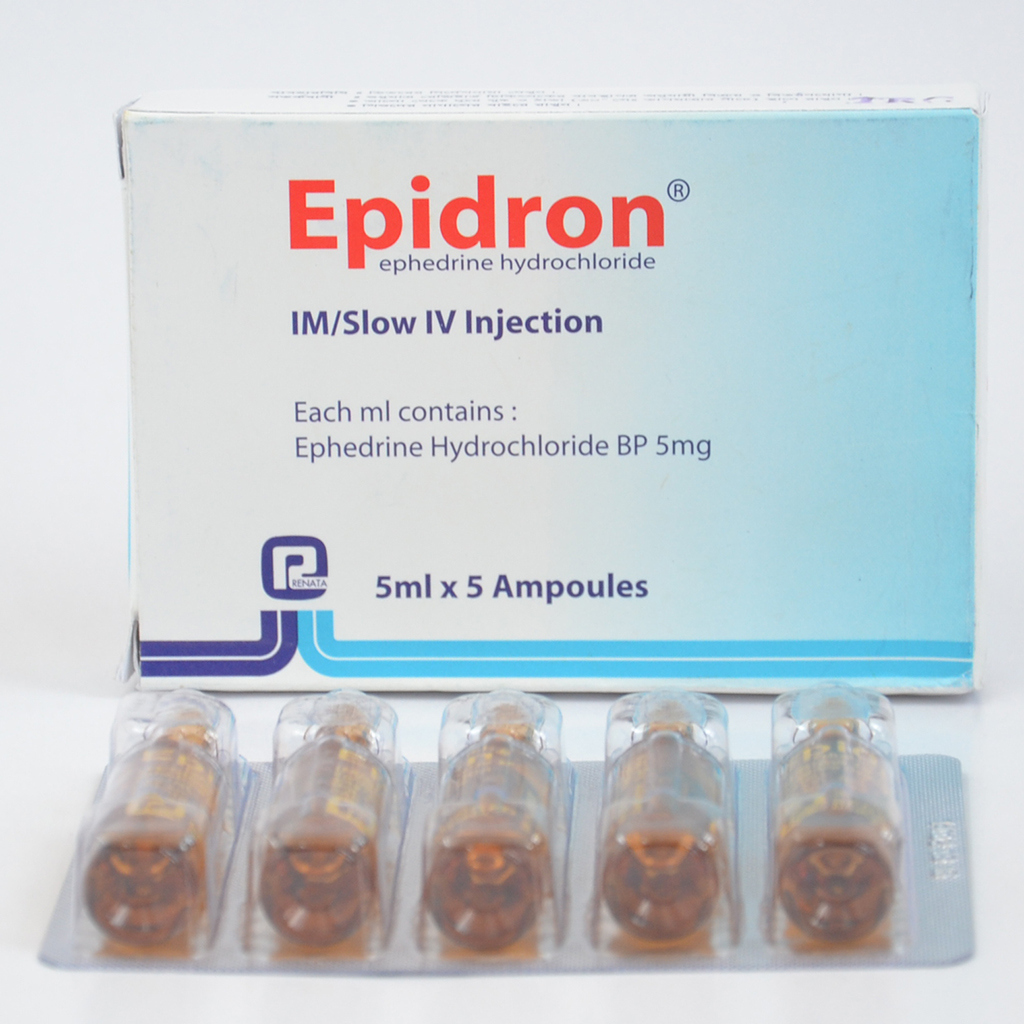
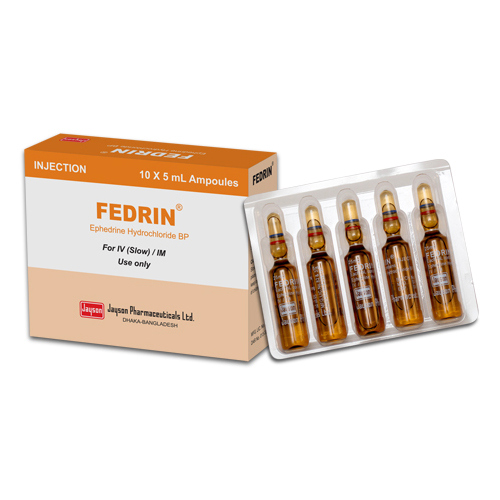
Introduction
Ephedrine was first described in western literature in 1888, as a naturally occurring component of the ephedra plant, along with pseudoephedrine. Ephedrine is an adrenergic receptor agonist used for its vasoconstrictive, positive chronotropic, and positive inotropic effects. Ephedrine and phenylephrine are still commonly used to treat hypotension but their use in other indications has decreased due to the development of more selective adrenergic agonists.
Uses
Ephedrine is an alpha and beta-adrenergic agonist indicated to treat hypotension under anesthesia, allergic conditions, bronchial asthma, and nasal congestion.
Ephedrine intravenous injections are indicated to treat hypotension under anesthesia, ephedrine injections by multiple routes are indicated to treat allergic conditions such as bronchial asthma, ephedrine nasal spray is and OTC medication used as a decongestant.
Associated Conditions
Pharmacodynamics
Ephedrine is a sympathomimetic amine that activates adrenergic receptors, increasing heart rate and blood pressure, and causing bronchodilation. The therapeutic window is wide as patients can be given doses of 5mg up to 50mg. Patients should be counselled regarding the pressor effects of sympathomimetic amines and the risk of tachyphylaxis.
Mechanism of Action
Ephedrine is a direct and indirect sympathomimetic amine. Ephedrine activates adrenergic α and β-receptors as well as inhibiting norepinephrine reuptake, and increasing the release of norepinephrine from vesicles in nerve cells. These actions combined lead to larger quantities of norepinephrine present in the synapse, for longer periods of time, increasing stimulation of the sympathetic nervous system. Ephedrine's stimulation of α-1 receptors causes constriction of veins and a rise in blood pressure, stimulation of β-1 adrenergic receptors increase cardiac chronotropy and inotropy, stimulation of β-2 adrenergic receptors causes bronchodilation.
Absorption
Oral ephedrine reaches an average Cmax of 79.5ng/mL, with a Tmax of 1.81h, and a bioavailability of 88%.
Volume of Distribution
Oral ephedrine has an average volume of distribution of 215.6L.
Protein Binding
(-) Ephedrine is 4.9±0.3% bound to human serum albumin and (+) Ephedrine is 6.9±1.4% bound to human serum albumin.
Route of Elimination
Ephedrine is mainly eliminated in the urine. Approximately 60% is eliminated as the unmetabolized parent compound, 13% as benzoic acid conjugates, and 1% as 1,2-dihydroxypropylbenzene.
Half Life
Oral ephedrine has a plasma elimination half life of approximately 6 hours, but there is a large degree of inter-patient variability.
Clearance
Oral ephedrine has a clearance of 23.3L/h but there is a high degree of inter-patient variability.
Toxicity
Patients experiencing an overdose of ephedrine will present with rapidly increasing blood pressure. Manage overdose with blood pressure monitoring, and possibly the administration of parenteral antihypertensives. The LD50 in mice after oral administration is 785mg/kg, after intraperitoneal administration if 248mg/kg, and after subcutaneous administration is 425mg/kg.
Food Interactions
No interactions found.