Introduction
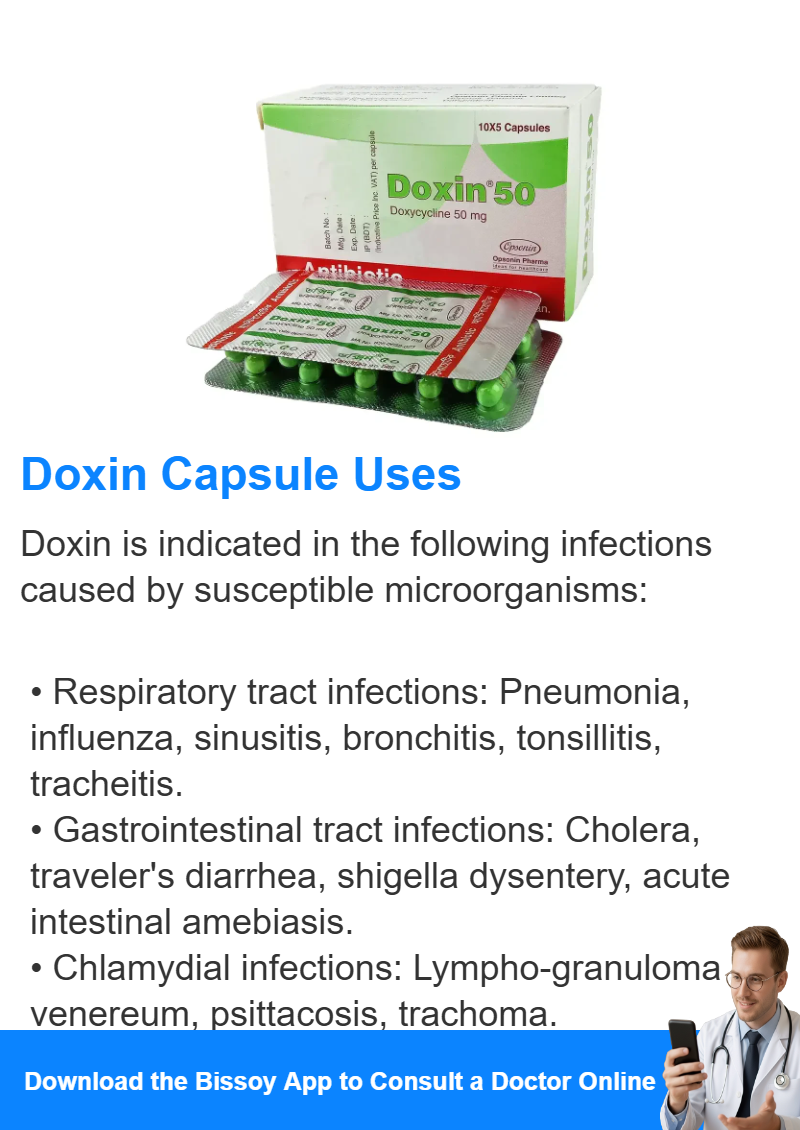
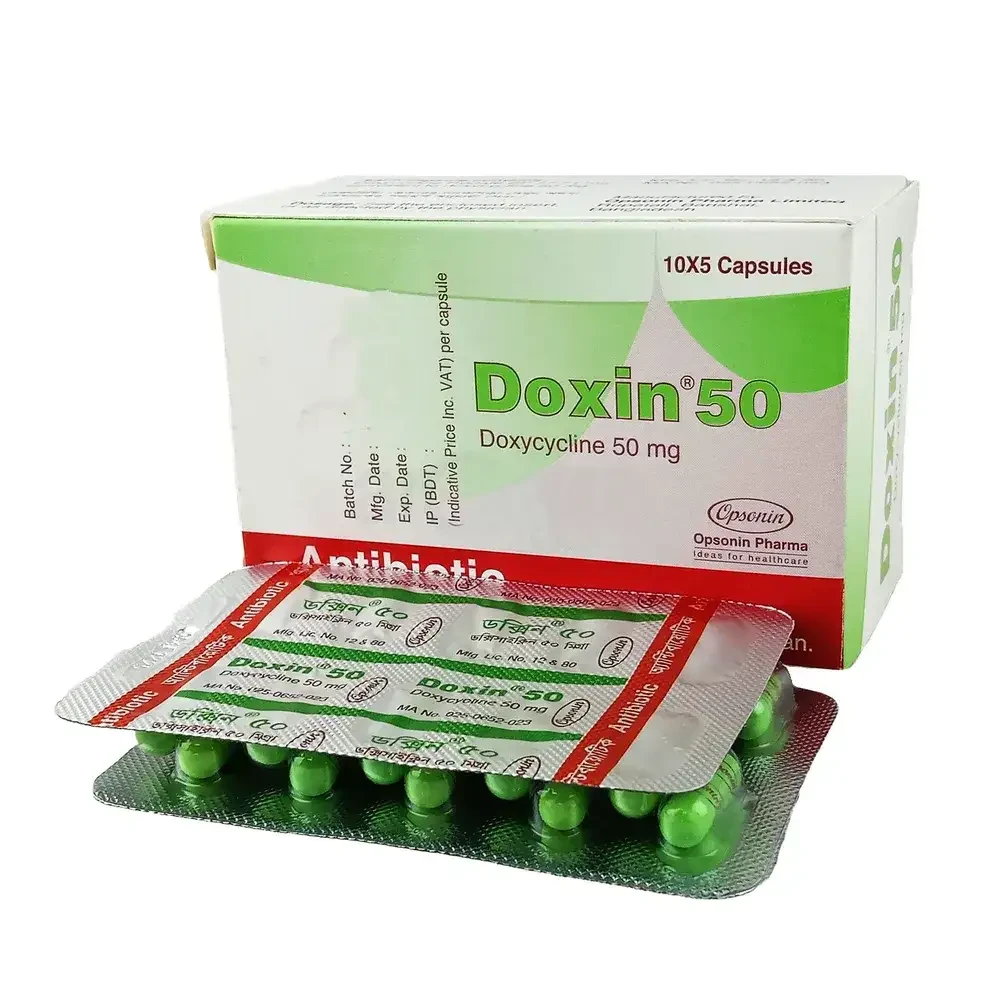
Doxycycline is a broad-spectrum antibiotic synthetically derived from oxytetracycline . This drug is a second-generation tetracycline, exhibiting lesser toxicity than first-generation tetracyclines . Doxycycline may be used to treat a wide range of bacterial infections, depending on the results of antibiotic susceptibility testing.
Uses
Doxycycline is a tetracycline antibiotic used to treat a wide variety of bacterial infections.
Doxycycline is indicated for the treatment of various infections by gram-positive and gram-negative bacteria, aerobes and anaerobes, as well other types of bacteria. A complete list of organisms is available in the FDA label and in the "indications" section of this drug entry .
The following are some of the major infections that may be treated with doxycycline :
Rocky mountain spotted fever, typhus fever and the typhus group, Q fever, rickettsialpox, and tick fevers caused by Rickettsiae
Respiratory tract infections caused by Mycoplasma pneumoniae
Lymphogranuloma venereum caused by Chlamydia trachomatis
Psittacosis (ornithosis) caused by Chlamydia psittaci
Trachoma caused by Chlamydia trachomatis, although the infectious agent is not always eliminated as judged by immunofluorescence
Inclusion conjunctivitis caused by Chlamydia trachomatis
Uncomplicated urethral, endocervical or rectal infections in adults caused by Chlamydia trachomatis
Nongonococcal urethritis caused by Ureaplasma urealyticum
Relapsing fever due to Borrelia recurrentis
A note regarding anti-microbial resistance
It is important to note that doxycycline is not the drug of choice in the treatment of any type of staphylococcal infection. Up to 44 percent of strains of Streptococcus pyogenes and 74 percent of Streptococcus faecalis have been found to be resistant to tetracyclines. Therefore, tetracyclines such as doxycycline should not be used to treat streptococcal infections unless the microorganism has been demonstrated to be susceptible .
Associated Conditions
Pharmacodynamics
The tetracyclines, including doxycycline, are mainly bacteriostatic and are thought to exert antimicrobial effects by the inhibition of protein synthesis. Bacteriostatic antibiotics suppress the growth of bacteria, or keep them in the stationary phase of growth . The tetracyclines, including doxycycline, have a similar antimicrobial spectrum of activity against a variety of gram-positive and gram-negative microorganisms, treating numerous infectious diseases. Cross-resistance of these microorganisms to tetracyclines is a common occurrence . Doxycycline shows favorable intra-cellular penetration, with bacteriostatic activity on a wide range of bacteria . Doxycycline has antiparasitic effects , , . In addition to the above effects, this drug has demonstrated anti-inflammatory actions, which may help to manage inflammatory conditions such as rosacea .
Mechanism of Action
In bacterial replication, an interaction that is important for translation initiation of proteins occurs at the 3′ end of the 16S rRNA, found on the ribosome on the 30S subunit , , . The 30S subunit is the smaller subunit of the ribosome of prokaryotes, including bacteria.
Tetracyclines such as doxycycline are thought to inhibit translation by binding to the 16S rRNA portion of the ribosome , preventing binding of tRNA to the RNA-30S bacterial ribosomal subunit, which is necessary for the delivery of amino acids for protein synthesis. As a result of the above actions, the initiation of protein synthesis by polyribosome formation is blocked. This stops the replication of bacteria and produces a bacteriostatic effect .
Absorption
Tetracyclines, such as doxycycline, are readily absorbed and are bound to plasma proteins by varying degrees. Doxycycline is almost completely absorbed after oral administration. This drug is highly lipid soluble and has a low affinity for calcium binding . Absorption is not significantly affected by the concomitant ingestion of food or milk . Peak serum levels of approximately 2.6 mcg/ml are reached at 2 hours following a 200 mg tablet oral dose .
Volume of Distribution
Doxycycline diffuses readily into most body tissues, fluid and/or cavities and the volume of distribution has been measured as 0.7 L/kg .
Protein Binding
>90% , .
Route of Elimination
Mainly the urine and feces as active and unchanged drug . Between 40% and 60% of an administered dose can be accounted for in the urine by 92 hours, and approximately 30% can be accounted for in the feces .
Half Life
16.33 hr (± 4.53 sd) .
Clearance
The excretion of doxycycline by the kidney is about 40% over 72 hours in individuals with normal kidney function (creatinine clearance approximately 75 mL/min). This rate may fall as low as 1-5% over 72 hours in individuals with severe renal insufficiency (creatinine clearance below 10 mL/min). Some clinical studies have shown no major difference in serum half-life of doxycycline (range 18-22 hours) in patients with normal and severely impaired renal function. Hemodialysis does not affect serum half-life of doxycycline .
Toxicity
There are various precautions to be undertaken while doxycyline is administered . A full list of adverse events is included in the "Adverse Effects" section of this drug entry.
A note on tooth development and tetracycline use
The use of tetracyclines, including doxycycline, during tooth development (i.e. the last half of pregnancy, throughout infancy, and in childhood up to 8 years of age) may lead to tooth enamel hypoplasia and yellow-gray discoloration of teeth. It is advisable not to administer doxycycline in this age group according to the FDA label, except for in cases of post-exposure cases of anthrax (including inhalational anthrax) . Other sources state that doxycycline should not be administered in children under 12 years .
A note on Clostridium difficile Clostridium difficile associated diarrhea (CDAD) and antibiotic associated pseudomembranous colitis may result from doxycycline use. Administering antibacterial agents changes the normal flora of the colon leading to an overgrowth of C. difficile. This bacteria produces toxins A and B, which contribute to the development of CDAD . in moderate to severe cases, therapy with a suitable oral antibacterial agent effective against Clostridium difficile should be considered. Fluids, electrolytes and protein replacement should be provided when warranted .
A note on gastrointestinal irritation Gastrointestinal irritation may also occur. Rarely, esophagitis and esophageal ulcers have been reported in patients receiving doxycycline. Most of these patients took medication immediately before going to bed. Administration of appropriate amounts of fluid with the tablets is recommended to reduce the risk of esophageal irritation and ulceration, and late evening ingestion of the dose should be avoided . To decrease the risk of gastric irritation, it is recommended that doxycycline is taken with food or milk. The absorption of doxycycline is not significantly influenced by simultaneous ingestion of food or milk .
Pregnancy Results of animal research indicate that tetracyclines cross the placenta, are found in fetal tissues and exert toxic effects on the developing fetus, manifested by retardation of skeletal development. The importance of this in humans is not known, however, doxycycline should not be used in pregnant women unless the benefit significantly outweighs the risk .
Carcinogenicity In vivo studies conducted in rats and mice have not provided conclusive evidence that tetracyclines may be carcinogenic or that they affect fertility. In two mammalian cell lines, positive tests for mutagenicity occurred at concentrations of 60 and 10 mcg/ml respectively. In humans, no association between tetracyclines and these effects have been established .
Food Interactions
- Avoid alcohol.
- Avoid multivalent ions. Calcium, iron, and aluminum containing products taken up to 2 hours before and 6 hours after administration can decrease drug concentrations.
- Take with a full glass of water.
Dosage
Severe infections (including refractory urinary tract infections): 200 mg daily for 10 days.
Acne: 100 mg daily.
Uncomplicated genital chlamydia, non-gonococcal urethritis: 100 mg twice daily for 7-21 days (14-21 days in pelvic inflammatory disease).