Introduction
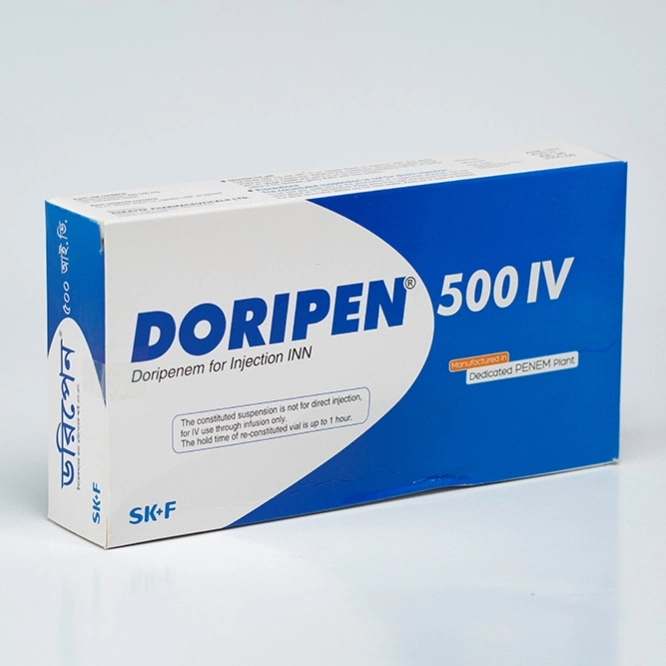
Doripen IV Infusion 250 mg/vial is a broad-spectrum antibiotic belonging to the class of carbapenems. It is used for the treatment of various bacterial infections by inhibiting bacterial cell wall synthesis. It is effective against a wide range of Gram-positive and Gram-negative bacteria, including some that are resistant to other antibiotics.
Uses
Doripen IV Infusion 250 mg/vial is primarily used for the treatment of complicated intra-abdominal infections, complicated urinary tract infections, and complicated skin and soft tissue infections. It is also used in hospital settings for serious infections where other antibiotics might not be effective.
| Brand Name | Doripen |
|---|---|
| Type | IV Infusion |
| Weight | 250 mg/vial |
| Generic | Doripenem |
| Manufacturer | Eskayef Pharmaceuticals Ltd. |
| Available in | English বাংলা |
Mechanism of Action
Doripen IV Infusion 250 mg/vial works by inhibiting bacterial cell wall synthesis. It binds to penicillin-binding proteins (PBPs) in the bacterial cell wall, which prevents the cross-linking of peptidoglycan layers. This disruption leads to bacterial cell lysis and death.
How Long Does It Take to Work?
Clinical improvement is typically observed within 48 to 72 hours of starting Doripen IV Infusion 250 mg/vial, though it may vary depending on the severity and type of infection.
Absorption
Doripen IV Infusion 250 mg/vial is administered intravenously, so it does not undergo absorption through the gastrointestinal tract. Its bioavailability is therefore complete when given by IV administration.
Route of Elimination
Doripen IV Infusion 250 mg/vial is primarily eliminated through the kidneys. It is excreted unchanged in the urine, with minimal amounts eliminated through the bile.
Dosage
The recommended dosage of Doripenem is 500 mg administered every 8 hours by intravenous infusion over one hour in patients >18 years of age-- Complicated intra-abdominal infection: 500 mg every 8 hours for 5-14 days. Infusion time: 1 hour.
- Complicated UTI, including pyelonephritis: 500 mg every 8 hours for 10 days. Infusion time: 1 hour.
- CrCI >50 mL/min: No dosage adjustment necessary
- CrCI ≥30 to ≤ 50 mL/min: 250 mg administered intravenously (over 1 hour) every 8 hours.
- CrCI >10 to <30 mL/min: 250 mg administered intravenously (over 1 hour) every 12 hours.
The usual dosage for Doripen IV Infusion 250 mg/vial in adults is 500 mg administered intravenously every 8 hours. The duration of therapy depends on the type and severity of the infection but typically ranges from 5 to 14 days.
Administration
Doripen IV Infusion 250 mg/vial is administered intravenously. It should be given over a period of 1 hour to avoid potential side effects. The dosage and duration should be adjusted based on the patient’s condition and response to treatment.
Side Effects
Common side effects include nausea, diarrhea, headache, rash, and phlebitis at the injection site. Serious side effects may include allergic reactions, seizures, and Clostridium difficile-associated diarrhea.
Toxicity
High doses or prolonged use of Doripen IV Infusion 250 mg/vial may lead to toxicity, including neurological symptoms such as seizures. Monitoring kidney function and adjusting the dosage in cases of renal impairment is essential to prevent toxicity.
Precautions
Precautions should be taken in patients with a history of seizures, renal impairment, or hypersensitivity to beta-lactam antibiotics. Dosage adjustments may be required for patients with renal issues.
Interaction
Doripen IV Infusion 250 mg/vial may interact with other medications, including probenecid, which can increase its levels in the blood and enhance its side effects. Caution is advised when used with other nephrotoxic drugs.
Disease Interaction
Special caution is needed in patients with renal disease as Doripen IV Infusion 250 mg/vial is predominantly eliminated by the kidneys. It should be used with care in patients with a history of seizures or central nervous system disorders.
Drug Interaction
Doripen IV Infusion 250 mg/vial may interact with certain drugs, including valproic acid, potentially reducing its levels and efficacy. Monitoring and dose adjustments may be necessary when used concurrently with such medications.
Food Interactions
As Doripen IV Infusion 250 mg/vial is administered intravenously, food interactions are not a concern. However, oral medications should be managed with care to avoid interactions that could affect Doripen IV Infusion 250 mg/vial treatment.
Pregnancy Use
Doripen IV Infusion 250 mg/vial falls under Category B for pregnancy, indicating that it is not expected to be harmful to an unborn baby based on animal studies. However, its use should be considered only if the benefits outweigh the risks.
Lactation Use
It is not known if Doripen IV Infusion 250 mg/vial is excreted in human breast milk. Caution is advised when administering Doripen IV Infusion 250 mg/vial to nursing mothers. The decision to use this drug should consider potential benefits and risks to the infant.
Acute Overdose
Acute overdose may lead to symptoms such as seizures and gastrointestinal disturbances. Treatment should include supportive measures and symptomatic management. Dialysis may help to remove excess Doripen IV Infusion 250 mg/vial from the bloodstream.
Contraindication
Doripen IV Infusion 250 mg/vial is contraindicated in patients with a known hypersensitivity to carbapenems, other beta-lactam antibiotics, or any component of the formulation.
Use Direction
Doripen IV Infusion 250 mg/vial should be administered strictly according to the prescribed dosage and duration. Ensure proper hydration and monitor for any adverse effects during treatment.
Storage Conditions
Doripen IV Infusion 250 mg/vial should be stored at 25°C (77°F), protected from light and moisture. Do not freeze. Once reconstituted, the solution should be used within the recommended time frame.
Volume of Distribution
The volume of distribution of Doripen IV Infusion 250 mg/vial is approximately 20-30 liters, indicating its extensive distribution in body tissues and fluids.
Half Life
The elimination half-life of Doripen IV Infusion 250 mg/vial is approximately 1 hour, which necessitates frequent dosing to maintain effective drug levels.
Clearance
Doripen IV Infusion 250 mg/vial clearance is primarily renal, with approximately 70-90% of the drug excreted unchanged in the urine. Renal function should be monitored to adjust dosing as necessary.
See in details version Doripen IV Infusion 250 mg/vial also Doripen IV Infusion 250 mg/vial in bangla
Social card

Some Frequently Asked Questions About Doripen IV Infusion 250 mg/vial