Introduction
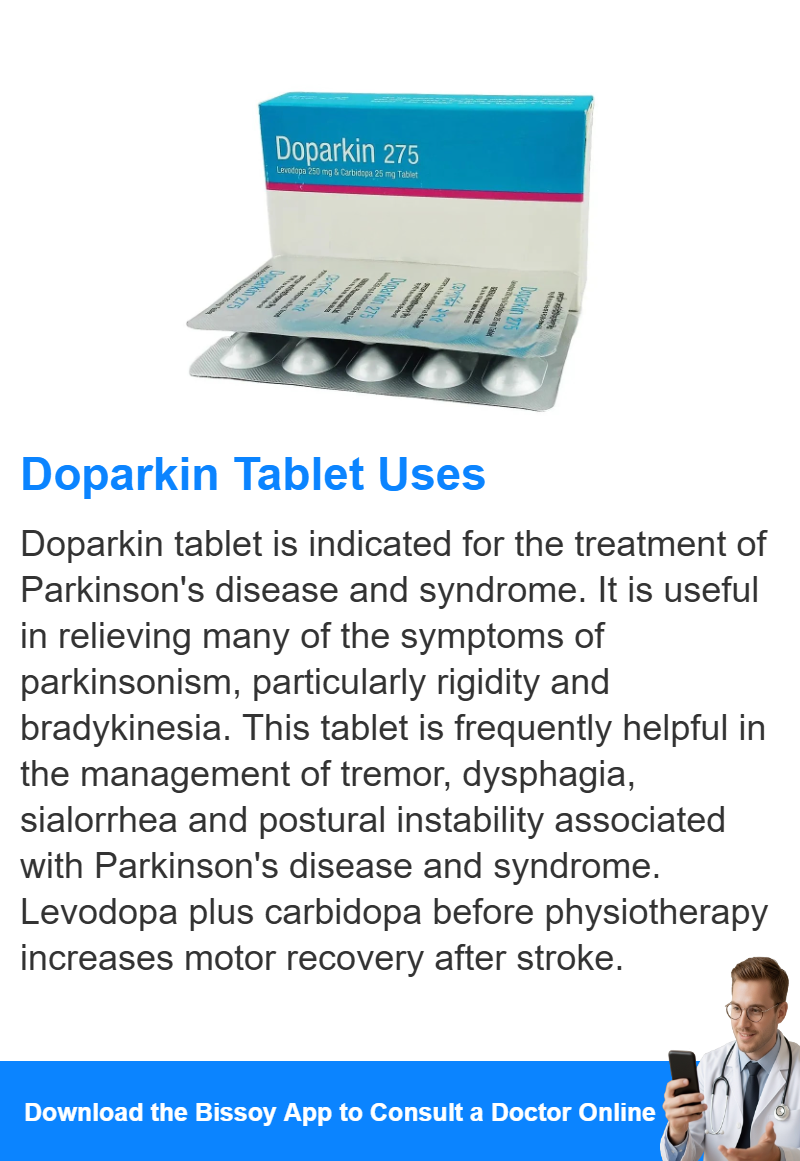
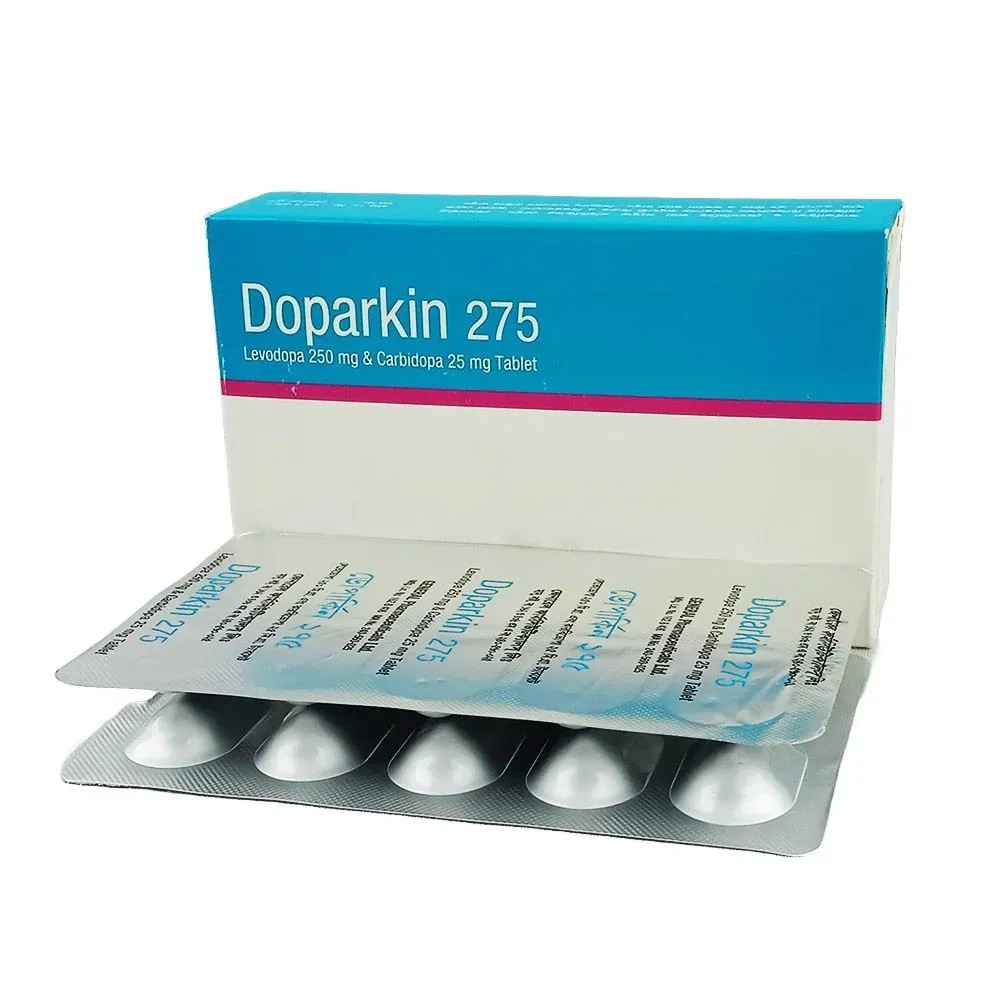
Doparkin Tablet 250 mg+25 mg is a combination medication used primarily to manage symptoms of Parkinson's disease and Parkinsonism. Levodopa is a precursor to dopamine, which is deficient in the brains of people with Parkinson's disease. Carbidopa is included to prevent levodopa from being converted into dopamine outside the brain, thus increasing the amount of levodopa that reaches the brain.
Uses
This combination medication is used for:
- Treating the symptoms of Parkinson's disease, including tremors, stiffness, and slowness of movement.
- Managing symptoms of Parkinsonism resulting from other causes.
Mechanism of Action
Levodopa is a dopamine precursor that gets converted into dopamine in the brain. Dopamine is a neurotransmitter that is deficient in Parkinson's disease. Carbidopa inhibits the enzyme aromatic L-amino acid decarboxylase, which prevents the conversion of levodopa to dopamine in the peripheral tissues. This helps increase the amount of levodopa that crosses the blood-brain barrier, enhancing the therapeutic effect while reducing peripheral side effects.
How Long Does It Take to Work?
Levodopa + Carbidopa typically starts to improve symptoms within 30 minutes to 1 hour after administration. The full therapeutic effects may take several weeks to achieve as the medication adjusts to the individual’s system.
Absorption
Levodopa is rapidly absorbed from the gastrointestinal tract, primarily from the duodenum and jejunum. The presence of carbidopa improves the bioavailability of levodopa by inhibiting its conversion to dopamine outside the brain.
Route of Elimination
Levodopa and its metabolites are primarily eliminated through the urine. Some levodopa is also metabolized in the liver. Carbidopa is excreted mainly through the urine as well.
Dosage
If 100/10 mg tablet is used: Dosage may be initiated with one tablet three or four times a day. Titration upward may be required in some patients to achieve optimum dosage of carbidopa. The dosage may be increased by one tablet every day or every other day until a total of eight tablets (two tablets q.d.s.) is reached.For patients starting with 250/25 mg tablet: The initial dose is one half taken once or twice daily. However, this may not provide the optimal amount of Carbidopa needed by many patients. If necessary, add one-half every day or every other day until optimal response is reached. The suggested starting dosage for most patients taking more than 1500 mg of Levodopa a day is one tablet of 250/25 mg three or four times a day.
Maintenance dose: Therapy should be individualized and adjusted according to the desired therapeutic response. When more levodopa is requried, 250/25 mg tablet should be substituted at a dosage of one tablet three or four times a day. If necessary, the dosage of 250/25 mg tablet may be increased by half to one tablet every other day to a maximum of eight tablets a day. Experience with a total daily dosage greater than 200 mg Carbidopa is limited.
The dosage of Levodopa + Carbidopa depends on the specific formulation and individual patient needs. Typical dosages for the FC tablet include:
- Initial dosage: Usually starts at 100 mg of levodopa and 25 mg of carbidopa, taken 2-3 times daily.
- Maintenance dosage: Can be adjusted based on the patient’s response, often ranging from 300-800 mg of levodopa daily, divided into multiple doses.
Dosage should be personalized based on individual response and tolerability, and adjustments should be made by a healthcare provider.
Administration
Levodopa + Carbidopa FC tablets are administered orally. The tablets should be taken with food to minimize gastrointestinal side effects. The exact dosing schedule should be followed as prescribed by a healthcare provider.
Side Effects
Common side effects include:
- Nausea
- Vomiting
- Dizziness
- Dry mouth
- Orthostatic hypotension
Serious side effects may include:
- Uncontrolled movements (dyskinesia)
- Hallucinations
- Severe mood changes
Toxicity
Symptoms of toxicity may include severe nausea, vomiting, confusion, and abnormal movements. Acute overdose can lead to severe dyskinesias, psychotic episodes, and cardiovascular effects. Medical attention should be sought immediately if overdose symptoms occur.
Precautions
Precautions should be taken in individuals with:
- Severe cardiovascular disease
- History of psychosis
- Peptic ulcer disease
- Glaucoma
Regular monitoring of blood pressure, heart rate, and other relevant parameters is recommended during treatment.
Interaction
Levodopa + Carbidopa can interact with various medications, including:
- Antidepressants (e.g., MAO inhibitors) which can enhance side effects.
- Antihypertensives which may have altered effects.
- Other drugs affecting the central nervous system (e.g., sedatives, antipsychotics).
Disease Interaction
Levodopa + Carbidopa should be used cautiously in patients with:
- History of melanoma or suspicious skin lesions
- Severe hepatic impairment
- Active peptic ulcer disease
Drug Interaction
Drug interactions may occur with:
- Certain antihypertensives and diuretics.
- Anticholinergic drugs which can alter the effectiveness of levodopa.
Food Interactions
High-protein meals may interfere with the absorption of levodopa. It is generally recommended to take the medication with a low-protein diet or to space out protein intake throughout the day.
Pregnancy Use
Levodopa + Carbidopa is categorized as a pregnancy category C drug. This means that risk cannot be ruled out. It should be used during pregnancy only if the potential benefit justifies the potential risk to the fetus.
Lactation Use
Levodopa + Carbidopa is excreted in breast milk. It is recommended to either avoid breastfeeding or use the medication only if the benefits outweigh the risks. Consult a healthcare provider for guidance.
Acute Overdose
Acute overdose may lead to severe nausea, vomiting, cardiovascular effects, and altered mental status. Immediate medical attention is required to manage overdose symptoms.
Contraindication
Levodopa + Carbidopa is contraindicated in individuals with:
- Hypersensitivity to levodopa, carbidopa, or any components of the formulation.
- Use of non-selective MAO inhibitors within the past 14 days.
Use Direction
Take Levodopa + Carbidopa FC tablets as prescribed by your healthcare provider. Follow the dosage instructions carefully and report any side effects or unusual symptoms promptly. Do not adjust the dose or stop the medication without consulting your healthcare provider.
Storage Conditions
Store at room temperature, away from moisture and heat. Keep the medication out of reach of children. Do not use beyond the expiration date printed on the package.
Volume of Distribution
The volume of distribution for levodopa is about 2-4 L/kg, which reflects its distribution in the body, including the brain, where it is converted to dopamine.
Half Life
The half-life of levodopa is approximately 1-2 hours. However, its effects can last longer due to sustained dopamine activity in the brain. The half-life of carbidopa is about 1-2 hours as well.
Clearance
Levodopa is primarily cleared through the kidneys, with about 70-80% excreted as metabolites in the urine. Carbidopa is also cleared through the kidneys, with a similar excretion pattern.