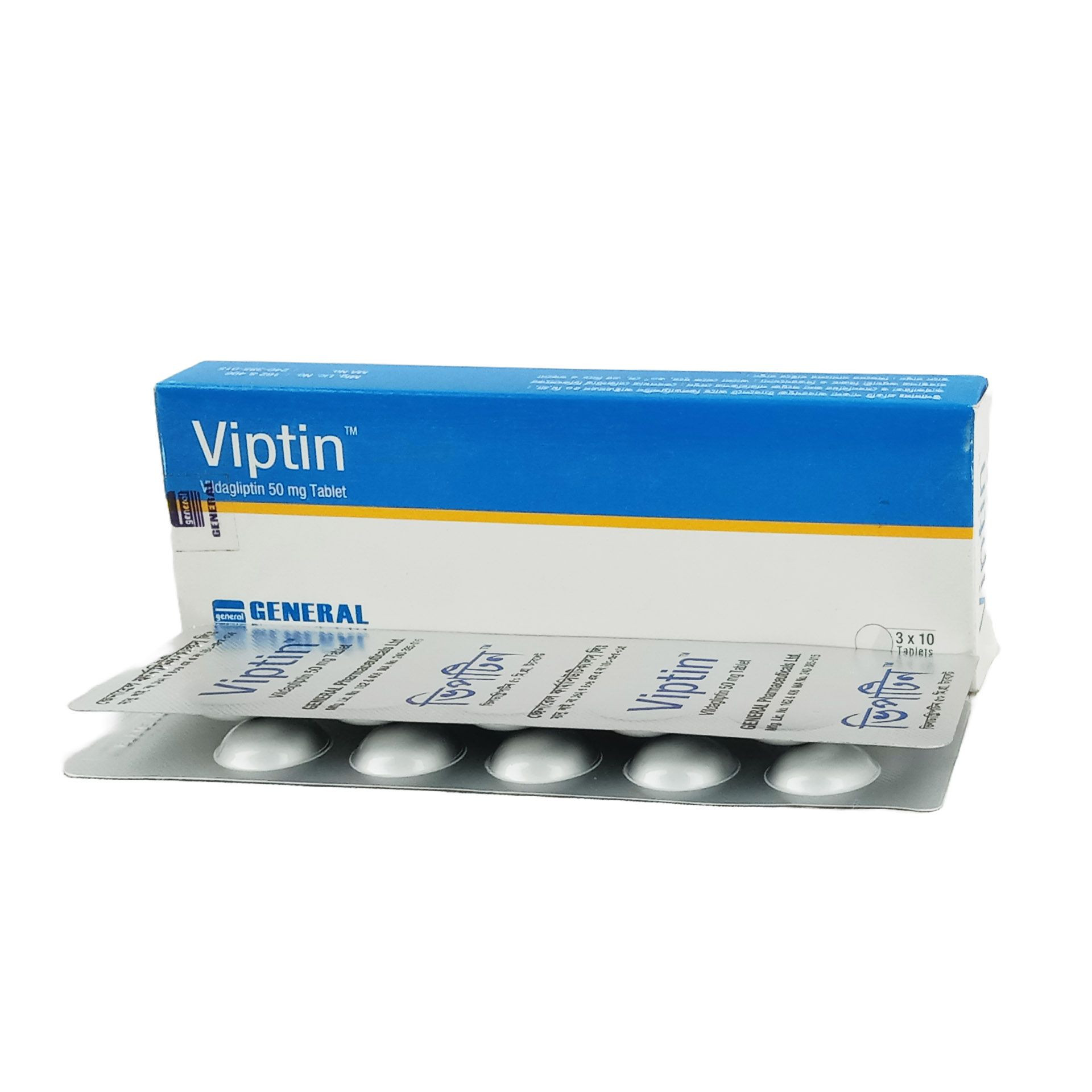
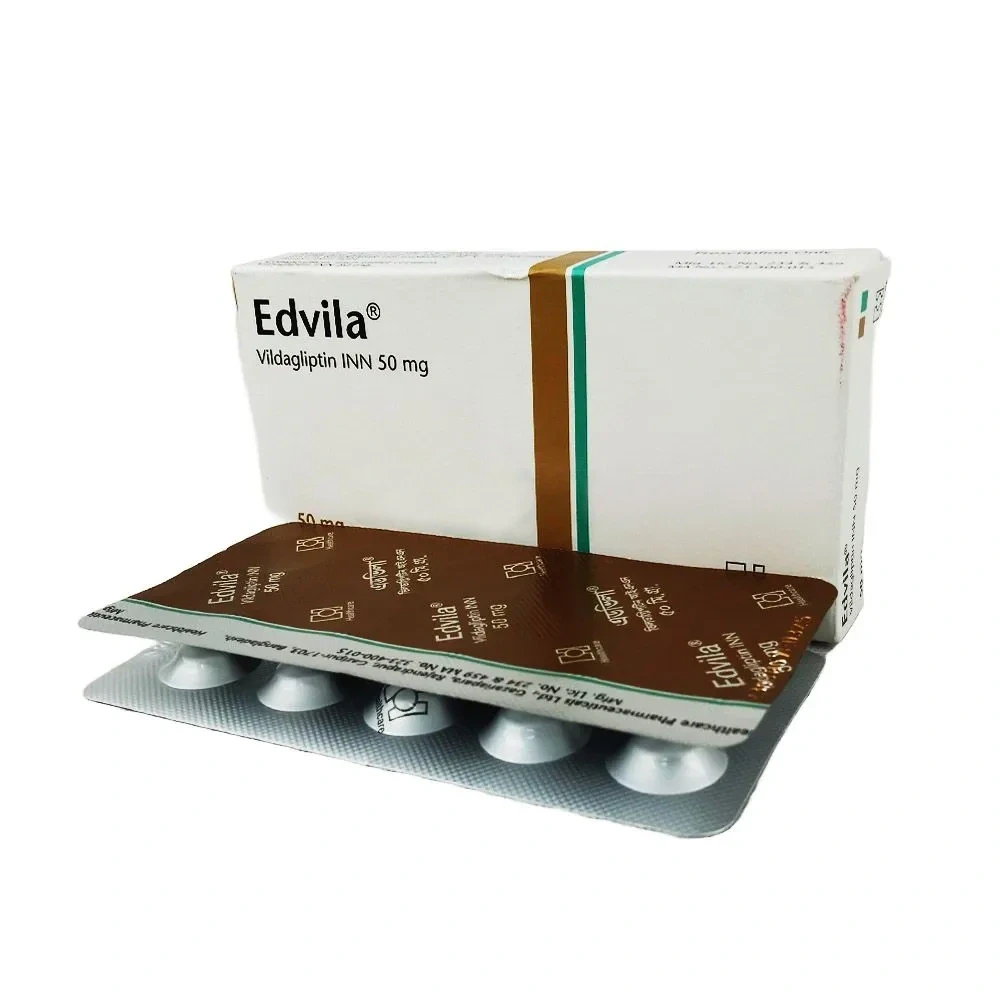
Introduction
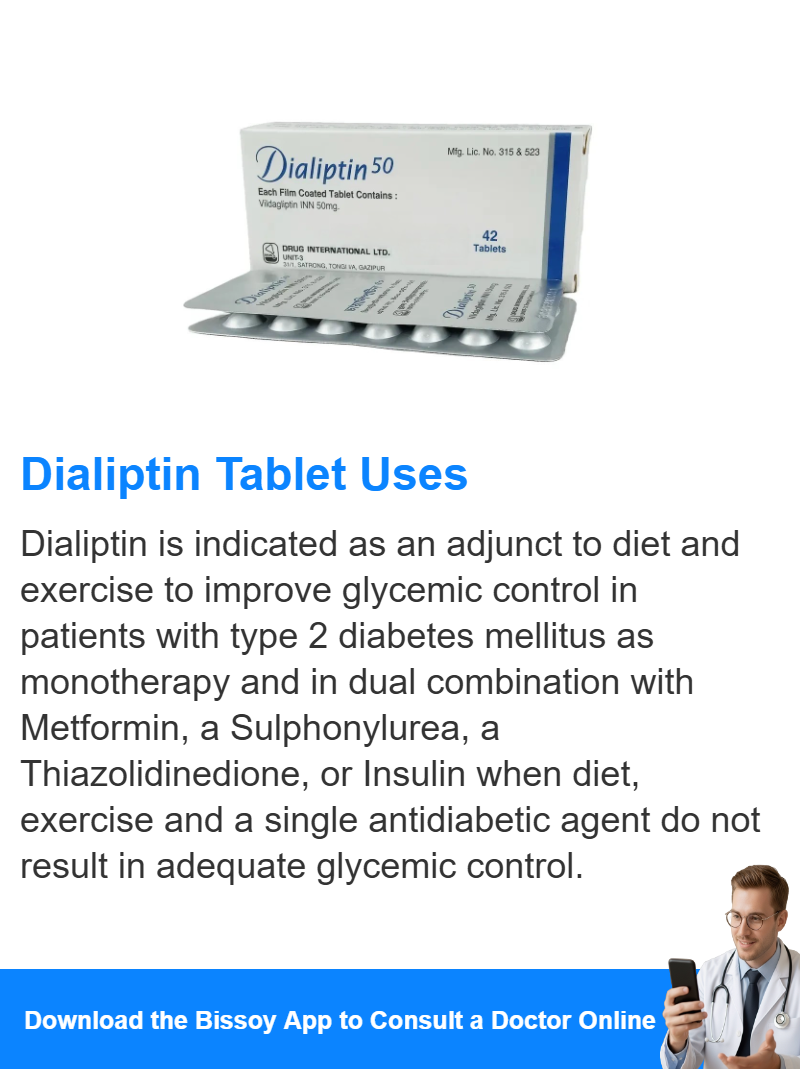
Dialiptin Tablet 50 mg is an oral dipeptidyl peptidase-4 (DPP-4) inhibitor used to improve glycemic control in type 2 diabetes mellitus. It works by preventing the breakdown of the incretin hormones GLP-1 and GIP, thereby enhancing glucose-dependent insulin secretion, suppressing glucagon release, and lowering blood glucose levels. Dialiptin Tablet 50 mg may be used alone or in combination with other antidiabetic agents, such as metformin, sulfonylureas, or thiazolidinediones, and is associated with a relatively low risk of hypoglycemia.
Uses
Dialiptin Tablet 50 mg is a once-daily dipeptidyl peptidase 4 (DPP-4) inhibitor used in the management of type 2 diabetes mellitus.
Dialiptin Tablet 50 mg is indicated in the treatment of type II diabetes mellitus in adults. As monotherapy, vildagliptin is indicated in adults inadequately controlled by diet and exercise alone and for whom metformin is inappropriate due to contraindications or intolerance. It is also indicated as dual therapy in combination with metformin, a sulphonylurea, or a thiazolidinedione in adults patients with insufficient glycemic control despite maximal tolerated dose of monotherapy.
Dialiptin Tablet 50 mg is also marketed in a combination product with metformin for the treatment of adults with type II diabetes mellitus who inadequately respond to either monotherapy of vildagliptin or metformin. This fixed-dose formulation can be used in combination with a sulphonylurea or insulin (i.e., triple therapy) as an adjunct to diet and exercise in adults who do not achieve adequate glycemic control with monotherapy or dual therapy.
Associated Conditions
Pharmacodynamics
Dialiptin Tablet 50 mg works to improve glycemic control in type II diabetes mellitus by enhancing the glucose sensitivity of beta-cells (β-cells) in pancreatic islets and promoting glucose-dependent insulin secretion. Increased GLP-1 levels leads to enhanced sensitivity of alpha cells to glucose, promoting glucagon secretion. Dialiptin Tablet 50 mg causes an increase in the insulin to glucagon ratio by increasing incretin hormone levels: this results in a decrease in fasting and postprandial hepatic glucose production. Dialiptin Tablet 50 mg does not affect gastric emptying. It also has no effects on insulin secretion or blood glucose levels in individuals with normal glycemic control.
In clinical trials, treatment with vildagliptin 50-100 mg daily in patients with type 2 diabetes significantly improved markers of beta-cells, proinsulin to insulin ratio, and measures of beta-cell responsiveness from the frequently-sampled meal tolerance test. Dialiptin Tablet 50 mg has improves glycated hemoglobin (HbA1c) and fasting plasma glucose (FPG) levels.
Mechanism of Action
Glucagon-like peptide-1 (GLP-1) and glucose-dependent insulinotropic peptide (GIP) are incretin hormones that regulate blood glucose levels and maintain glucose homeostasis. It is estimated that the activity of GLP-1 and GIP contribute more than 70% to the insulin response to an oral glucose challenge. They stimulate insulin secretion in a glucose-dependent manner via G-protein-coupled GIP and GLP-1 receptor signalling. In addition to their effects on insulin secretion, GLP-1 is also involved in promoting islet neogenesis and differentiation, as well as attenuating pancreatic beta-cell apoptosis. Incretin hormones also exert extra-pancreatic effects, such as lipogenesis and myocardial function. In type II diabetes mellitus, GLP-1 secretion is impaired, and the insulinotropic effect of GIP is significantly diminished.
Dialiptin Tablet 50 mg exerts its blood glucose-lowering effects by selectively inhibiting dipeptidyl peptidase-4 (DPP-4), an enzyme that rapidly truncates and inactivates GLP-1 and GIP upon their release from the intestinal cells. DPP-4 cleaves oligopeptides after the second amino acid from the N-terminal end. Inhibition of DPP-4 substantially prolongs the half-life of GLP-1 and GIP, increasing the levels of active circulating incretin hormones. The duration of DPP-4 inhibition by vildagliptin is dose-dependent. Dialiptin Tablet 50 mg reduces fasting and prandial glucose and HbA1c. It enhances the glucose sensitivity of alpha- and beta-cells and augments glucose-dependent insulin secretion. Fasting and postprandial glucose levels are decreased, and postprandial lipid and lipoprotein metabolism are also improved.
Absorption
In a fasting state, vildagliptin is rapidly absorbed following oral administration. Peak plasma concentrations are observed at 1.7 hours following administration. Plasma concentrations of vildagliptin increase in an approximately dose-proportional manner.
Food delays Tmax to 2.5 hours and decreases Cmax by 19%, but has no effects on the overall exposure to the drug (AUC). Absolute bioavailability of vildagliptin is 85%.
Volume of Distribution
The mean volume of distribution of vildagliptin at steady-state after intravenous administration is 71 L, suggesting extravascular distribution.
Protein Binding
The plasma protein binding of vildagliptin is 9.3%. Dialiptin Tablet 50 mg distributes equally between plasma and red blood cells.
Route of Elimination
Dialiptin Tablet 50 mg is eliminated via metabolism. Following oral administration, approximately 85% of the radiolabelled vildagliptin dose was excreted in urine and about 15% of the dose was recovered in feces. Of the recovered dose in urine, about 23% accounted for the unchanged parent compound.
Half Life
The mean elimination half-life following intravenous administration is approximately two hours. The elimination half-life after oral administration is approximately three hours.
Clearance
After intravenous administration to healthy subjects, the total plasma and renal clearance of vildagliptin were 41 and 13 L/h, respectively.
Toxicity
The oral Lowest published toxic dose (TDLO) is 0.3 mg/kg in rats and 1 mg/kg in mice.
There is limited information regarding overdose with vildagliptin. In one study, patients experienced muscle pain, mild and transient paresthesia, fever, edema, and a transient increase in lipase levels at a dose of 400 mg. At 600 mg, one subject experienced edema of the feet and hands and increases in creatine phosphokinase (CPK), aspartate aminotransferase (AST), C-reactive protein (CRP) and myoglobin levels. Supportive management is recommended in case of an overdose. There is no known antidote, and vildagliptin and its major metabolite cannot be removed via hemodialysis.
Food Interactions
- Take with or without food. Food reduces Cmax and delays Tmax, but not in a clinically significant way.
Dosage
- 50 mg or 100 mg daily for monotherapy.
- 50 mg twice daily (morning and evening) when used in dual combination with Metformin or a Thiazolidinedione;
- 50 mg once daily in the morning when used in dual combination with a Sulphonylurea.
Pediatric use: Dialiptin Tablet 50 mg is not recommended in patients 18 years of age.