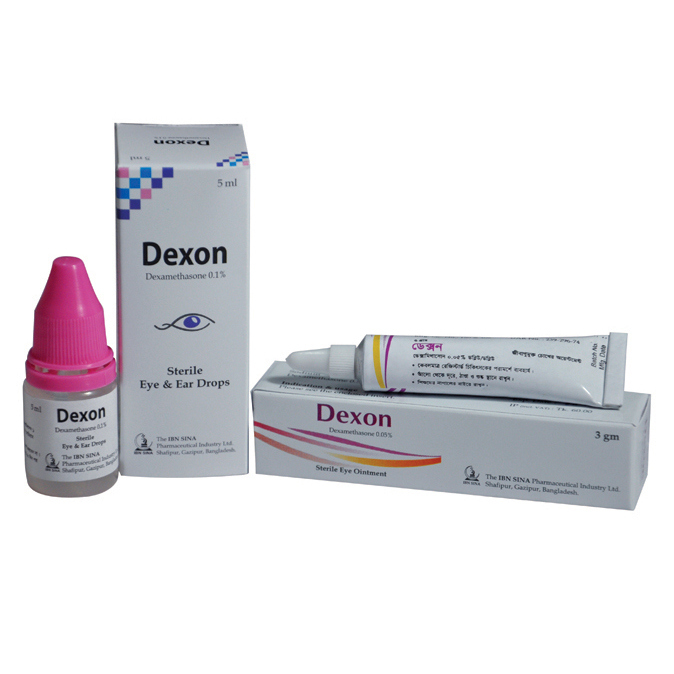
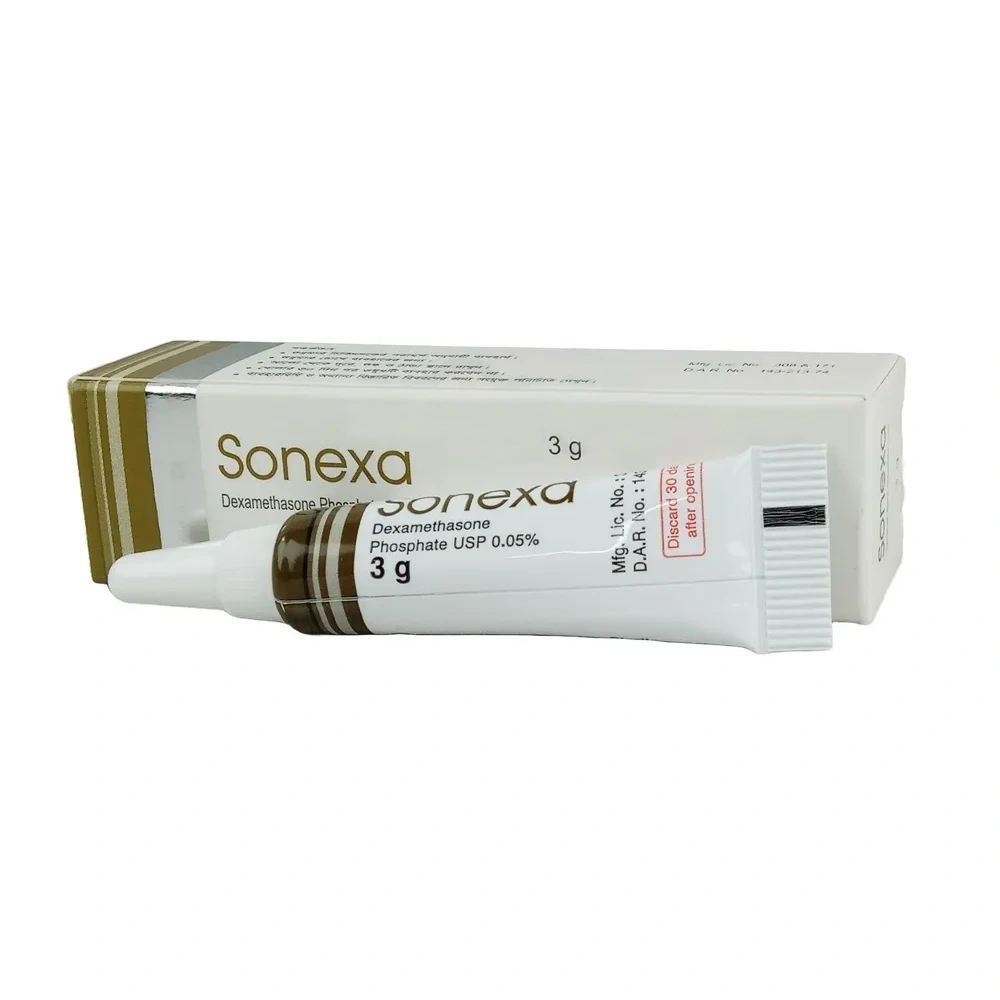
Brand Name Dexon
Type Ophthalmic Ointment
Weight 0.05%
Generic Dexamethasone Sodium Phosphate
Manufacturer Ibn Sina Pharmaceuticals Ltd.
Price (Bangladesh) 3 gm tube: ৳ 65.00
Available in

About Dexon Ophthalmic Ointment 0.05%

Dexon Ophthalmic Ointment 0.05% is a brand medicine manufactured by Ibn Sina Pharmaceuticals Ltd. containing the generic Dexamethasone Sodium Phosphate (0.05%). Current listed price in Bangladesh: 3 gm tube: ৳ 65.00.

Medical information for Dexon Ophthalmic Ointment 0.05%

Uses, dosage, side effects, and safety details below apply to Dexon Ophthalmic Ointment 0.05% (generic: Dexamethasone Sodium Phosphate). This is general information — consult a doctor before use.

Introduction

Dexamethasone, or MK-125, is a corticosteroid fluorinated at position 9 used to treat endocrine, rheumatic, collagen, dermatologic, allergic, ophthalmic, gastrointestinal, respiratory, hematologic, neoplastic, edematous, and other conditions. It is structurally similar to other corticosteroids like hydrocortisone and prednisolone.

Dexamethasone reduced deaths by approximately one third in patients requiring ventilation and by one fifth in those requiring oxygen.

Uses

Dexamethasone is a glucocorticoid available in various modes of administration that is used for the treatment of various inflammatory conditions, including bronchial asthma, as well as endocrine and rheumatic disorders.

Dexamethasone and ciprofloxacin otic suspension is indicated for bacterial infections with inflammation in acute otitis media and acute otitis externa. Intramuscular and intravenous injections are indicated for a number of endocrine, rheumatic, collagen, dermatologic, allergic, ophthalmic, gastrointestinal, respiratory, hematologic, neoplastic, edematous, and other conditions. Oral tablets are indicated for the treatment of multiple myeloma. An intravitreal implant is indicated for some forms of macular edema and non-infectious posterior uveitis affecting the posterior of the eye. Various ophthalmic formulations are indicated for inflammatory conditions of the eye.

Associated Conditions

  • Acne Rosacea
  • Acute Gouty Arthritis
  • Acute Otitis Externa
  • Acute Otitis Media
  • Adrenal cortical hypofunctions
  • Adrenocortical Hyperfunction
  • Alopecia Areata (AA)
  • Ankylosing Spondylitis (AS)
  • Anterior Segment Inflammation
  • Aspiration Pneumonitis
  • Asthma
  • Atopic Dermatitis (AD)
  • Berylliosis
  • Bullous dermatitis herpetiformis
  • Bursitis
  • Chorioretinitis
  • Choroiditis
  • Congenital Adrenal Hyperplasia (CAH)
  • Congenital Hypoplastic Anemia
  • Conjunctivitis
  • Conjunctivitis allergic
  • Corneal Inflammation
  • Cushing's Syndrome
  • Dermatitis
  • Dermatitis exfoliative generalised
  • Dermatitis
  • Contact
  • Diabetic Macular Edema (DME)
  • Discoid Lupus Erythematosus (DLE)
  • Drug hypersensitivity reaction
  • Edema of the cerebrum
  • Epicondylitis
  • Episcleritis
  • Erythroblastopenia
  • Eye Infections
  • Eye allergy
  • Eye swelling
  • Glaucoma
  • Hypercalcemia
  • Idiopathic Thrombocytopenic Purpura
  • Infection
  • Inflammation
  • Inflammation of the External Auditory Canal
  • Intraocular Inflammation
  • Iridocyclitis
  • Iritis
  • Keloid Scars
  • Leukemia
  • Acute
  • Lichen Planus (LP)
  • Lichen simplex chronicus
  • Loeffler's syndrome
  • Macular Edema
  • Malignant Lymphomas
  • Middle ear inflammation
  • Mucosal Inflammation of the eye
  • Multiple Myeloma (MM)
  • Muscle Inflammation caused by Cataract Surgery of the eye
  • Mycosis Fungoides (MF)
  • Necrobiosis lipoidica diabeticorum
  • Noninfectious Posterior Uveitis
  • Ocular Infections
  • Irritations and Inflammations
  • Ocular Inflammation
  • Ocular Inflammation and Pain
  • Ocular Irritation
  • Ophthalmia
  • Sympathetic
  • Optic Neuritis
  • Otitis Externa
  • Pemphigus
  • Perennial Allergic Rhinitis (PAR)
  • Phlyctenular keratoconjunctivitis
  • Post-traumatic Osteoarthritis
  • Postoperative Infections of the eyes caused by susceptible bacteria
  • Regional Enteritis
  • Rheumatoid Arthritis
  • Rheumatoid Arthritis
  • Juvenile
  • Sarcoidosis
  • Scleritis
  • Seasonal Allergic Conjunctivitis
  • Seasonal Allergic Rhinitis
  • Secondary thrombocytopenia
  • Serum Sickness
  • Severe Seborrheic Dermatitis
  • Stevens-Johnson Syndrome
  • Synovitis
  • Systemic Lupus Erythematosus (SLE)
  • Trichinosis
  • Tuberculosis (TB)
  • Tuberculosis Meningitis
  • Ulcerative Colitis
  • Uveitis
  • Vernal Keratoconjunctivitis
  • Acquired immune hemolytic anemia
  • Acute nonspecific tenosynovitis
  • Acute rheumatic carditis
  • Corticosteroid-responsive dermatoses
  • Ear infection-not otherwise specified caused by susceptible bacteria
  • Granuloma annulare lesions
  • Non-suppurative Thyroiditis
  • Ocular bacterial infections
  • Severe Psoriasis
  • Steroid-responsive inflammation of the eye
  • Varicella-zoster virus acute retinal necrosis
  • Watery itchy eyes

Pharmacodynamics

Corticosteroids bind to the glucocorticoid receptor, inhibiting pro-inflammatory signals, and promoting anti-inflammatory signals. Dexamethasone's duration of action varies depending on the route. Corticosteroids have a wide therapeutic window as patients may require doses that are multiples of what the body naturally produces. Patients taking corticosteroids should be counselled regarding the risk of hypothalamic-pituitary-adrenal axis suppression and increased susceptibility to infections.

Mechanism of Action

The short term effects of corticosteroids are decreased vasodilation and permeability of capillaries, as well as decreased leukocyte migration to sites of inflammation. Corticosteroids binding to the glucocorticoid receptor mediates changes in gene expression that lead to multiple downstream effects over hours to days.

Glucocorticoids inhibit neutrophil apoptosis and demargination; they inhibit phospholipase A2, which decreases the formation of arachidonic acid derivatives; they inhibit NF-Kappa B and other inflammatory transcription factors; they promote anti-inflammatory genes like interleukin-10.

Lower doses of corticosteroids provide an anti-inflammatory effect, while higher doses are immunosuppressive. High doses of glucocorticoids for an extended period bind to the mineralocorticoid receptor, raising sodium levels and decreasing potassium levels.

Absorption

Absorption via the intramuscular route is slower than via the intravenous route. A 3mg intramuscular dose reaches a Cmax of 34.6±6.0ng/mL with a Tmax of 2.0±1.2h and an AUC of 113±38ng*h/mL. A 1.5mg oral dose reaches a Cmax of 13.9±6.8ng/mL with a Tmax of 2.0±0.5h and an AUC of 331±50ng*h/mL. Oral dexamethasone is approximately 70-78% bioavailable in healthy subjects.

Volume of Distribution

A 1.5mg oral dose of dexamethasone has a volume of distribution of 51.0L, while a 3mg intramuscular dose has a volume of distribution of 96.0L.

Protein Binding

Dexamethasone is approximately 77% protein bound in plasma. The majority of protein binding is with serum albumin.[A188559] Dexamethasone does not significantly bind to corticosteroid binding protein.[A188559]

Route of Elimination

Corticosteroids are generally eliminated predominantly in the urine. However, dexamethasone is 15

Half Life

The mean terminal half life of a 20mg oral tablet is 4 hours. A 1.5mg oral dose of dexamethasone has a half life of 6.6±4.3h, while a 3mg intramuscular dose has a half life of 4.2±1.2h.

Clearance

A 20mg oral tablet has a clearance of 15.7L/h. A 1.5mg oral dose of dexamethasone has a clearance of 15.6±4.9L/h while a 3.0mg intramuscular dose has a clearance of 9.9±1.4L/h.

Toxicity

The oral LD50 in female mice was 6.5g/kg and 794mg/kg via the intravenous route.

Overdoses are not expected with otic formulations. Chronic high doses of glucocorticoids can lead to the development of cataract, glaucoma, hypertension, water retention, hyperlipidemia, peptic ulcer, pancreatitis, myopathy, osteoporosis, mood changes, psychosis, dermal atrophy, allergy, acne, hypertrichosis, immune suppression, decreased resistance to infection, moon face, hyperglycemia, hypocalcemia, hypophosphatemia, metabolic acidosis, growth suppression, and secondary adrenal insufficiency. Overdose may be treated by adjusting the dose or stopping the corticosteroid as well as initiating symptomatic and supportive treatment.

Food Interactions

  • Avoid alcohol.
  • Take with food. Food reduces irritation.
Frequently Asked Questions About Dexon Ophthalmic Ointment 0.05%

1. What is Dexon Ophthalmic Ointment 0.05%?

Dexon Ophthalmic Ointment 0.05% is a corticosteroid medication used to treat inflammation, allergies, autoimmune diseases, and certain types of cancer. It works by suppressing the immune system and reducing inflammation.

2. What conditions is Dexon Ophthalmic Ointment 0.05% used to treat?

This medication is used for:

- Severe allergies and asthma

- Rheumatoid arthritis and lupus

- Skin disorders

- Brain swelling (cerebral edema)

- Certain cancers, such as leukemia

- COVID-19 and severe respiratory illnesses

- Adrenal insufficiency

3. How does Dexon Ophthalmic Ointment 0.05% work?

It mimics natural corticosteroids produced by the adrenal glands, reducing inflammation and suppressing immune system activity.

4. What are the available forms of Dexon Ophthalmic Ointment 0.05%?

It is available as:

- Injectable solution (IV/IM use)

- Eye drops

- Oral tablets

5. How is the injectable form administered?

It is administered intramuscularly (IM), intravenously (IV), or via intra-articular injection (into a joint) by a healthcare professional.

6. What is the usual dosage of Dexon Ophthalmic Ointment 0.05%?

The dosage varies based on the condition being treated. Common doses:

- IV for severe inflammation: 4-10 mg every 6-12 hours

- Asthma: 0.6 mg/kg once

- Cerebral edema: 10 mg IV, then 4 mg every 6 hours

7. Can Dexon Ophthalmic Ointment 0.05% be used for COVID-19?

Yes, it is used in hospitalized COVID-19 patients requiring oxygen support to reduce inflammation and improve outcomes.

8. How long does Dexamethasone stay in the body?

The half-life is 36-72 hours, meaning effects can last several days after stopping the medication.

9. What are the common side effects?

Possible side effects include:

- Increased appetite

- Weight gain

- Insomnia

- High blood sugar levels

- Stomach irritation

- Mood changes

10. What are the serious side effects?

- Osteoporosis (bone thinning)

- High blood pressure

- Glaucoma

- Increased risk of infections

- Adrenal suppression

11. Can this medication be used long-term?

Long-term use should be monitored due to risks like osteoporosis, adrenal suppression, and high blood sugar.

12. How does Dexamethasone affect blood sugar?

It can increase blood sugar levels, which may require dose adjustments in diabetic patients.

13. Can Dexon Ophthalmic Ointment 0.05% be used in pregnancy?

It should be used only if necessary, as it may affect fetal development.

14. Is it safe for breastfeeding mothers?

It passes into breast milk, so consult a doctor before use.

15. Can Dexamethasone cause withdrawal symptoms?

Yes, stopping it suddenly can cause fatigue, nausea, low blood pressure, and muscle pain.

16. How should I stop taking Dexamethasone?

Gradually reduce the dose under medical supervision to prevent withdrawal effects.

17. Can it be used in children?

Yes, but long-term use may affect growth and development.

18. Can it be used for allergies?

Yes, it is effective for severe allergic reactions and anaphylaxis.

19. Does Dexamethasone interact with other medications?

Yes, it may interact with:

- NSAIDs (increased ulcer risk)

- Diuretics (low potassium)

- Blood thinners (increased bleeding risk)

- Diabetes medications (increased blood sugar)

20. Can I take it with alcohol?

Alcohol can increase stomach irritation and the risk of ulcers, so it should be avoided.

21. Can it be used for asthma?

Yes, it is used in severe asthma attacks to reduce airway inflammation.

22. Can it cause mood changes?

Yes, it may cause mood swings, irritability, and depression in some patients.

23. How does it affect the immune system?

It suppresses the immune response, reducing inflammation but increasing infection risk.

24. Can it be used for arthritis?

Yes, it reduces joint inflammation in rheumatoid and osteoarthritis.

25. Is it available over-the-counter?

No, it requires a prescription.

26. How does it affect the digestive system?

It may cause ulcers, indigestion, and stomach irritation.

27. Can it cause osteoporosis?

Yes, long-term use can weaken bones, increasing fracture risk.

28. Does it affect sleep?

Yes, it can cause insomnia or restlessness.

29. Can it be used for ear infections?

Yes, it is sometimes used in combination with antibiotics.

30. Can it be used for sinus infections?

Yes, it helps reduce sinus inflammation.

31. Is it safe for heart patients?

It should be used cautiously in patients with high blood pressure or heart disease.

32. Can it be used for migraines?

Yes, it can help relieve severe migraine headaches.

33. Does it increase blood pressure?

Yes, it can raise blood pressure, especially with long-term use.

34. Can it cause eye problems?

Yes, prolonged use may cause cataracts or glaucoma.

35. Can it be taken with painkillers?

Use caution with NSAIDs, as they can increase ulcer risk.

36. Can it be used for eczema?

Yes, it reduces inflammation in severe eczema cases.

37. Can it be used for cancer treatment?

Yes, it helps manage symptoms in some cancers like leukemia.

38. Can it be used for brain swelling?

Yes, it is used to reduce cerebral edema.

39. Does it affect kidney function?

It can cause fluid retention and electrolyte imbalances.

40. Can it be used for skin rashes?

Yes, for severe allergic rashes.

41. Can it cause weight gain?

Yes, due to increased appetite and fluid retention.

42. Can it cause Cushing’s syndrome?

Yes, prolonged use can lead to Cushing’s syndrome (moon face, obesity, and high blood pressure).

43. Can it cause fatigue?

Yes, especially if stopped suddenly.

44. Can it be used for liver disease?

Yes, but with caution.

45. Can it be used for pneumonia?

Yes, in severe cases.

46. Can it be used for nerve pain?

Yes, it reduces inflammation in nerve-related conditions.

47. Can it be used for colds?

No, it is not recommended for common colds.

48. Can it cause dizziness?

Yes, in some patients.

49. Can it be used for autoimmune diseases?

Yes, it is commonly used in conditions like lupus.

50. Can it be taken for emergency allergic reactions?

Yes, it is used for severe allergic reactions, including anaphylaxis.

Medical review

Last reviewed: 24 Jul 2026

Medically reviewed by:

This is general information, not personal medical advice. Consult a doctor before taking any medicine.

Social card

Uses
Taking medicines without doctor's advice can cause long-term problems.
Dr. M. A. Latif

Dr. M. A. Latif

Orthopedics Specialist & Surgeon

Call Doctor
Dr. A.K.M Shaheen Ahmed

Dr. A.K.M Shaheen Ahmed

Medicine & Diabetes Specialist

Call Doctor
Related Medicines