Introduction
Fexofenadine is an over-the-counter second-generation antihistamine used in the treatment of various allergic symptoms. It is selective for the H1 receptor, carries little-to-no activity at off-targets, and does not cross the blood-brain barrier - this is in contrast to previous first-generation antihistamines, such as diphenhydramine, which readily bind to off-targets that contribute to side effects such as sedation. Fexofenadine is the major active metabolite of terfenadine and is administered as a racemic mixture in which both enantiomers display approximately equivalent antihistamine activity.
Uses
Fexofenadine is a selective H1-antagonist for the symptomatic treatment of seasonal allergic rhinitis and chronic idiopathic urticaria.
In the United States, fexofenadine is indicated for the symptomatic treatment of allergic rhinitis in patients ≥2 years old and chronic idiopathic urticaria in patients ≥6 months old. In Canada, fexofenadine carries the same indications but is approved only for patients ≥12 years old. Fexofenadine is also available in combination with pseudoephedrine for the symptomatic treatment of season allergic rhinitis in patients ≥12 years old.
Associated Conditions
Pharmacodynamics
Fexofenadine relieves allergy symptoms by antagonizing the actions of histamine, an endogenous compound predominantly responsible for allergic symptomatology. The relatively long duration of action of fexofenadine (approximately 24 hours) allows for once or twice daily dosing, and its rapid absorption allows for an onset of action within 1-3 hours. Fexofenadine should not be taken with fruit juice, as this may impair its absorption.
Mechanism of Action
The H1 histamine receptor is responsible for mediating hypersensitivity and allergic reactions. Exposure to an allergen results in degranulation of mast cells and basophils, which then release histamine and other inflammatory mediators. Histamine binds to, and activates, H1 receptors, which results in the further release of pro-inflammatory cytokines, such as interleukins, from basophils and mast cells. These downstream effects of histamine binding are responsible for a wide variety of allergic symptoms, such as pruritus, rhinorrhea, and watery eyes.
Fexofenadine is considered an “inverse agonist” of the H1 receptor because it binds to and stabilizes the inactive form of the receptor, preventing its activation and subsequent downstream effects. It has a potent and selective affinity for H1 receptors, and there is no evidence that it carries antidopaminergic, antiserotonergic, anticholinergic, sedative, or adrenergic blocking activity. Fexofenadine does not cross the blood-brain barrier and thus is unlikely to cause significant CNS effects.
Absorption
Fexofenadine is rapidly absorbed following oral administration and its absolute bioavailability is approximately 33%. The Tmax following oral administration is approximately 1-3 hours. The steady-state AUCss(0-12h) and Cmax following twice daily dosing of 60mg are 1367 ng/mL.h and 299 ng/mL, respectively.
Fexofenadine AUC is decreased by >20% when coadministered with fruit juices (e.g. apple, orange, grapefruit) due to their inhibition of OATP transporters - for this reason, prescribing information recommends administering fexofenadine only with water. Similarly, coadministration of fexofenadine with a high-fat meal appears to decrease AUC and Cmax by >20%.
Volume of Distribution
The volume of distribution is approximately 5.4-5.8 L/kg.
Protein Binding
Fexofenadine is 60-70% bound to plasma proteins, primarily to albumin and α1-acid glycoprotein. The extent of protein binding is decreased to 56-68% and 56-75% in patients with renal and hepatic impairment, respectively.
Route of Elimination
Approximately 80% of an ingested dose is eliminated in the feces, likely largely unchanged due to fexofenadine's limited metabolism, and 11% is eliminated in the urine. The principal pathways of fexofenadine elimination are biliary and renal.
Half Life
The terminal elimination half-life is approximately 11-15 hours.
Clearance
The oral clearance of fexofenadine is approximately 50.6 L/h and the renal clearance is approximately 4.32 L/h.
Toxicity
No deaths were observed following the oral administration of up to 5000 mg/kg in both mice and rats (equivalent to approximately 100-200x the recommended human dose). Single doses of up to 800 mg and chronic exposure of up to 690 mg twice daily for 1 month in humans did not result in clinically significant adverse events. Symptoms of overdosage are consistent with fexofenadine's adverse effect profile and are likely to include dizziness, drowsiness, and dry mouth.
If overdosage occurs, employ symptomatic and supportive treatment. Hemodialysis does not effectively remove fexofenadine from the blood and is therefore of no benefit.
Food Interactions
- Avoid fruit juice. Fruit juices like grapefruit, orange, and apple may reduce bioavailability and overall exposure to the medication.
- Take with or without food. Co-administration with food does not significantly affect absorption.
Dosage
Adults and children 12 years and older:
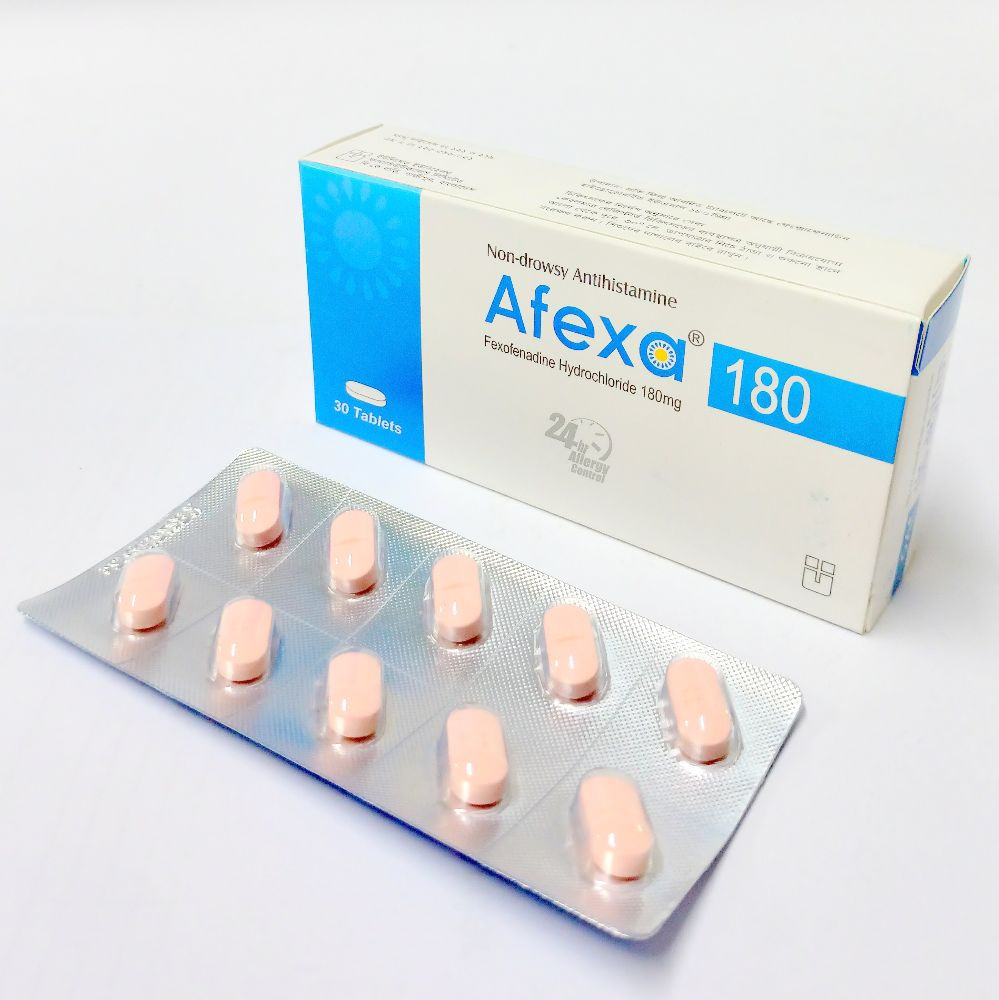
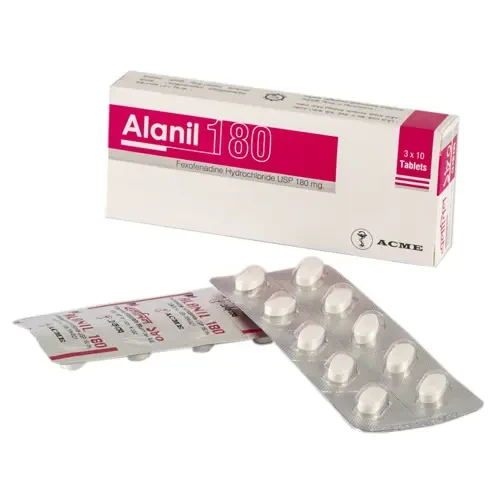
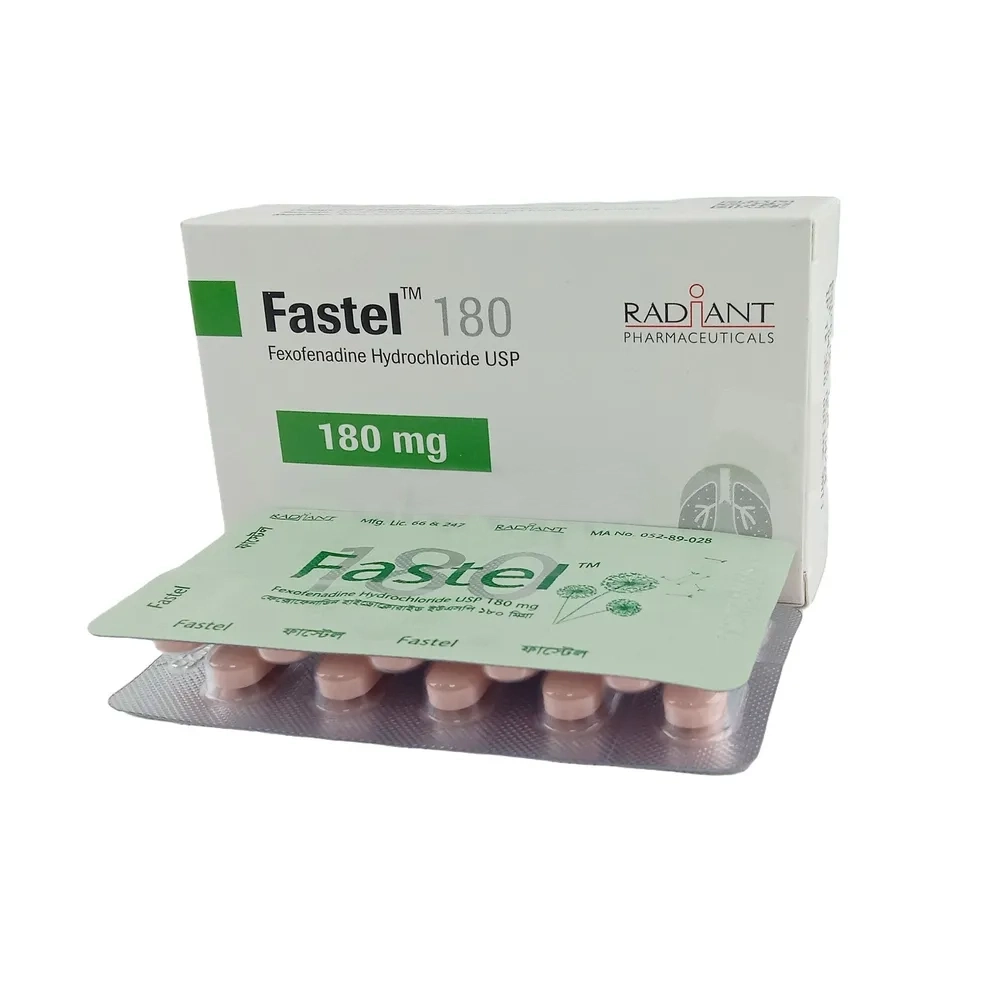
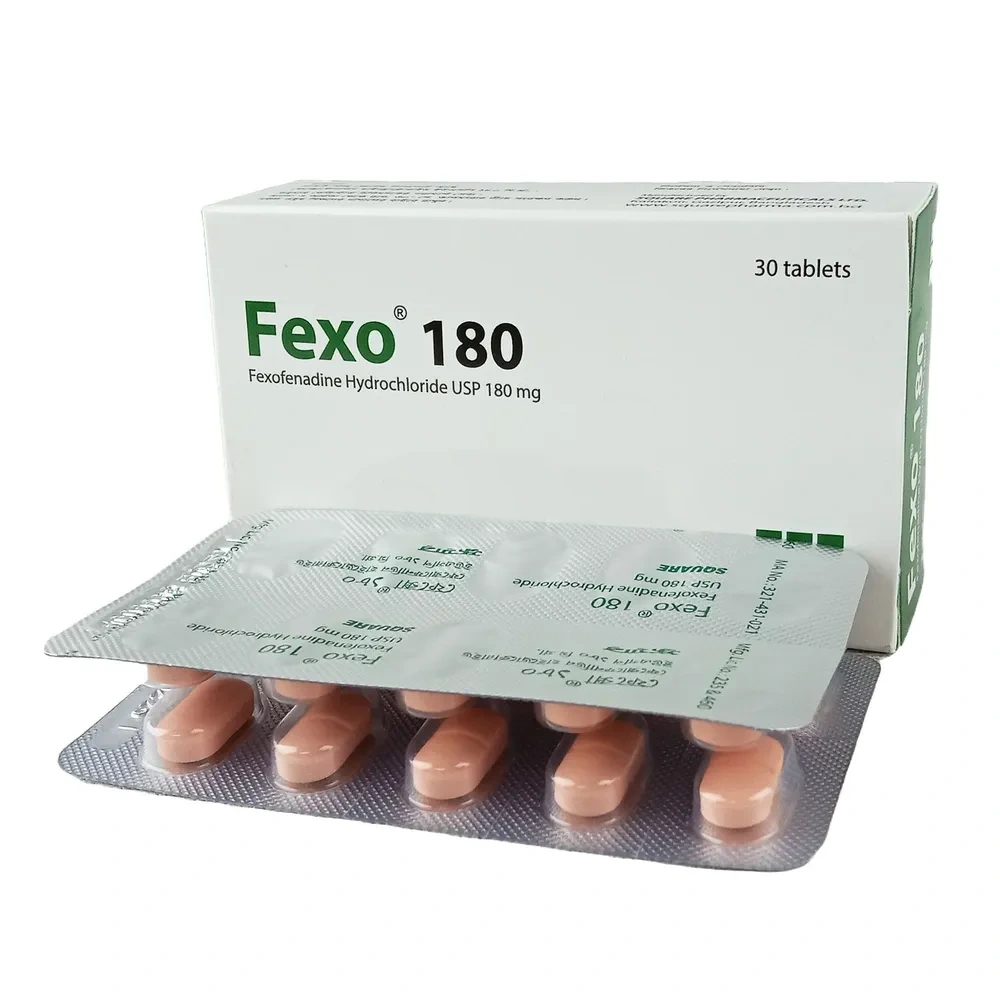
- Tablet: 60 mg twice daily or 120 mg once daily or 180 mg once daily
- In case of impaired renal function: 60 mg once daily
- Tablet: 30 mg twice daily or 60 mg once daily
- In case of impaired renal function: 30 mg once daily
- Suspension: 30 mg or 5 ml twice daily
- In case of impaired renal function: 30 mg or 5 ml once daily
Chronic Idiopathic Urticaria-
Adults and children 12 years and older:
- Tablet: 60 mg twice daily or 120 mg once daily or 180 mg once daily
- In case of impaired renal function: 60 mg once daily
- Tablet: 30 mg twice daily or 60 mg once daily
- In case of impaired renal function: 30 mg once daily
- Suspension: 15 mg or 2.5 ml (1/2 tsp) twice daily
- In case of impaired renal function: 15 mg or 2.5 ml (1/2 tsp) once daily
- Suspension: 30 mg or 5 ml (1 tsp) twice daily
- In case of impaired renal function: 30 mg or 5 ml (1 tsp) once daily