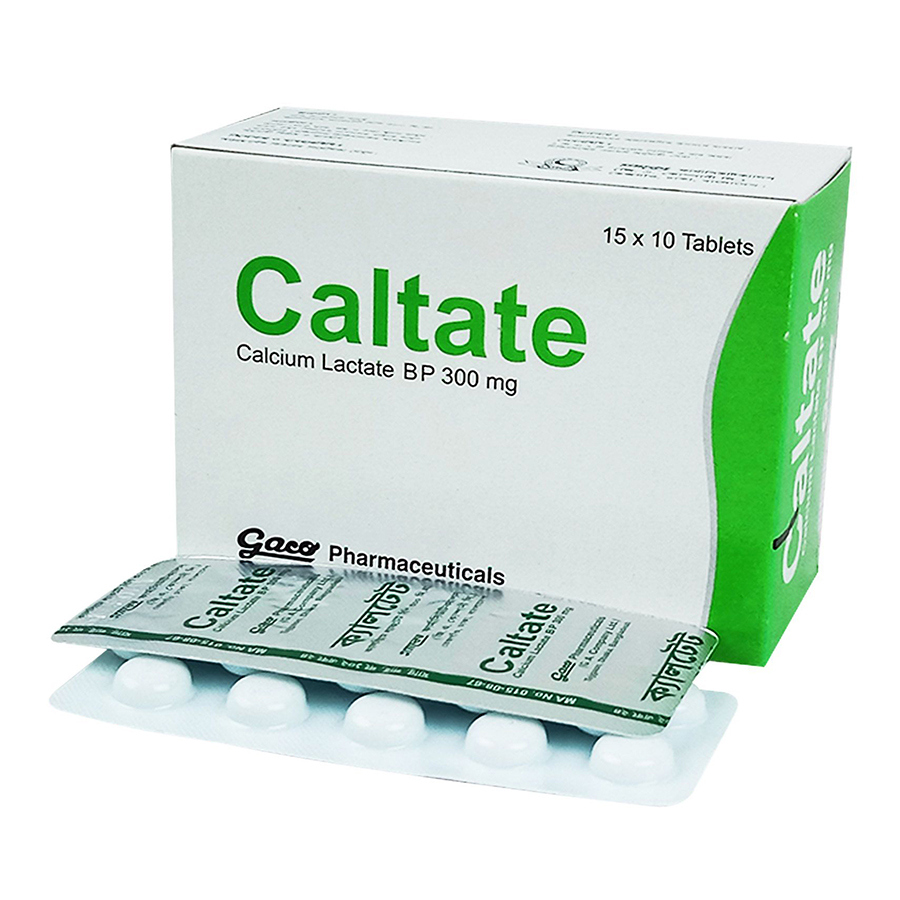
Calcium lactate is an inorganic salt composed of two molecules of lactate (CH3CH(OH)COO–) and one calcium cation (Ca2+) which when dissolved in water will form an alkaline solution. Calcium lactate is a tasteless white powder that is odourless and highly soluble in water, making it widely used in many industries.
Calcium lactate is most commonly used as a dietary supplement, either in the form of tablets or as a liquid additive to food or beverage. It is also used as a biochemical reagent, buffer, and electrolyte. Calcium lactate has preservative properties and is used as a food additive in cheese and pastries. Calcium lactate is also used in manufacturing dyes, ceramics, detergents, soaps, and medicines.
| Brand Name | Decal |
|---|---|
| Type | Tablet |
| Weight | 300 mg |
| Generic | Calcium Lactate |
| Manufacturer | Desh Pharmaceuticals Ltd. |
| Available in | English বাংলা |
Similar to calcium chloride, upon administration, calcium lactate is hydrolyzed in the small intestines to its component lactate and calcium ions. The absorption of the calcium ions occurs primarily in the small intestine and is facilitated by vitamin D. After absorption, the calcium ions are redistributed throughout the body and to some degree stored in the bone.
Calcium is normally absorbed within 45 minutes to 6 hours of taking a calcium lactate supplement. In individuals with a normal healthy gastrointestinal tract, the body’s capacity to absorb calcium is enhanced in the presence of vitamin D.
Calcium from calcium lactate is efficiently and readily absorbed in the small intestine when vitamin D is present. In the small intestine, calcium is bound to fatty acids and other organic acids, and its absorption is passive. In the absence of vitamin D, calcium absorption is decreased by up to 50%.
Most of the calcium from calcium lactate is excreted in the urine. Some is also excreted in the feces as part of calcium containing food residuums or via the sweat glands.
Calcium lactate is usually taken orally as a dietary supplement, often tablet form. The dosage for adults is typically anywhere from 750 mg to 2 g daily, taken in two divided doses. Calcium lactate can also be taken with vitamin D to help improve the absorption of calcium. Consult your physician or healthcare provider for the best dosage for your needs.
Calcium lactate is very soluble and can be dispensed as a dry powder or tablet and mixed into liquid solutions or as a suspension in liquid or semisolid preparations, such as milk shakes and ice cream, for ease of administration.
Calcium lactate, when taken at the appropriate dose, is generally considered safe, but may cause abdominal upset, nausea, and/or constipation. Taking more than the recommended dose may lead to an overdose of calcium, which can be dangerous.
The toxicity of calcium lactate is very low. An acute overdose is rarely reported and it is unlikely that an overdose of calcium lactate will cause serious adverse impacts in an adult. However, in large doses, calcium lactate can produce stomach upset, diarrhea, nausea, vomiting, and constipation.
People with allergies to lactose or other milk products should avoid calcium lactate supplements. Calcium lactate may also interact with certain medications, like thiazide diuretics, digitalis, chelating agents, and bile acid sequestrants, so patients should advise their healthcare provider if on any other medications. Calcium supplements should not be taken with aluminum-containing antacids.
Calcium lactate should not be taken with aluminum-containing antacids as it can increase the absorption of aluminum from the antacids. Calcium lactate may also interact with the following medications: thiazide diuretics, digitalis, chelating agents, and bile acid sequestrants.
Patients with any of the following diseases should use calcium lactate with caution and under the guidance and supervision of a healthcare provider: kidney stones, kidney failure, high blood calcium levels, sarcoidosis, hypercalcemia, and any disorder causing malabsorption of nutrients.
Calcium lactate may interact with certain medications, like thiazide diuretics, digitalis, chelating agents, and bile acid sequestrants, so patients should advise their healthcare provider if on any other medications. Calcium supplements should not be taken with aluminum-containing antacids.
Calcium supplements should be taken separately from foods that contain high amounts of oxalic acid, such as spinach, rhubarb, and chocolate as the absorption of calcium can be blocked. Calcium lactate should not be taken with products that contain magnesium, phosphorus, or aluminum.
Pregnant women should get the recommended dose of calcium from their prenatal vitamins. However, if not present in prenatal vitamins, calcium lactate can be safely taken during pregnancy in the recommended dosages.
The recommended amount of calcium is 1200 to 1500 mg/day for women who are breastfeeding. Calcium should be taken in divided doses throughout the day with food. If not present in prenatal vitamins, calcium lactate can be safely taken in the recommended dosages while breastfeeding.
Acute overdose with calcium supplements is usually benign, but may cause stomach upset, nausea, vomiting, and constipation. Severe overdose may cause hypercalcemia and renal failure. Treatment of overdose consists of supportive care, fluids, and electrolytes.
Patients with hypercalcemia, renal failure, or kidney stones should avoid taking calcium lactate. Calcium lactate should also be avoided if the patient is taking aluminum antacids or any other medication that contains calcium.
Calcium lactate should be taken as directed by a physician or healthcare provider. It is recommended that patients should take the supplement with food to ensure optimal absorption. Calcium lactate should not be chewed, as this may reduce its effectiveness.
Calcium lactate should be stored at room temperature in a tightly sealed container, away from direct sunlight and moisture. Keep out of the reach of children.
The volume of distribution (Vd) of calcium lactate is calculated to be 0.8 L/kg.
The half life of calcium lactate is 0.75 hours.
The renal clearance (Cl) of calcium lactate is 0.34 mL/min/kg.
See in details version Decal Tablet 300 mg also Decal Tablet 300 mg in bangla