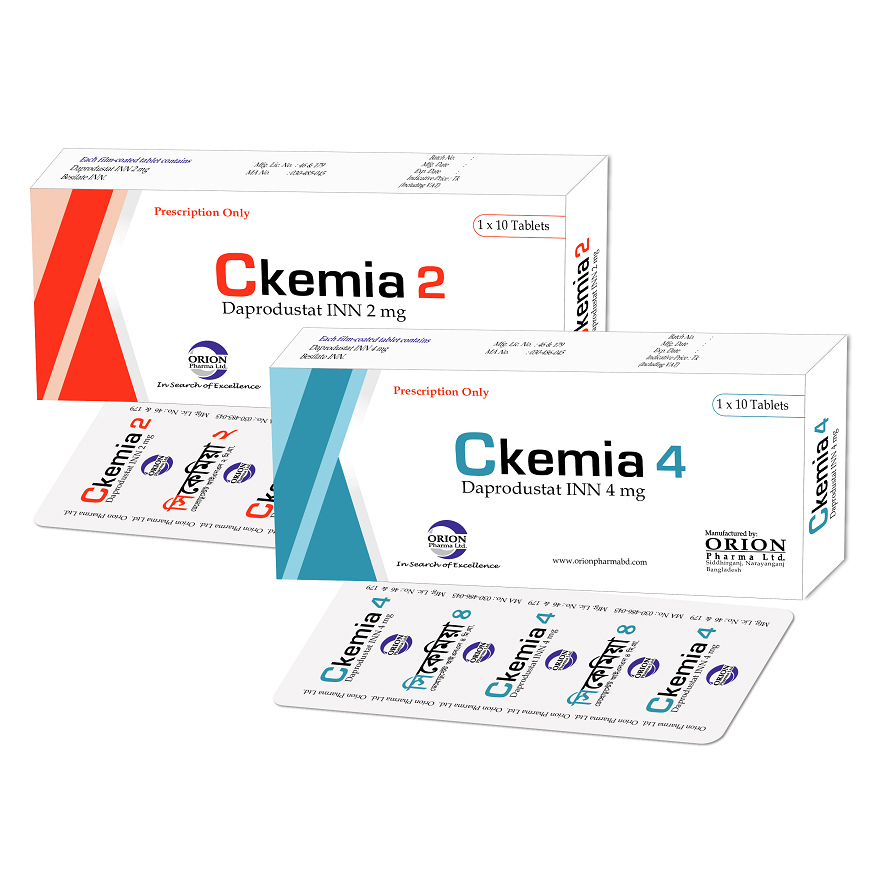
Introduction
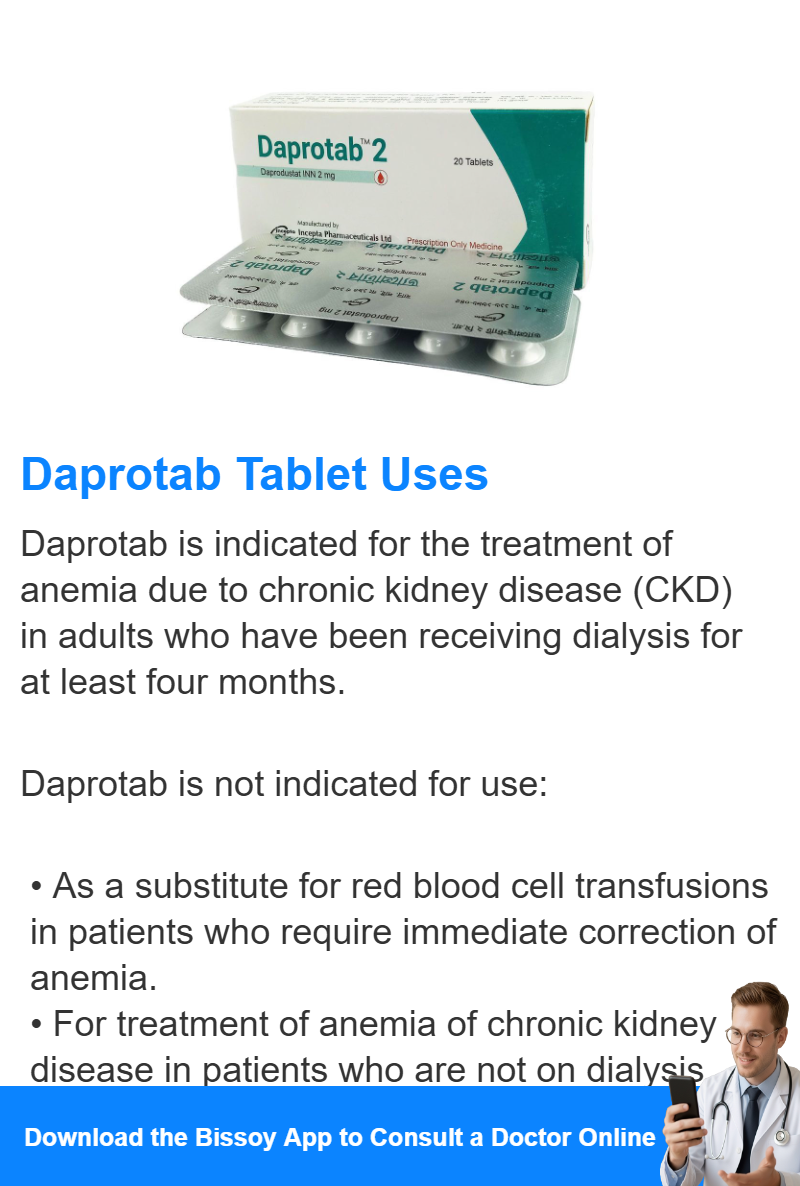
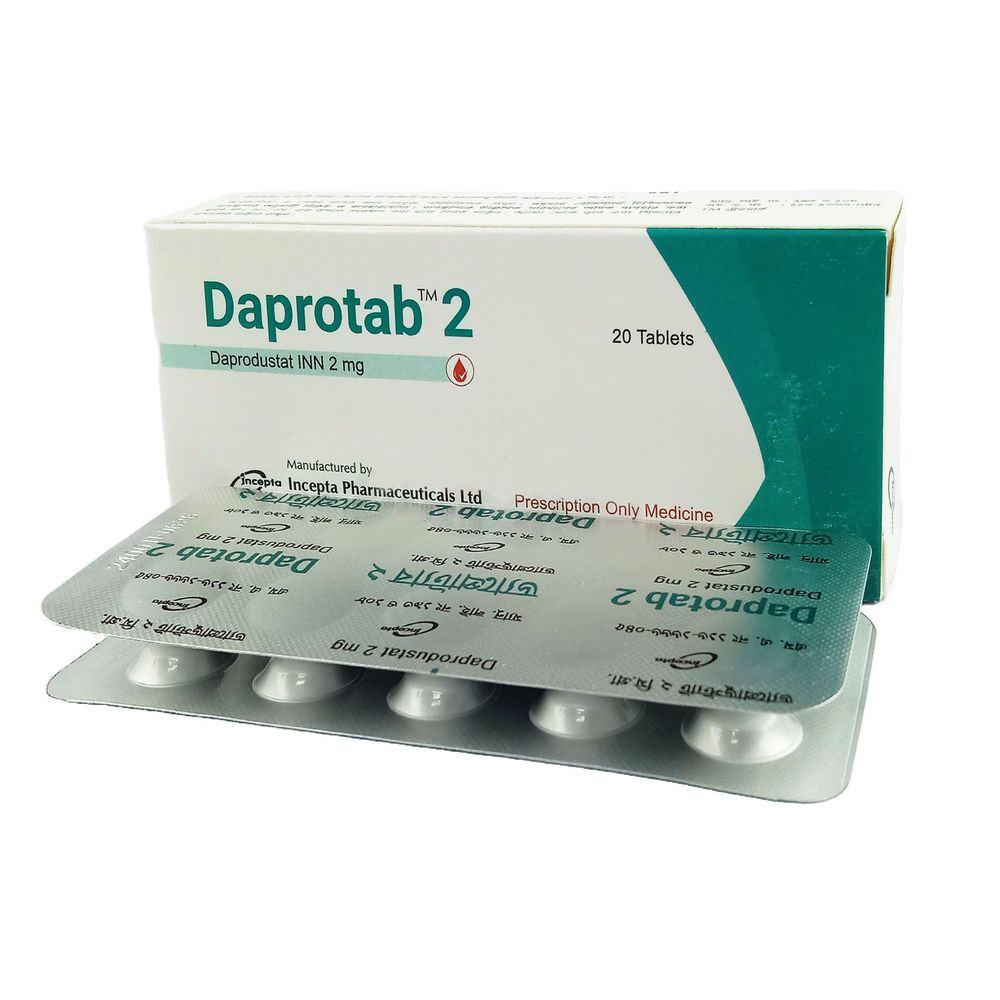
Daprotab Tablet 2 mg is an oral medication used in the treatment of anemia associated with chronic kidney disease (CKD). It is a hypoxia-inducible factor (HIF) prolyl hydroxylase inhibitor designed to stimulate erythropoiesis by mimicking the effects of low oxygen levels in the body.
Uses
Daprotab Tablet 2 mg is used primarily for:
- Treating anemia in patients with chronic kidney disease (CKD), both in patients on dialysis and those not on dialysis.
- It is used as an alternative to erythropoiesis-stimulating agents (ESAs) for managing anemia.
Mechanism of Action
Daprotab Tablet 2 mg works by inhibiting HIF prolyl hydroxylase enzymes, which stabilizes hypoxia-inducible factors (HIFs). Stabilized HIFs increase the production of erythropoietin and other erythropoiesis-related factors, promoting the formation of red blood cells and improving anemia.
How Long Does It Take to Work?
Patients may start to see improvements in hemoglobin levels and anemia symptoms within 4-8 weeks of initiating daprodustat treatment. The full therapeutic effect may take several months to become evident, depending on individual response.
Absorption
Daprotab Tablet 2 mg is well-absorbed after oral administration, with peak plasma concentrations typically occurring within 1-2 hours. The drug has a high oral bioavailability, meaning a substantial portion of the dose is absorbed into systemic circulation.
Route of Elimination
Daprotab Tablet 2 mg is metabolized in the liver, primarily through CYP3A4 and UDP-glucuronosyltransferases. The drug and its metabolites are primarily excreted via the feces, with a smaller portion eliminated in the urine.
Dosage
Pre-Treatment and On-Treatment Evaluations of Anemia, Iron Stores, and Liver TestsEvaluation of Anemia and Iron Stores: Correct and exclude other causes of anemia (e.g„vitamin deficiency, metabolic or chronic inflammatory conditions, bleeding) before initialing Daprotab Tablet 2 mg, Evaluate the iron status in all patients before and during treatment with Daprotab Tablet 2 mg. Administer supplemental iron therapy when serum ferritin is less than 100 mcg/mL or when serum transferrin saturation is less than 20%. The majority of patients with CKD will require supplemental iron during the course of therapy.
Liver Testing: Assess serum alanine aminotransferase (ALT), aspartate aminotransferase (AST), alkaline phosphatase, and total bilirubin prior to initiation of Daprotab Tablet 2 mg. Repeat the liver tests if the patient develops signs or symptoms that could be consistent with liver disease during treatment with Daprotab Tablet 2 mg.
Important Dosing Information: Individualize dosing and use the lowest dose of Daprotab Tablet 2 mg sufficient to reduce the need for red blood cell transfusions. Do not target a hemoglobin higher than 11 g/dL. Daprotab Tablet 2 mg can be taken with or without food, and without regard to concomitant administration of iron or phosphate binders. Daprotab Tablet 2 mg should be swallowed whole. Tablets should not be cut, crushed, or chewed. Daprotab Tablet 2 mg can be administered without regard to the timing or type of dialysis, if a dose of Daprotab Tablet 2 mg is missed, it should be taken as soon as possible, unless it is the same day as the next dose. In this case, the missed dose should be skipped, and the next dose taken at the usual time. Double-doses should not be taken to make-up for a missed dose.
Recommended Starting Dose of Daprotab Tablet 2 mg: Adults with Anemia Due to Chronic Kidney Disease Receiving Dialysis for at least 4 Months
Adults Not Being Treated with an ESA: For adults not being treated with an ESA, the starting dose of Daprotab Tablet 2 mg is based on the hemoglobin level. Dose modifications are needed for patients receiving concomitant treatment with a moderate CYP2C8 inhibitor or moderate hepatic impairment.
Monitoring Response to Therapy and Dose Adjustment: Following initiation of therapy and after each dose adjustment, monitor hemoglobin every 2 weeks for the first month and then every 4 weeks thereafter. When adjusting doses of Daprotab Tablet 2 mg, consider hemoglobin rate of rise, rate of decline and hemoglobin variability. Do not increase the dose of Daprotab Tablet 2 mg more frequently than once every 4 weeks.
- If the dose of Daprotab Tablet 2 mg needs to be adjusted, increase or decrease by one dose level at a time.
- Decrease the dose of Daprotab Tablet 2 mg if hemoglobin increases rapidly (e.g., greater than 1 g/dL over 2 weeks or greater than 2 g/dL over 4 weeks) or if the hemoglobin exceeds 11 g/dL.
- If hemoglobin exceeds 12 g/dL, interrupt treatment with Daprotab Tablet 2 mg, When the hemoglobin is within the target range, treatment may be restarted at one dose level lower.
- Treatment with Daprotab Tablet 2 mg should not be continued beyond 24 weeks of therapy if a clinically meaningful increase in hemoglobin level is not achieved. Alternative explanations for an inadequate response should be sought and treated before re-starting therapy.
Dosage Modification for Concomitant Treatment with Moderate CYP2C8 Inhibitors: Reduce the starting dose of Daprotab Tablet 2 mg by half in patients who are on clopidogrel or a moderate CYP2C8 inhibitor except in patients whose starting dose is already 1 mg. Monitor hemoglobin and adjust the dose of Daprotab Tablet 2 mg when initiating or stopping therapy with clopidogrel or a moderate CYP2C8 inhibitor during treatment with Daprotab Tablet 2 mg.
The recommended starting dose of daprodustat is typically 1-2 mg taken orally once daily. Dosage adjustments may be required based on hemoglobin levels and individual patient response. Dosage recommendations can vary based on the specific formulation and patient characteristics.
Administration
Daprotab Tablet 2 mg should be taken orally once daily. The tablets should be swallowed whole with water and can be taken with or without food. Consistency in timing is important for optimal efficacy.
Side Effects
Common side effects of daprodustat include:
- Headache
- Nausea
- Fatigue
- Dizziness
- Gastrointestinal disturbances
Toxicity
In cases of overdose or severe adverse reactions, symptoms may include severe hypertension, cardiovascular events, or exacerbated anemia. Immediate medical intervention is required to manage toxicity and provide supportive care.
Precautions
- Monitor blood pressure regularly, as daprodustat can cause or exacerbate hypertension. - Regular monitoring of hemoglobin levels is essential to avoid excessive increases and associated risks. - Use with caution in patients with a history of cardiovascular disease.
Interaction
Daprotab Tablet 2 mg may interact with other medications that affect CYP3A4 or glucuronidation pathways. Inform healthcare providers about all concurrent medications to avoid potential interactions.
Disease Interaction
- Caution is advised in patients with pre-existing cardiovascular disease or hypertension. - Monitor closely in patients with liver or renal impairment, as dose adjustments may be necessary.
Drug Interaction
Daprotab Tablet 2 mg may interact with drugs that are strong CYP3A4 inhibitors (e.g., ketoconazole) or inducers (e.g., rifampin). Adjustments in daprodustat dosing may be required based on the interaction.
Food Interactions
Food does not significantly affect the absorption of daprodustat. The medication can be taken with or without food.
Pregnancy Use
Daprotab Tablet 2 mg is not recommended during pregnancy due to potential risks to the fetus. Effective contraception should be used during treatment, and the drug should be avoided unless clearly necessary.
Lactation Use
It is not known if daprodustat is excreted in breast milk. Due to potential risks to the infant, breastfeeding is not recommended during treatment with daprodustat.
Acute Overdose
Acute overdose may result in severe hypertension, thromboembolic events, or cardiovascular symptoms. Immediate medical attention is required to manage overdose effects and provide supportive care.
Contraindication
Daprotab Tablet 2 mg is contraindicated in:
- Patients with known hypersensitivity to daprodustat or any component of the formulation.
- Pregnant women or those who are breastfeeding.
Use Direction
Take one tablet orally once daily, with or without food. Do not exceed the recommended dose. Follow the prescribed regimen and consult your healthcare provider for any necessary adjustments.
Storage Conditions
Store daprodustat at room temperature, away from moisture and heat. Keep out of reach of children and ensure the medication is kept in its original packaging to protect it from light and moisture.
Volume of Distribution
The volume of distribution for daprodustat is approximately 300 L, indicating extensive distribution throughout body tissues.
Half Life
The elimination half-life of daprodustat is approximately 12-15 hours, supporting once-daily dosing.
Clearance
Daprotab Tablet 2 mg is primarily cleared through hepatic metabolism, with a total clearance rate of about 30-50 L/h, reflecting its extensive metabolism and distribution.