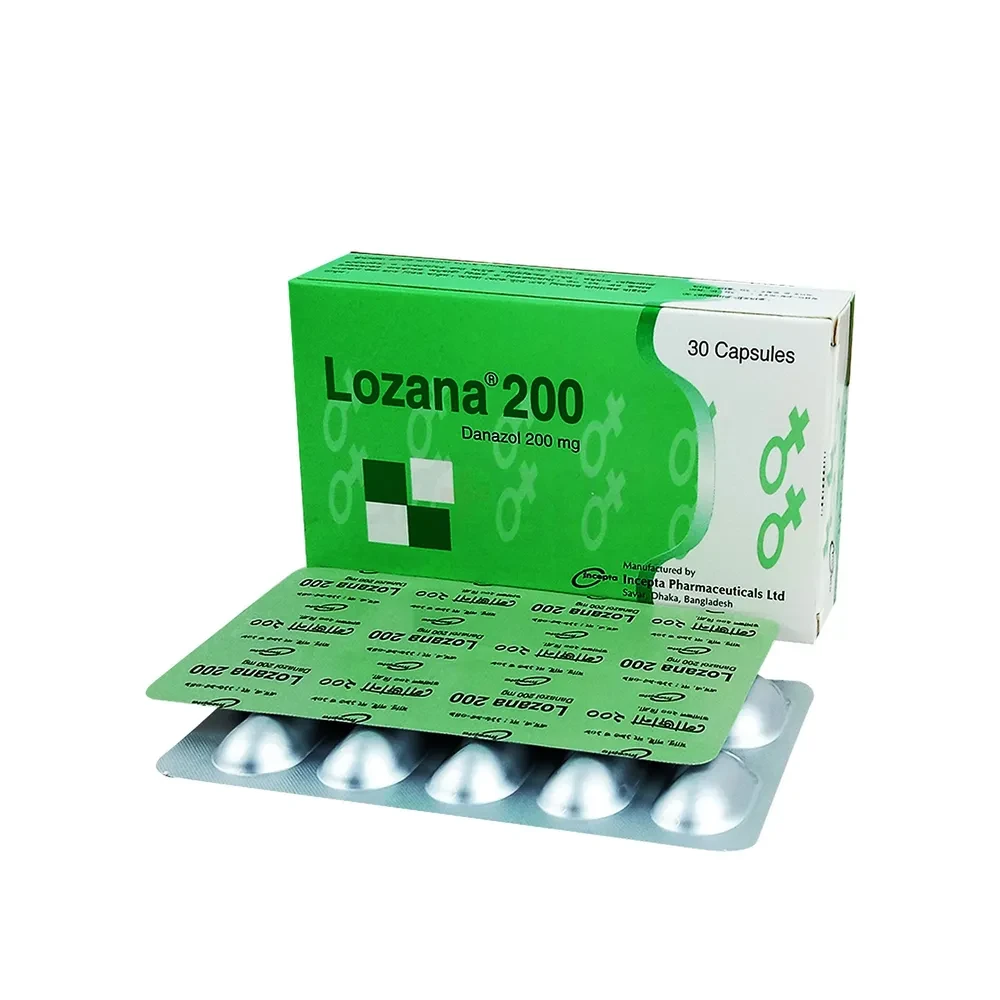
Introduction
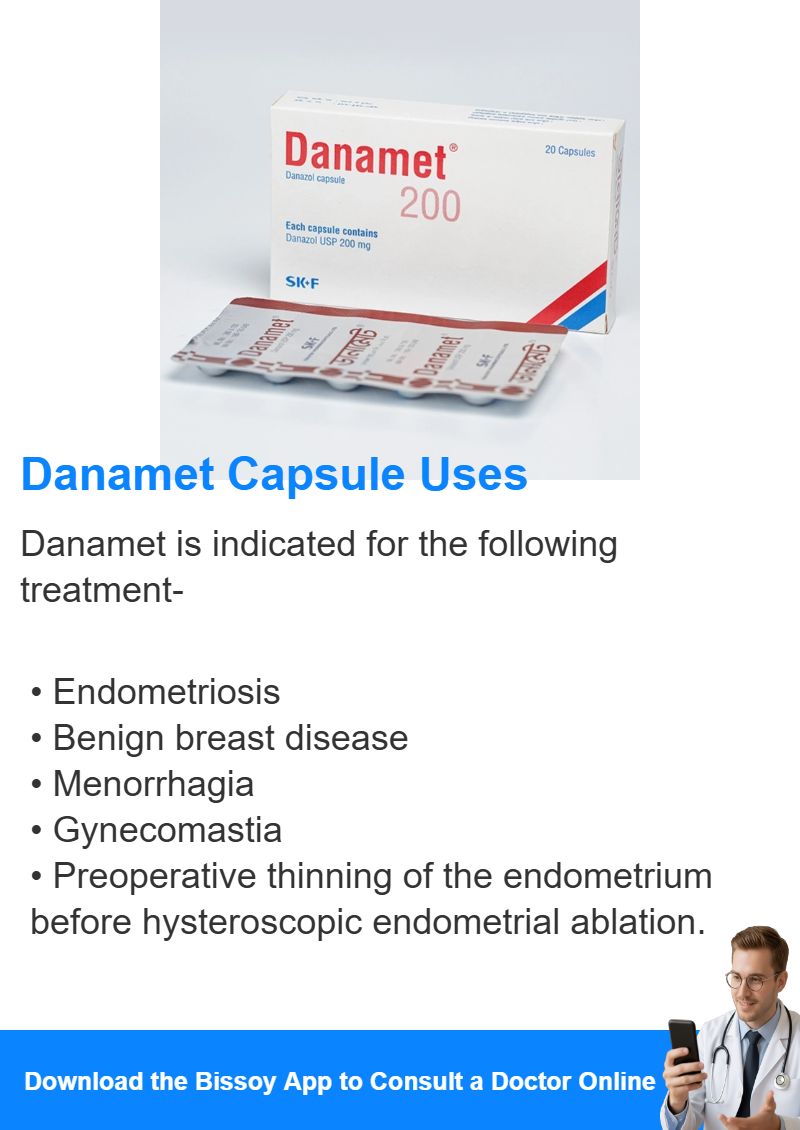
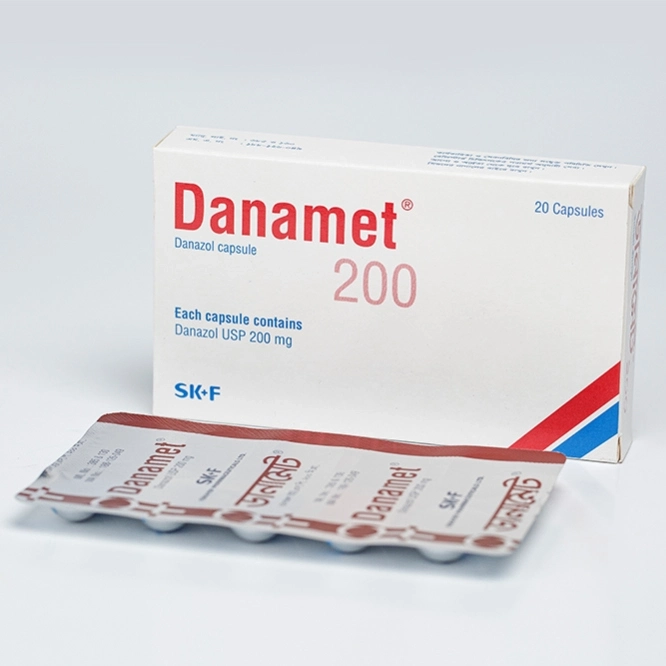
A synthetic steroid with antigonadotropic and anti-estrogenic activities that acts as an anterior pituitary suppressant by inhibiting the pituitary output of gonadotropins. It possesses some androgenic properties. Danamet Capsule 200 mg has been used in the treatment of endometriosis and some benign breast disorders.
Uses
Danamet Capsule 200 mg is a synthetic steroid and pituitary gonadotropin inhibitor used in the treatment of endometriosis and symptomatic treatment of severe pain and tenderness associated with benign fibrocystic breasts.
For the treatment of endometriosis and fibrocystic breast disease (in patients unresponsive to simple measures). Also used for the prophylactic treatment of all types of hereditary angioedema in males and females.
Associated Conditions
Pharmacodynamics
Danamet Capsule 200 mg is a derivative of the synthetic steroid ethisterone, a modified testosterone. It was approved by the U.S. Food and Drug Administration (FDA) as the first drug to specifically treat endometriosis, but its role as a treatment for endometriosis has been largely replaced by the gonadotropin-releasing hormone (GnRH) agonists. Danamet Capsule 200 mg has antigonadotropic and anti-estrogenic activities. Danamet Capsule 200 mg acts as an anterior pituitary suppressant by inhibiting the pituitary output of gonadotropins. It possesses some androgenic properties.
Mechanism of Action
As a gonadotropin inhibitor, danazol suppresses the pituitary-ovarian axis possibly by inhibiting the output of pituitary gonadotropins. Danamet Capsule 200 mg also depresses the preovulatory surge in output of follicle-stimulating hormone (FSH) and luteinizing hormone (LH), thereby reducing ovarian estrogen production. Danamet Capsule 200 mg may also directly inhibits ovarian steroidogenesis; bind to androgen, progesterone, and glucocorticoid receptors; bind to sex-hormone-binding globulin and corticosteroid-binding globulin; and increases the metabolic clearance rate of progesterone. Another mechanism of action by which danazol may use to facilitate regression of endometriosis is by decreasing IgG, IgM, and IgA concentrations, as well as phospholipid and IgG isotope autoantibodies. In the treatment of endometriosis, as a consequence of suppression of ovarian function, danazol causes both normal and ectopic endometrial tissues to become inactive and atrophic. This leads to anovulation and associated amenorrhea. In fibrocystic breast disease, the exact mechanism of action of danazol is unknown, but may be related to suppressed estrogenic stimulation as a result of decreased ovarian production of estrogen. A direct effect on steroid receptor sites in breast tissue is also possible. This leads to a disappearance of nodularity, relief of pain and tenderness, and possibly changes in the menstrual pattern. In terms of hereditary angioedema, danazol corrects the underlying biochemical deficiency by increasing serum concentrations of the deficient C1 esterase inhibitor, resulting in increased serum concentrations of the C4 component of the complement system. (Source: PharmGKB)
Half Life
Approximately 24 hours.
Food Interactions
- Take with or without food. The absorption is unaffected by food.
Dosage
Endometriosis: 200-800 mg daily in up to 4 divided doses, adjusted to achieve amenorrhoea, usually for 6 months (up to 9 months in some cases).
Menorrhagia: In menorrhagia daily doses of 100-200 mg have been found effective but 200 mg daily for 3 months is usually sufficient to reduce menstrual blood flow to acceptable levels.
Severe cyclical mastalgia: 100-400 mg daily usually for 3-6 months.
Benign breast cysts: 300 mg daily usually for 3-6 months.
Gynaecomastia: 400 mg daily in up to 4 divided doses for 6 months (adolescents 200 mg daily, increased to 400 mg daily if no response after 2 months).
For pre-operative thinning of endometrium: 400 mg-800 mg daily in up to 4 divided doses for 3-6 weeks.
Children: Danamet Capsule 200 mg is not used in children.