Introduction
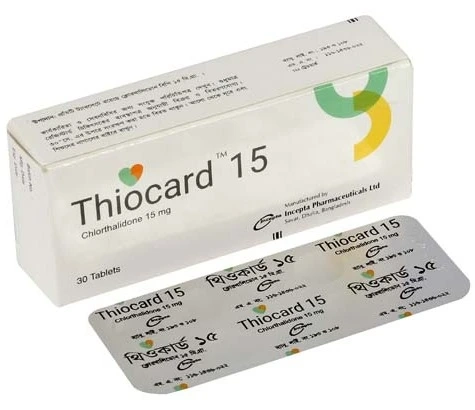
Clortha Tablet 15 mg is a thiazide-like diuretic used for the treatment of hypertension and for management of edema caused by conditions such as heart failure or renal impairment. Clortha Tablet 15 mg improves blood pressure and swelling by preventing water absorption from the kidneys through inhibition of the Na+/Cl− symporter in the distal convoluted tubule cells in the kidney. The exact mechanism of chlorthalidone's anti-hypertensive effect is under debate, however, it is thought that increased diuresis results in decreased plasma and extracellular fluid volume, decreased cardiac output and therefore overall reduction in blood pressure.
Clortha Tablet 15 mg is considered first-line therapy for management of uncomplicated hypertension as there is strong evidence from meta-analyses that thiazide diuretics such as chlorthalidone reduce the risk of stroke, myocardial infarction, heart failure, and cardiovascular all-cause mortality in patients with hypertension. In particular, the ALLHAT trial confirmed the role of thiazide diuretics as first-line therapy and demonstrated that chlorthalidone had a statistically significant lower incidence of stroke and heart failure when compared to Lisinopril, Amlodipine, or Doxazosin. Further studies have indicated that low-dose thiazides are as good as, and in some secondary endpoints, better than β-blockers, ACE inhibitors, Calcium Channel Blockers or ARBs.
Clortha Tablet 15 mg has been shown to have a number of pleiotropic effects that differentiate it from other diuretics such as Hydrochlorothiazide. In addition to its antihypertensive effects, chlorthalidone has also been shown to decrease platelet aggregation and vascular permeability, as well as promote angiogenesis in vitro, which is thought to be partly the result of reductions in carbonic anhydrase–dependent pathways. These pathways may play a role in chlorthalidone's cardiovascular risk reduction effects.
Uses
Clortha Tablet 15 mg is a diuretic used to treat hypertension or edema caused by heart failure, renal failure, hepatic cirrhosis, estrogen therapy, and other conditions.
Clortha Tablet 15 mg is indicated in the management of hypertension either as the sole therapeutic agent or to enhance the effect of other antihypertensive drugs in the more severe forms of hypertension.
Clortha Tablet 15 mg is indicated as adjunctive therapy in edema associated with congestive heart failure, hepatic cirrhosis, and corticosteroid and estrogen therapy.
Clortha Tablet 15 mg has also been found useful in edema due to various forms of renal dysfunction, such as nephrotic syndrome, acute glomerulonephritis, and chronic renal failure.
Associated Conditions
Mechanism of Action
Clortha Tablet 15 mg prevents reabsorption of sodium and chloride through inhibition of the Na+/Cl- symporter in the cortical diluting segment of the ascending limb of the loop of Henle. Reduction of sodium reabsorption subsequently reduces extracellular fluid and plasma volume via an osmotic, sodium-driven diuresis. By increasing the delivery of sodium to the distal renal tubule, Clortha Tablet 15 mg indirectly increases potassium excretion via the sodium-potassium exchange mechanism. The exact mechanism of chlorthalidone's anti-hypertensive effect is under debate, however, it is thought that increased diuresis results in decreased plasma and extracellular fluid volume which therefore requires decreased cardiac output and overall lowers blood pressure. Clortha Tablet 15 mg has also been shown to decrease platelet aggregation and vascular permeability, as well as promote angiogenesis in vitro, which is thought to be partly the result of reductions in carbonic anhydrase–dependent pathways. These pathways may play a role in chlorthalidone's cardiovascular risk reduction effects.
Volume of Distribution
Clortha Tablet 15 mg has been shown to rapidly concentrate within erythrocytes and subsequently equilibrate via a slow diffusion back into the serum compartment, resulting in a large volume of distribution.
Protein Binding
Approximately 75 percent of the drug is bound to plasma proteins, 58 percent of the drug being bound to albumin. This is caused by an increased affinity of the drug to erythrocyte carbonic anhydrase.
Route of Elimination
Approximately 50% of the administered dose is excreted unmetabolized through the kidney, and excretion is characterized by biphasic elimination with a rapid phase followed by a slow secretory phase.
Half Life
40-50 hours
Food Interactions
- Take with food. Food may increase bioavailability.
Dosage
Hypertension: Usual adult dose is 25 to 50 mg daily. The clinically useful dosage range is 12.5 to 50 mg daily. Doses greater than 50 mg per day increase metabolic complications and are rarely of therapeutic benefit. For a given dose, the full effect is reached after 3 to 4 weeks. If the decrease in blood pressure obtained using doses of 25 or 50 mg/day proves inadequate, combined treatment with other antihypertensive drugs (such as beta-blockers and ACE inhibitors) is recommended. When adding an ACE inhibitor, Clortha Tablet 15 mg is to be reduced or discontinued.
Edema of Specific Origin: The lowest effective dose is to be identified by titration. Maintenance doses should not exceed 50 mg/day and should be administered over limited periods only. The dosage should be individually adapted to the clinical picture and patient response. For long-term therapy, the lowest possible dosage sufficient to maintain an optimal effect should be employed; this applies particularly to elderly patients.
The therapeutic effect of Clortha Tablet 15 mg occurs even without salt restriction and is well sustained during continued use.
The elderly: This is a suitable drug for treating hypertension in the elderly, in particular systolic hypertension. Dose of 50 mg daily, or less, should be used to avoid hypovolemia and hypokalemia.