Introduction
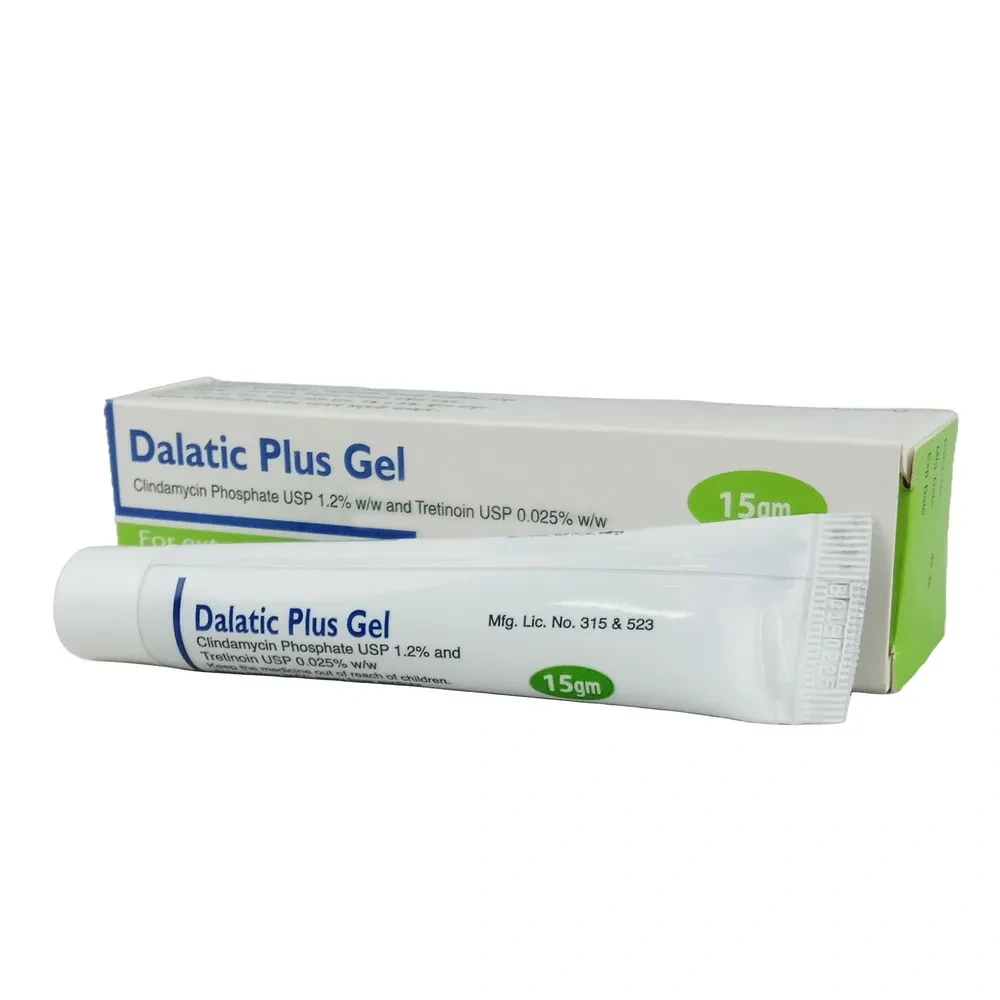
Clindamycin + Tretinoin is a combination topical medication used primarily to treat acne. Clindamycin is an antibiotic that targets the bacteria responsible for acne, while Tretinoin, a retinoid, helps to reduce inflammation, prevent clogged pores, and promote skin cell turnover. This combination effectively reduces acne formation, treats existing acne, and improves skin texture.
Uses
This combination is primarily used for:
- Treatment of moderate to severe acne vulgaris.
- Prevention of new acne lesions while healing existing pimples and reducing post-inflammatory hyperpigmentation.
Mechanism of Action
The mechanisms of action for Clindamycin and Tretinoin are distinct but complementary:
- Clindamycin: An antibiotic that inhibits bacterial protein synthesis by binding to the 50S ribosomal subunit of Propionibacterium acnes, the bacteria implicated in acne formation. This reduces bacterial load and inflammation in acne lesions.
- Tretinoin: A retinoid that promotes the turnover of epithelial cells, preventing the formation of comedones (clogged pores) and reducing the appearance of fine lines, hyperpigmentation, and scars. It normalizes keratinization and decreases the stickiness of skin cells, reducing pore blockages.
How Long Does It Take to Work?
The effects of Clindamycin + Tretinoin typically become noticeable after 4 to 8 weeks of consistent use. Maximum results may take 12 weeks or longer, as it works to prevent new breakouts while gradually reducing existing acne lesions and post-acne marks.
Absorption
Both Clindamycin and Tretinoin are minimally absorbed into the systemic circulation when applied topically. Tretinoin penetrates the epidermis and dermis, where it exerts its effect. Clindamycin also penetrates the skin, targeting bacteria at the site of inflammation but is only minimally absorbed systemically.
Route of Elimination
Due to its minimal systemic absorption, most of the Clindamycin and Tretinoin remains localized in the skin. Any absorbed drug is metabolized in the liver and excreted through the urine and feces.
Dosage
Before sleep: Wash the face gently with a mild soap and water, then pat the skin dry. Apply the Gel with finger tips through the face gently.In the morning: Apply a sunscreen after the application of Gel. Do not wash your face more than 2 or 3 times a day. Apply the sunscreen cream as needed.
Safety and effectiveness in children below 12 years of age have not been established.
The typical dosage for Clindamycin + Tretinoin topical combination:
- Adults and Adolescents (12 years and older): Apply a thin layer to the affected area once daily at bedtime or as directed by a physician.
- Children under 12 years: Use is not typically recommended unless under medical supervision.
Administration
This medication is applied topically to the skin:
- Wash your face with a mild cleanser and pat dry before application.
- Apply a thin layer to the entire affected area, avoiding the eyes, mouth, and mucous membranes.
- It is usually applied once daily in the evening.
- Do not use excessive amounts, as this may increase the risk of irritation without improving efficacy.
Side Effects
Common side effects include:
- Skin dryness
- Redness and irritation at the site of application
- Peeling or flaking of the skin
- Increased sensitivity to sunlight (photosensitivity)
Serious but rare side effects may include severe allergic reactions (rash, itching, swelling, dizziness) or gastrointestinal issues due to Clindamycin absorption.
Toxicity
When applied topically, toxicity is rare due to minimal systemic absorption. However, excessive use of Tretinoin may lead to severe skin irritation. Ingesting the medication can cause toxicity and should be treated as a medical emergency. Clindamycin may cause diarrhea or colitis if absorbed in significant amounts.
Precautions
Precautions to take when using Clindamycin + Tretinoin include:
- Avoid prolonged sun exposure, tanning beds, or UV light, as the combination increases photosensitivity.
- Use sunscreen (SPF 30 or higher) and protective clothing when outdoors.
- Avoid using other potentially irritating topical products, such as astringents, exfoliants, or harsh soaps.
- Not recommended for use in patients with Crohn’s disease, ulcerative colitis, or a history of antibiotic-associated colitis.
Interaction
Drug Interactions
Clindamycin + Tretinoin may interact with the following drugs:
- Other topical acne treatments: Benzoyl peroxide can inactivate Tretinoin, reducing the efficacy of the treatment.
- Oral antibiotics: Concurrent use of oral antibiotics (especially Clindamycin) can increase the risk of side effects.
- Photosensitizing drugs: Medications such as diuretics or tetracycline may increase sensitivity to sunlight when used with Tretinoin.
Food Interactions
There are no significant food interactions with Clindamycin + Tretinoin topical application. However, patients should avoid excessive sun exposure and use sun protection when outdoors.
Disease Interactions
Patients with the following conditions should use Clindamycin + Tretinoin cautiously:
- Gastrointestinal diseases, including colitis, may increase the risk of Clindamycin-associated diarrhea.
- Chronic skin conditions like eczema may be aggravated by Tretinoin's irritating properties.
Pregnancy Use
Clindamycin is classified as pregnancy category B, indicating it is generally safe for use during pregnancy. Tretinoin, however, is category C when used topically, as there is insufficient data to confirm its safety. Pregnant women should use this combination only if clearly needed and directed by their physician.
Lactation Use
Clindamycin is excreted in breast milk, and while topical use minimizes systemic exposure, caution is advised. Tretinoin's effects on breastfeeding infants are unknown. It is important to avoid applying the medication to areas that may come into contact with the infant.
Acute Overdose
An overdose with Clindamycin + Tretinoin topical is unlikely but could result in excessive skin irritation, peeling, redness, and discomfort. In case of accidental ingestion, immediate medical attention should be sought as systemic toxicity may occur, especially with Clindamycin.
Contraindication
Clindamycin + Tretinoin is contraindicated in patients with:
- Known hypersensitivity to Clindamycin, Tretinoin, or any component of the formulation.
- History of antibiotic-associated colitis.
- Pregnancy, unless deemed necessary by a healthcare provider.
Use Direction
The medication should be used as directed by a healthcare provider. Apply a thin layer to the affected area in the evening, after washing and drying the skin. Avoid applying to sensitive areas like the eyes, lips, and mucous membranes. Do not use more than the prescribed amount, as excessive use may lead to irritation without improving efficacy.
Storage Conditions
Store Clindamycin + Tretinoin at room temperature (15°C to 25°C), away from direct sunlight and moisture. Keep the medication tightly closed and out of reach of children.
Volume of Distribution
The volume of distribution for Clindamycin and Tretinoin is minimal when applied topically. Systemic absorption is limited due to localized action on the skin.
Half-Life
Clindamycin has a half-life of approximately 2-3 hours when administered systemically, but its half-life is not clinically significant in topical use. Tretinoin’s half-life following topical administration is difficult to measure due to limited systemic absorption.
Clearance
Clindamycin is primarily cleared by the liver and excreted through the urine and bile. Tretinoin undergoes metabolism in the liver and is excreted in urine and feces. However, due to minimal systemic absorption from topical application, clearance is not typically clinically relevant.