Introduction
Ciprofloxacin and hydrocortisone acetate are combined in a topical formulation used primarily for treating and managing inflammatory conditions of the skin and eyes. Ciprofloxacin is a fluoroquinolone antibiotic, and hydrocortisone acetate is a corticosteroid. This combination provides both antibacterial and anti-inflammatory effects.
Uses
The combination of ciprofloxacin and hydrocortisone acetate is used for:
- Treating bacterial infections of the eye, such as conjunctivitis and blepharitis, where inflammation and infection are present.
- Managing inflammatory skin conditions with a bacterial component, including certain types of dermatitis and eczema.
Mechanism of Action
The mechanism of action of the combination involves:
- Ciprofloxacin inhibits bacterial DNA gyrase and topoisomerase IV, which are crucial for DNA replication and repair, leading to bacterial cell death.
- Hydrocortisone acetate reduces inflammation by suppressing the release of inflammatory mediators, inhibiting immune responses, and reducing swelling and redness.
How Long Does It Take to Work?
Improvement in symptoms can typically be observed within a few days of starting treatment. The antibacterial effects of ciprofloxacin usually start to alleviate infection signs within 24 to 48 hours, while the anti-inflammatory effects of hydrocortisone acetate may take a bit longer, often showing improvement within a few days. Full resolution of symptoms usually occurs within 7 to 10 days, depending on the severity of the condition.
Absorption
When applied topically, ciprofloxacin and hydrocortisone acetate have minimal systemic absorption. Ciprofloxacin is primarily active at the site of infection, and hydrocortisone acetate exerts its effects locally. Systemic absorption is low, reducing the risk of systemic side effects.
Route of Elimination
The primary route of elimination for ciprofloxacin and hydrocortisone acetate, when applied topically, is through local metabolism and excretion. Ciprofloxacin is mainly excreted through the kidneys in the urine, while hydrocortisone acetate is metabolized in the liver and excreted in the urine.
Dosage
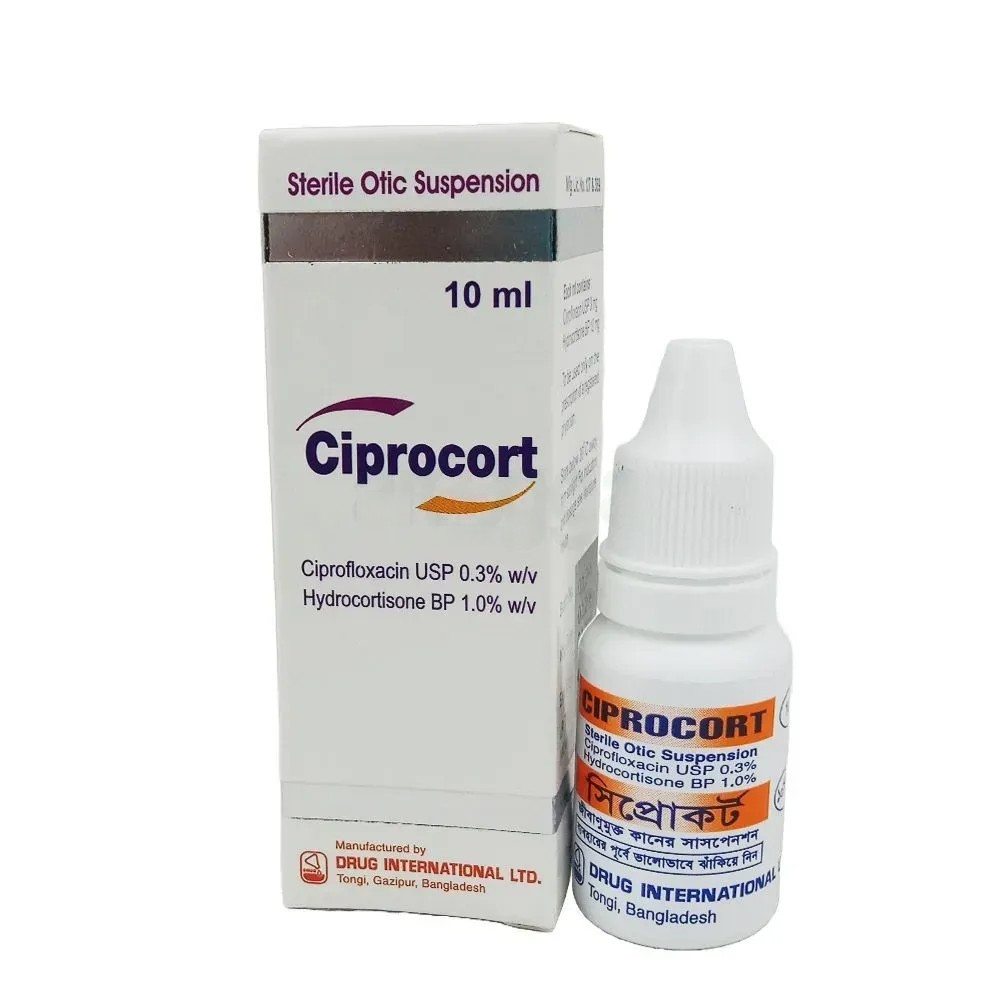
Adult dose: After Cleansing, 2-4 drops instilled thrice to four times a day and at night or as directed by the physician.Paediatric use: Safety and efficacy of Ciprocort otic suspension have been established in paediatric patients 2 years and older in adequate and well controlled clinical trials.
The dosage of the combination is typically:
- Apply a thin layer of the ointment or drops to the affected area 2 to 4 times daily, depending on the specific instructions provided by the healthcare provider.
Administration
The combination is administered topically:
- For eye conditions, apply the drops or ointment directly to the conjunctival sac of the eye, following the specific dosing instructions.
- For skin conditions, apply a thin layer of the ointment to the affected area, ensuring proper coverage without over-application.
Side Effects
Common side effects include:
- Localized irritation or burning sensation at the site of application.
- Redness or itching of the skin or eyes.
- Severe allergic reactions (e.g., rash, swelling, difficulty breathing).
- Significant worsening of symptoms or development of new symptoms.
Toxicity
Toxicity is rare due to minimal systemic absorption. However, excessive or prolonged use can lead to systemic effects from corticosteroids or antibiotic resistance. Discontinue use and seek medical advice if signs of toxicity, such as severe systemic reactions, occur.
Precautions
Precautions include:
- Ensure the solution or ointment is sterile before application to avoid infections.
- Avoid application to large areas of broken or inflamed skin or near the eyes unless directed by a healthcare provider.
- Monitor for signs of worsening infection or adverse reactions, and consult a healthcare provider if symptoms do not improve or worsen.
Interaction
Interactions are unlikely due to topical application, but:
- Inform healthcare providers of all other medications or topical treatments being used to avoid potential interactions.
- Consider potential interactions with systemic medications if used in conjunction with other therapies.
Disease Interaction
Use with caution in:
- Patients with a history of hypersensitivity to ciprofloxacin, hydrocortisone, or similar drugs.
- Individuals with pre-existing conditions that could be aggravated by corticosteroids or antibiotics.
Drug Interaction
Drug interactions are generally minimal due to the topical nature of the treatment. However:
- Review all systemic medications with a healthcare provider to ensure that no adverse interactions occur.
- Consider interactions with other topical treatments used in conjunction.
Food Interactions
There are no known food interactions with this combination. The topical application is not affected by dietary intake.
Pregnancy Use
The combination is classified as pregnancy category C, meaning that risk cannot be ruled out. It should be used during pregnancy only if the potential benefits outweigh the risks. Consult a healthcare provider before use during pregnancy to ensure safety.
Lactation Use
Use during lactation should be approached with caution. As the medication is applied topically, systemic absorption is minimal, but it is still advisable to consult a healthcare provider before use while breastfeeding to ensure no adverse effects on the infant.
Acute Overdose
Acute overdose is unlikely with topical use. If excessive application or accidental ingestion occurs, seek medical attention. Symptoms of overdose would be related to high doses of the components and could include systemic effects or worsening of local reactions.
Contraindication
The combination is contraindicated in:
- Patients with known hypersensitivity to ciprofloxacin, hydrocortisone acetate, or any components of the formulation.
- Individuals with certain types of infections where corticosteroids are contraindicated, such as viral or fungal infections.
Use Direction
For effective use:
- Apply the medication as directed by a healthcare provider or according to the specific product instructions.
- Use the medication only on the affected area and avoid over-application.
- Monitor for any adverse reactions and consult a healthcare provider if symptoms persist or worsen.
Storage Conditions
Store the medication at room temperature (15-30°C or 59-86°F), away from direct sunlight and moisture. Keep it in its original container and out of reach of children. Do not use beyond the expiration date and ensure the product remains sterile.
Volume of Distribution
The volume of distribution is not typically measured for topical formulations. The medication primarily acts locally at the site of application, with minimal systemic distribution.
Half Life
The half-life is not usually relevant for topical formulations. The medication's effects are primarily localized, and systemic half-life data is not applicable. The effects last only as long as the medication is in contact with the affected area.
Clearance
Clearance is not a key parameter for topical applications. Any systemic absorption is minimal and not typically considered for topical use. The medication is metabolized and excreted according to its components' characteristics.