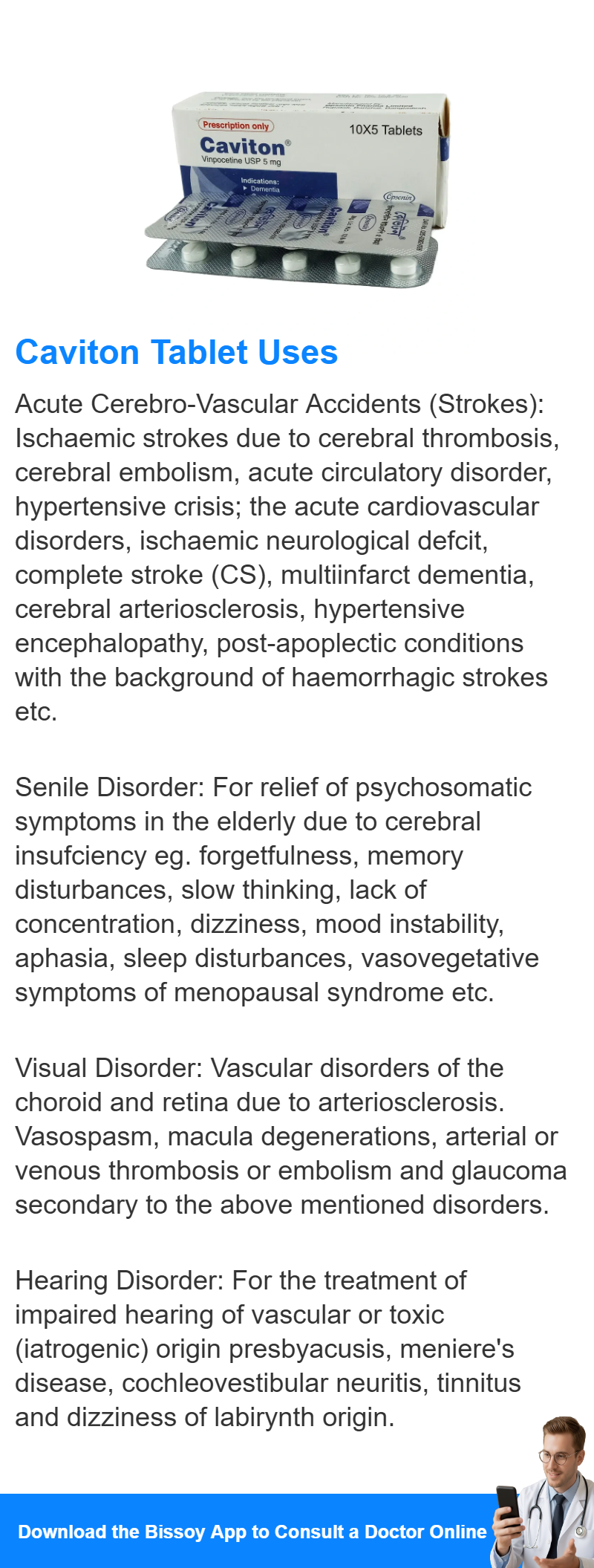
Caviton Tablet 5 mg is a synthetic derivative of the alkaloid vincamine, extracted from the periwinkle plant. It is commonly used as a neuroprotective agent and cognitive enhancer, particularly in the treatment of cerebrovascular disorders and conditions related to impaired blood flow to the brain. Caviton Tablet 5 mg is popular for improving memory, cognitive function, and cerebral metabolism.
Caviton Tablet 5 mg is used for:
| Brand Name | Caviton |
|---|---|
| Type | Tablet |
| Weight | 5 mg |
| Generic | Vinpocetine |
| Manufacturer | Opsonin Pharma Ltd. |
| Available in | English বাংলা |
Caviton Tablet 5 mg works primarily by inhibiting phosphodiesterase (PDE) enzymes and modulating ion channels. It increases cerebral blood flow by relaxing smooth muscle in blood vessels and improving microcirculation in the brain. Additionally, it enhances the utilization of glucose and oxygen in the brain and has antioxidant properties, protecting neurons from oxidative stress.
The onset of action for Caviton Tablet 5 mg is typically within 1 to 2 hours after oral administration. It may take several weeks of consistent use for the full cognitive-enhancing effects to be realized in chronic conditions.
Caviton Tablet 5 mg is absorbed rapidly after oral administration. It has a bioavailability of around 6.7% due to significant first-pass metabolism in the liver. Peak plasma concentrations are usually reached within 1 to 2 hours after ingestion.
Caviton Tablet 5 mg is primarily metabolized in the liver to its main metabolite, apovincaminic acid. It is then excreted mainly through the kidneys as metabolites. A small fraction of the drug is excreted unchanged in the urine.
The typical dosage of Caviton Tablet 5 mg for cognitive enhancement and neuroprotection ranges from 5 mg to 30 mg per day, divided into two to three doses. For cerebrovascular insufficiency, doses of up to 20 mg three times daily may be recommended. Dosage should be individualized based on patient needs and clinical response.
Caviton Tablet 5 mg is administered orally in the form of tablets or capsules. It is recommended to take the medication with food to enhance absorption. The tablets should be swallowed whole with a glass of water, without crushing or chewing.
Common side effects include:
Caviton Tablet 5 mg is generally well-tolerated at therapeutic doses. In cases of overdose, symptoms may include nausea, dizziness, and hypotension. Treatment is supportive and may include discontinuation of the drug and symptomatic care.
Precautions should be taken in patients with:
Caviton Tablet 5 mg may interact with:
Caviton Tablet 5 mg should be used cautiously in patients with:
Caviton Tablet 5 mg may interact with several types of medications, including:
Caviton Tablet 5 mg is best taken with food to enhance absorption. There are no significant food interactions, but a balanced diet may improve overall therapeutic outcomes.
Caviton Tablet 5 mg is not recommended for use during pregnancy due to insufficient evidence regarding its safety. It should only be used if the potential benefits outweigh the risks to the fetus.
There is limited information on the excretion of Caviton Tablet 5 mg in breast milk. It is generally recommended to avoid its use during lactation unless absolutely necessary, as the effects on the nursing infant are unknown.
In cases of acute overdose, symptoms may include nausea, vomiting, dizziness, and hypotension. Treatment is supportive and may involve discontinuation of the drug, hydration, and monitoring of vital signs. Seek medical attention if overdose occurs.
Caviton Tablet 5 mg is contraindicated in patients with:
Take Caviton Tablet 5 mg exactly as prescribed by your healthcare provider. Adhere to the recommended dosage and schedule. It is important not to abruptly discontinue the medication without consulting a healthcare provider, especially in cases of long-term use.
Store Caviton Tablet 5 mg at room temperature, between 20°C and 25°C (68°F and 77°F). Keep it away from excessive heat, light, and moisture. Ensure it is stored out of reach of children and pets.
The volume of distribution of Caviton Tablet 5 mg is approximately 3.4 L/kg, indicating its moderate distribution into body tissues and fluids.
The elimination half-life of Caviton Tablet 5 mg is approximately 2 to 4 hours. Due to this short half-life, it is typically dosed multiple times per day to maintain therapeutic levels.
Caviton Tablet 5 mg is primarily cleared by hepatic metabolism, with renal excretion of its metabolites. Clearance rates may vary depending on liver and kidney function. In individuals with impaired hepatic or renal function, dose adjustments may be necessary.
See in details version Caviton Tablet 5 mg also Caviton Tablet 5 mg in bangla
Prof. Dr. Sehereen Farhad Siddiqua
Gynecology, Obstetrics Specialist & Laparoscopic Surgeon
Dr. lqbal Murshed Kabir
Gastroenterology (Stomach, Liver, Gallbladder, Pancreas) & Medicine Specialist