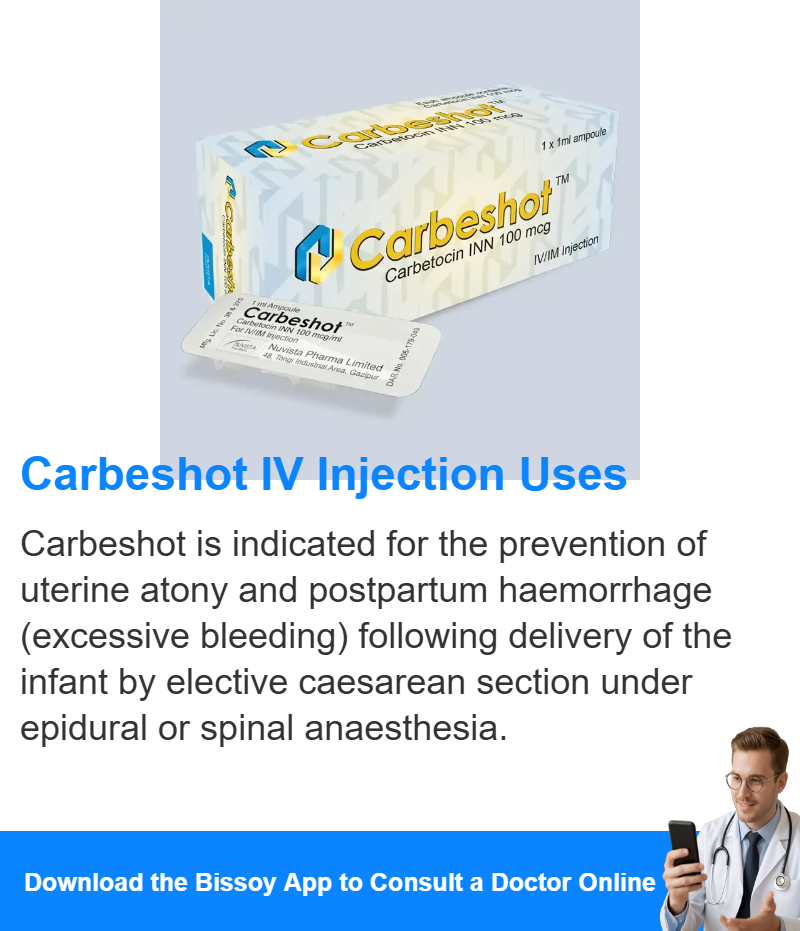
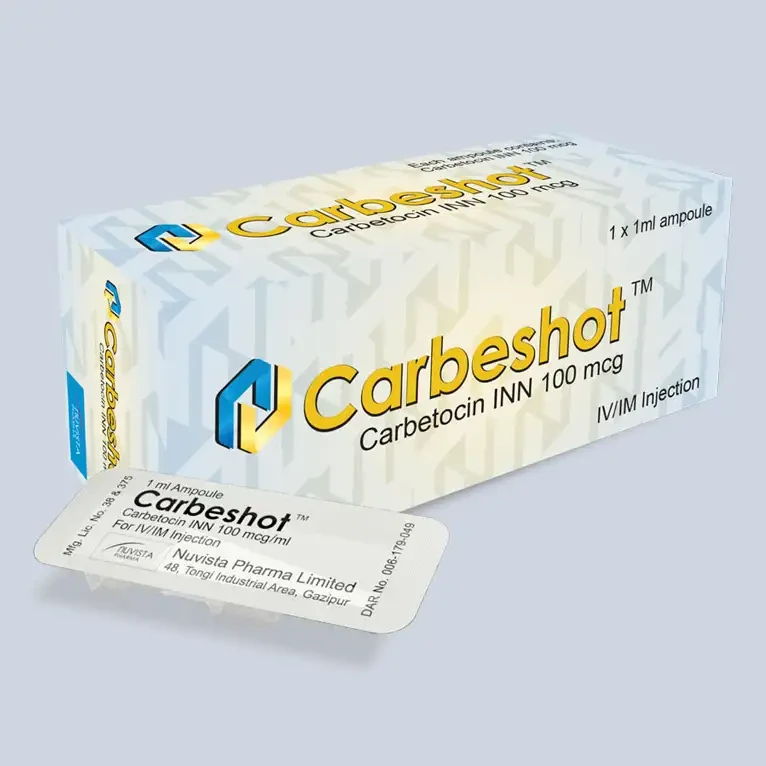
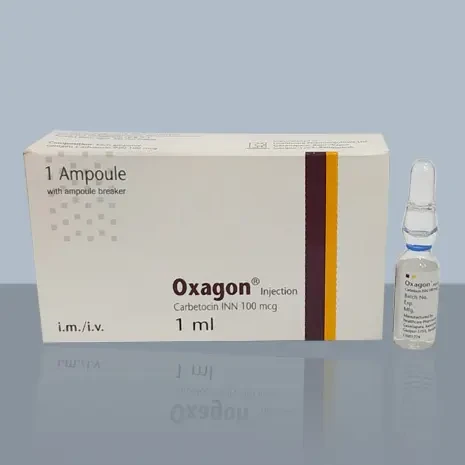
Carbeshot IV Injection 100 mcg/ml

Carbeshot IV Injection 100 mcg/ml is a synthetic oxytocin analog used to induce labor or as a tocolytic. It is indicated to control postpartum hemorrhage due to uterine atony associated with uterine inertia, as well as in the prevention and treatment of uterine muscle syndrome during the third trimester of pregnancy. It is available in injection form in a 20ml vial.

Uses For

Carbeshot IV Injection 100 mcg/ml is mainly used to induce labor and control postpartum hemorrhage associated with uterine atony due to uterine inertia. Additionally, it can also be used to prevent and treat uterine muscle syndrome during the third trimester of pregnancy.

Mechanism Of Action

The active component of the drug, Carbeshot IV Injection 100 mcg/ml, is a delta receptor agonist with a much higher potency than oxytocin. Its mechanism of action involves binding to isotocin receptors, which are expressed in both the myometrium and endometrium, to induce uterine contraction. Additionally, carbetocin has vasopressin-like properties, which can lead to vasoconstriction. This results in improved uterine perfusion, delaying postpartum hemorrhage.

How Long Does It Take To Work?

Carbeshot IV Injection 100 mcg/ml starts to work within 5-10 minutes after administration and its effects can last anywhere from 2-4 hours. In some cases, it can take up to 30 minutes for the drug to start producing its effects.

Absorption

Carbeshot IV Injection 100 mcg/ml is rapidly and completely absorbed after intravenous administration.

Route of Elimination

Carbeshot IV Injection 100 mcg/ml is mainly eliminated via renal excretion. After intravenous administration, there is typically a rapid decline in plasma levels over 4 to 6 hours, with a median elimination half life of 3.7 hours.

Dosage

A single intravenous dose of 100 mcg of carbetocin injection is administered by bolus injection, slowly over 1 minute, only when infant delivery has been completed by caesarean section under epidural or spinal anaesthesia. carbetocin is to be used as a single dose only.

The recommended dose of Carbeshot IV Injection 100 mcg/ml is 2 mL, corresponding to 100 mcg given intravenously, which is repeated 1 to 4 hours depending on the intensity of uterine contractions. If the effect does not occur, a further single dose can be used up to 8 hours after the previous dose. The maximum dose is 500 mcg over a 24-hour period.

Administration

Carbeshot IV Injection 100 mcg/ml should be administered intravenously at a rate of 1 mL per minute. It should not be administered intramuscularly or subcutaneously.

Side Effects

Common side effects of Carbeshot IV Injection 100 mcg/ml include headache, dizziness, nausea, vomiting, abdominal discomfort, diarrhea, flushing, hypertension, and tachycardia. Rarely, more serious side effects such as pulmonary edema, arrhythmia, and cardiac arrest have been reported.

Toxicity

The pharmacologic effects of Carbeshot IV Injection 100 mcg/ml are dose-dependent. Overdoses of Carbeshot IV Injection 100 mcg/ml can result in an excessive uterine contraction, which can lead to uterine rupture. Additionally, it is important to note that the maximum recommended dose of Carbeshot IV Injection 100 mcg/ml is 500 mcg over a 24-hour period.

Precautions

Carbeshot IV Injection 100 mcg/ml should not be used in individuals with hypothyroidism, adrenal insufficiency, hypertension, cardiac disorders, and hepatic impairment. Additionally, Carbeshot IV Injection 100 mcg/ml should not be used in individuals with previous cesarean delivery or induced labor. Finally, special caution should be taken when administering Carbeshot IV Injection 100 mcg/ml to geriatric patients or those with high-risk factors for adverse reactions.

Interaction

Carbeshot IV Injection 100 mcg/ml is known to interact with antidiuretic hormones such as vasopressin and methothine, as well as with drugs used to treat hypertension and diabetes.

Disease Interaction

Carbeshot IV Injection 100 mcg/ml is contraindicated in individuals with congenital or acquired uterine abnormalities, as it can cause uterine rupture. Additionally, it is contraindicated in individuals with oligohydramnios, postpartum infection, and prior myocardial infarction.

Drug Interaction

Carbeshot IV Injection 100 mcg/ml is known to interact with drugs used in the treatment of hypertension, diabetes, and antidiuretic hormones. Therefore, it is recommended to closely monitor the patient's response and blood pressure when administering Carbeshot IV Injection 100 mcg/ml in combination with these drugs.

Food Interactions

Carbeshot IV Injection 100 mcg/ml should be taken approximately 30 minutes before meal or 2 hours after meal. Additionally, antacid medications should not be taken within 2 hours of administering Carbeshot IV Injection 100 mcg/ml as they could interfere with absorption.

Pregnancy Use

Carbeshot IV Injection 100 mcg/ml is not recommended for use in pregnant women, as it has the potential to cause uterine contractions that could lead to uterine rupture. If necessary, it should be used in pregnant women only after careful consideration of the potential risks.

Lactation Use

Carbeshot IV Injection 100 mcg/ml should not be used in nursing mothers, as it is not known whether or not it is excreted in breast milk. If necessary, it should be used in nursing mothers only after careful consideration of the potential risks.

Acute Overdose

Carbeshot IV Injection 100 mcg/ml should not be used in excess of the recommended dose due to the possibility of excessive uterine contractions leading to uterine rupture. In case of acute overdose, supportive measures should be taken as necessary.

Contraindication

Carbeshot IV Injection 100 mcg/ml is contraindicated in individuals with congenital or acquired uterine abnormalities, as it can cause uterine rupture. Additionally, it is contraindicated in individuals with hypothyroidism, adrenal insufficiency, hypertension, cardiac disorders, hepatic impairment, prior myocardial infarction, oligohydramnios, and postpartum infection.

Use Direction

Carbeshot IV Injection 100 mcg/ml should be dissolved in 10 ml of sterile water prior to administration. The recommended dose is 2 mL (100 mcg), which should be administered intravenously at a rate of 1 mL per minute. It should not be administered intramuscularly or subcutaneously. The maximum dose is 500 mcg over a 24-hour period.

Storage Condition

Carbeshot IV Injection 100 mcg/ml should be stored in a cool (5°C - 30°C) and dry place away from direct sunlight or moisture.

Volume of Distribution

The volume of distribution of Carbeshot IV Injection 100 mcg/ml is not known.

Half Life

After intravenous administration, the elimination half life of Carbeshot IV Injection 100 mcg/ml is 3.7 hours.

Clearance

The clearance of Carbeshot IV Injection 100 mcg/ml is not known.

See in details version Carbeshot IV Injection 100 mcg/ml also Carbeshot IV Injection 100 mcg/ml in bangla

Social card

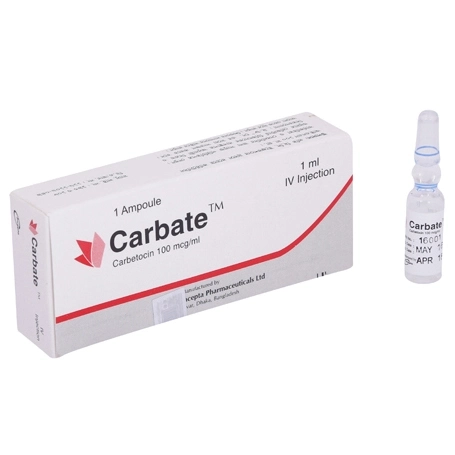
Uses

Some Frequently Asked Questions About Carbeshot IV Injection 100 mcg/ml

*** Taking medicines without doctor's advice can cause long-term problems.
Dr. Jebunnesa

Dr. Jebunnesa

Newborn, Adolescent & Child Diseases Specialist

Call Doctor
Prof. Dr. Md. Shah Alam

Prof. Dr. Md. Shah Alam

Mental Diseases, Drug Addiction, Sexual Health Specialist & Psychotherapist

Call Doctor
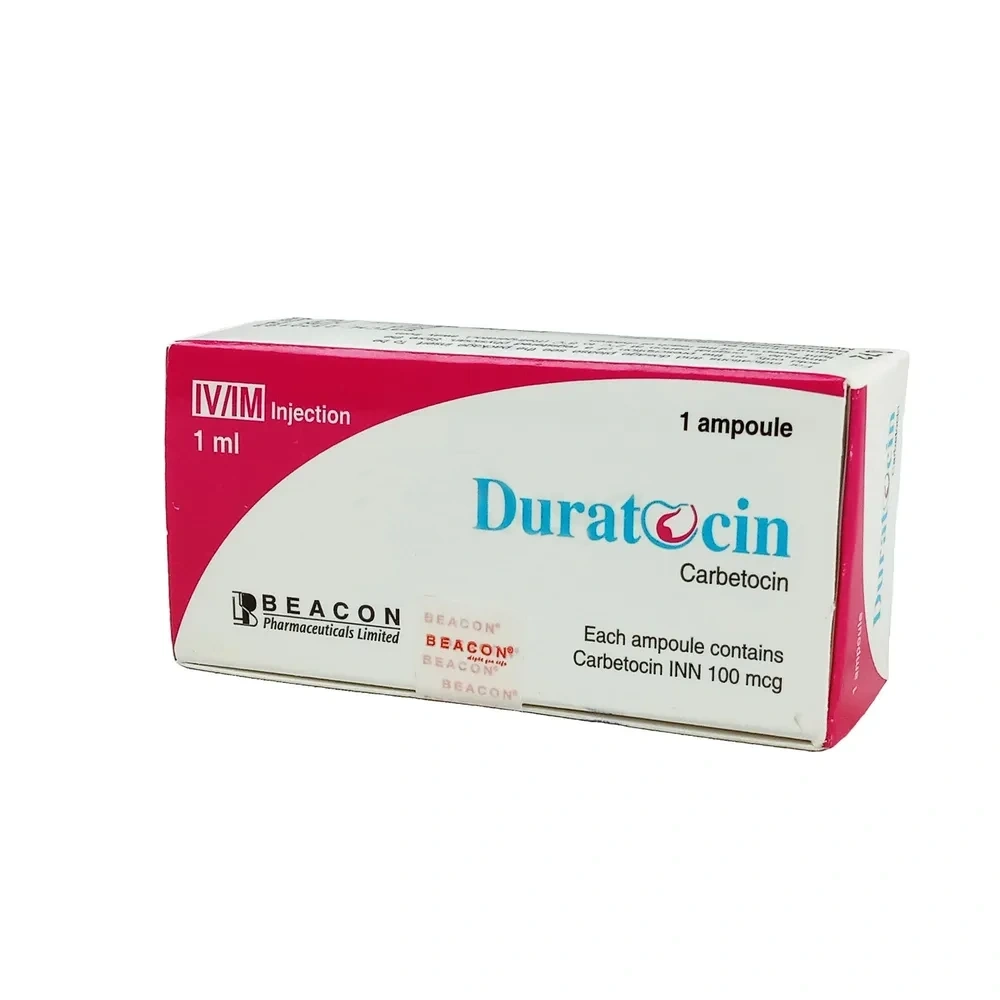
Related Medicines