Introduction
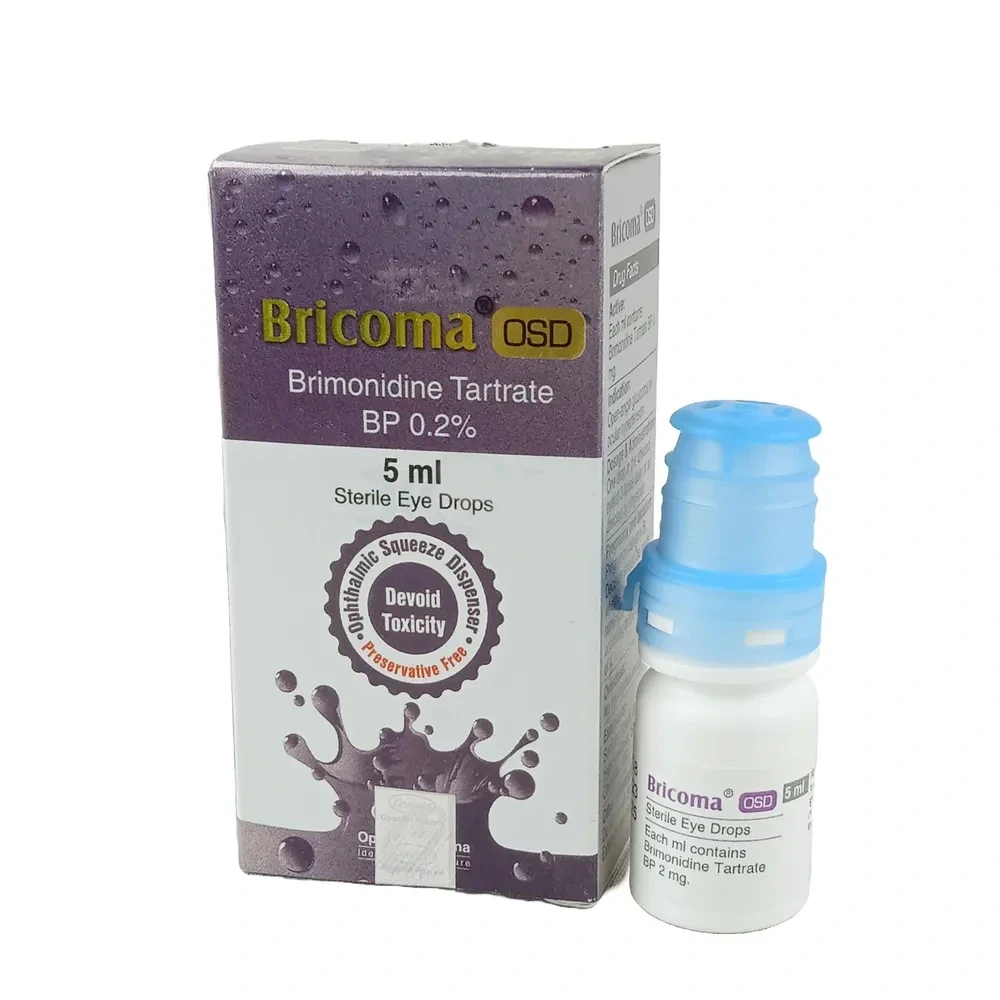
Brimonidine is an alpha-adrenergic agonist and 2-imidazoline derivative. It is considered to be a third generation alpha-2 aadrenergic receptor agonist, since it displays preferential binding at alpha-2 adrenoceptors over alpha-1 receptors. Brimonidine displays a higher selectivity toward the alpha-2 adrenergic receptors than clonidine or apraclonidine, which are also alpha-2 adrenergic agonists. Alpha-2 adrenergic agonists are members of the ocular hypotensive agent drug class that are used in the chronic treatment of glaucoma. Early treatment and management of glaucoma, which predominantly involves the lowering of intraocular pressure, is critical since glaucoma is considered to be a common cause of blindness worldwide.
Ophthalmically, brimonidine is used to lower intraocular pressure by reducing aqueous humor production and increasing uveoscleral outflow. Because it is oxidately stable, brimonidine is associated with fewer reports of ocular allergic reactions compared to other alpha-2 adrenergic agonists. The ophthalmic solution of brimonidine is the only selective alpha-adrenergic receptor agonist approved for chronic treatment in glaucoma. Brimonidine is also found in ophthalmic solutions in combination with brinzolamide under the market name Simbrinza for the reduction in intraocular pressure. Unlike nonselective beta-blockers used in ocular hypertension, brimonidine is not associated with significantly adverse cardiopulmonary side effects. Thus brimonidine is an effective and safe alternative to beta-blockers, in patients with, or at high risk for, cardiopulmonary disease. The topical form is for the symptomatic treatment of persistent facial erythema of rosacea in adults. Brimonidine is the first topical treatment approved for facial erythema of rosacea.
Uses
Brimonidine is an alpha-2 adrenergic agonist used to treat glaucoma and ocular hypertension, as well as facial erythema in rosacea.
Opthalmic
Indicated for lowering intraocular pressure (IOP) in patients with open-angle glaucoma or ocular hypertension as monotherapy or combination product with brinzolamide.
Topical
Indicated for the treatment of persistent (non-transient) facial erythema of rosacea in adults 18 years of age or older.
Associated Conditions
Pharmacodynamics
Brimonidine is a highly selective alpha-2 adrenergic receptor agonist that is 1000-fold more selective for the alpha2-adrenergic receptor than the alpha1-adrenergic receptor. This characteristic gives the drug some therapeutic advantages, since it reduces the risk of systemic side effects, such as systemic hypotension, bradycardia, and sedation. In addition, there is a reduction in the risk for developing alpha-1 mediated ocular unwanted effects, such as conjunctival blanching, mydriasis, and eyelid retraction. However, despite high alpha-2 receptor specificity, brimonidine may still produce alpha-1 adrenoceptor-mediated ocular effects, such as conjunctival vasoconstriction. Brimonidine has a peak ocular hypotensive effect occurring at two hours post-dosing. In a randomized, double-blind clinical study, ocular administration of 0.2% brimonidine in healthy volunteers resulted in a 23% reduction of mean intraocular pressure from baseline at 3 hours following administration. In comparative studies consisting of patients with open-angle glaucoma or ocular hypertension, the ocular hypotensive effect of brimonidine was maintained during treatment periods of up to 1 year.
Brimonidine mediates vasoconstrictive effects and it was shown to exhibit anti-inflammatory properties in ex vivo human skin model and in vivo inflammation models. In a clinial trials consisting of adults with moderate to severe facial erythema of rosacea, brimonidine was shown to improve the extent of redness at 3 hours after application, compared to placebo. It was shown to be a potent vasoconstrictor of human subcutaneous vessels with a diameter of less than 200 µm. In in vivo mouse inflammation models, brimonidine displayed anti-inflammatory properties by inhibiting edema. In a randomized, double-blind study, brimonidine reduced erythema for the 12 hours of the study in a dose-dependent manner.
When adminsitered systemically, brimonidine was shown to cause cardiovascular effects by decreasing blood pressure, decreasing heart and respiratory rate, and prolonging the PR interval in the electrocardiogram. This is due to the targeting of adrenoceptors by the drug. Although the clinical significance has not been established, there is evidence that brimonidine exhibits neuroprotective activity in experimental models of cerebral ischemia and optic nerve injury. In vitro studies show that brimonidine mediated protective effects on neuronal cells from kainate acid insult and on cultured retinal ganglion cells from glutamate-induced cytotoxicity, which is a possible mediator of secondary neuronal degeneration in human glaucoma. Neuroprotective actions of brimonidine were also demonstrated in rat models of acute retinal ischemia and chronic IOP elevation. It has been proposed that brimonidine may exert neuroprotective effects on the retina and optic nerve by enhancing intrinsic retinal ganglion cell survival mechanisms and/or induction of neuronal survival factors, such as bFGF. However, further investigations are needed to conclude on these possible therapeutic benefits of the drug.
Mechanism of Action
In the eye, alpha-1 adrenoceptors play a role in vasoconstriction, mydriasis, eyelid retraction, and elevation of intraocular pressure (IOP) whereas alpha-2 adrenoceptors are responsible for IOP reduction via a complex Gi-coupled signaling cascade pathway. Activation of alpha-2 receptors leads to inhibition of adenylyl cyclase and reduction of cyclic AMP levels. As a result, there is a decrease in norpinephrine (NE) release at the synaptic junction, NE-induced stimulation of beta-2 adrenoceptors, and production of aqueous humor by the ciliary epithelium. An elevated IOP is the most significant risk factor for developing glaucomatous optic neuropathy, which is associated with progressive visual field loss and functional disability if left untreated. Regardless of the etiology of the disease, the aim of current therapies for glaucoma is to reduce IOP, as reduction of IOP significantly reduces the risk of progression of vision loss even when IOP is already within the normal range. When administered ophthalmically, brimonidine is rapidly absorbed into the eye, acts as an agonist at ocular alpha-2 adrenoceptors and lowers IOP via a dual mechanism of action. It is proposed that initial dosing of the drug causes a reduction in aqueous humour production and chronic dosing leads to an increase in uveoscleral outflow. Brimonidine does not affect episcleral venous pressure. By reducing IOP, brimonidine aims to reduce the likelihood of glaucomatous visual field loss in ocular hypertension, and slow the progression of visual field defect in established open-angle glaucoma. When applied topically on skin, brimonidine reduces erythema through direct vasocontriction of small arteries and veins. As brimonidine mediates a potent peripheral vasoconstrictive activity by selectively working on the alpha-2 adrenoceptors, the use of brimonidine is thought to be efficacious for the treatment of facial erythema of rosacea, which is thought to arise from vasomotor instability and abnormal vasodilation of the superficial cutaneous vasculature of the face.
Absorption
Brimonidine readily penetrates the cornea following ocular administration to reach pharmacologically active concentrations in the aqueous humor and ciliary body, the putative sites of its IOP-lowering activity. Following ocular administration of 0.2% brimonidine solution, the peak plasma concentrations were achieved within 1 to 4 hours.
In a clinical study of adult subjects with facial erythema of rosacea, brimonidine was cutaneously applied on facial skin in a repeated manner. While there was no drug accumulation in plasma, the highest peak plasma concentrations (Cmax) and AUC were 46 ± 62 pg/mL and 417 ± 264 pgxhr/mL, respectively.
Volume of Distribution
The volume of distribution of brimonidine has not been established. In animal studies, brimonidine was shown to cross the placenta and enter into the fetal circulation to a limited extent. As its lipophilicity is relatively low, brimonidine is not reported to easily cross the blood-brain barrier.
Protein Binding
The protein binding of brimonidine has not been studied.
Route of Elimination
Brimonidine and its metabolites are predominantly eliminated via urinary excretion, with 74% of the total dose being found in the urine.
Half Life
Following ocular administration of 0.2% brimonidine solution, the systemic half-life was approximately 3 hours.
Clearance
The apparent clearance has not been studied. However, the systemic clearance of brimonidine is reported to be rapid. Approximately 87% of the total radioactive dose of brimonidine was shown to be eliminated within 120 hours following oral administration.
Toxicity
LD50 and Overdose
Oral LD50 is 50 mg/kg in mice and 100 mg/kg in rats. While there is limited clinial data on brimonidine overdose in adults, some common symptoms from oral overdoses of alpha-2 adrenergic agonists include hypotension, asthenia, vomiting, lethargy, sedation, bradycardia, arrhythmias, miosis, apnoea, hypotonia, hypothermia, respiratory depression and seizure. Treatment of an oral overdose includes supportive and symptomatic therapy. Cases of brimonidine overdose have been reported in neonates, infants, and pediatric patients receiving brimonidine tartrate as part of medical treatment of congenital glaucoma or by accidental oral ingestion. In these cases, children experienced symptoms consistent with previously reported oral overdoses of alpha-2 adrenergic agonists in young children.
Nonclinical Toxicology
At oral doses of up to 2.5 and 5 mg/kg/day in pregnant rats and rabbits, brimonidine was not shown to be teratogenic during gestation days 6 through 18. Findings from various in vitro and in vivo studies, including the Ames bacterial assay, CHO cell chromosomal aberration assay, and CD-1 mice studies, did not demonstrate any mutagenic or clastogenic potential of brimonidine. There were no observable adverse effects on male or female fertility when tested at oral doses of up to 1 mg/kg, which is approximately 200 times the systemic exposure following the maximum recommended ophthalmic dose of 0.5% brimonidine.
Use in special populations
Due to limited clinical data on the use of brimonidine pregnant or breastfeeding female patients, the use of brimonidine in these patients is generally not recommended and the use should be only considered after taking into account the benefit-to-risk ratio of continuing the drug therapy in these patients. In nursing mothers, the decision should be made whether to discontinue the drug or discontinue breastfeeding. As the systemic absorption and elimination of brimonidine are not significantly affected by age, the use of brimonidine is considered safe in geriatric patients. In contrast, the use of brimonidine in infants under the age of 2 and pediatric patients under the age of 18 is strongly not recommended due to the reports of serious adverse events following ophthalmic administration of brimonidine in infants between the age of 28 days and 3 months.
Food Interactions
- Avoid alcohol. Alcohol intake may potentially lead to additive CNS depressant effects.
Dosage
0.15% ophthalmic solution: The recommended dose is one drop of 0.15% ophthalmic solution in the affected eye(s) three times daily, approximately 8 hours apart.
0.025% ophthalmic solution: Instill 1 drop in the affected eye(s) every 6-8 hours. Do not use it more than 4 times daily. If more than one topical ophthalmic product is being used, the products should be administered at least 5 minutes apart.