Introduction
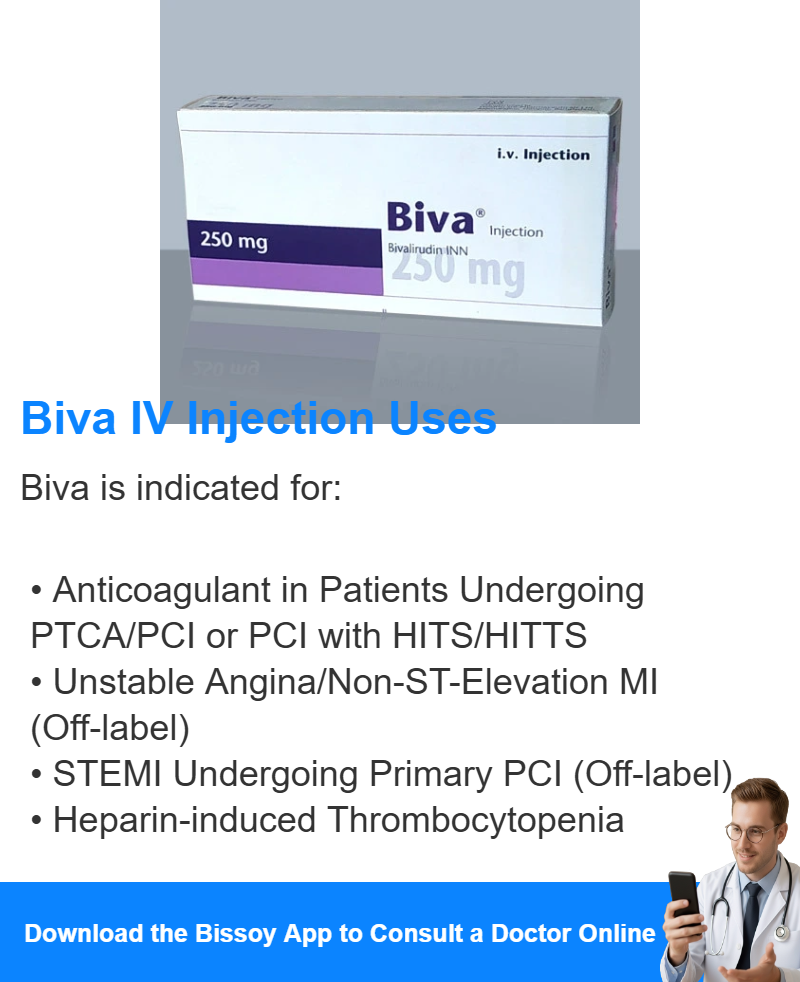
Biva IV Injection 250 mg/5 ml is a direct thrombin inhibitor used as an anticoagulant in various medical procedures. It is commonly administered during percutaneous coronary interventions (PCI) to prevent blood clot formation. Biva IV Injection 250 mg/5 ml is known for its effectiveness in reducing the risk of thrombotic events in patients undergoing certain cardiovascular procedures.
Uses
Biva IV Injection 250 mg/5 ml is primarily used for:
- Anticoagulation during percutaneous coronary interventions (PCI) such as angioplasty.
- Treatment of patients with unstable angina undergoing PCI.
- Reducing the risk of thrombotic events in patients with acute coronary syndrome.
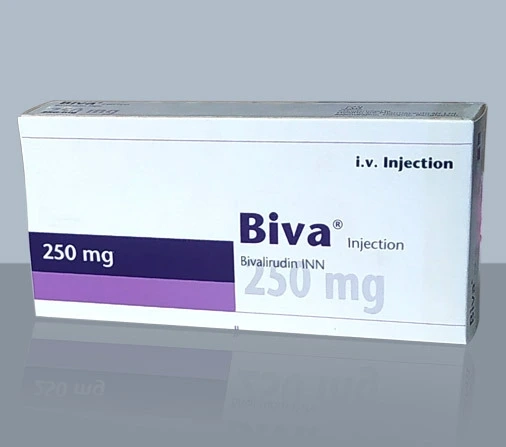
| Brand Name | Biva |
|---|---|
| Type | IV Injection |
| Weight | 250 mg/5 ml |
| Generic | Bivalirudin |
| Manufacturer | Healthcare Pharmaceuticals Ltd. |
| Available in | English বাংলা |
Mechanism of Action
Biva IV Injection 250 mg/5 ml works by directly inhibiting thrombin, a key enzyme in the blood clotting process. By binding to both the active site and the exosite-1 of thrombin, bivalirudin prevents thrombin from converting fibrinogen to fibrin and from activating platelets, thus reducing clot formation.
How Long Does It Take to Work?
After intravenous administration, bivalirudin begins to exert its effects within minutes. Its peak anticoagulant effect is typically observed within 1 to 2 hours. The drug's effect is rapidly reversible upon discontinuation.
Absorption
Biva IV Injection 250 mg/5 ml is administered intravenously, so it is not subject to gastrointestinal absorption. Its effects are immediate and directly correlate with its plasma concentration.
Route of Elimination
Biva IV Injection 250 mg/5 ml is primarily eliminated via the kidneys. Approximately 20% of the administered dose is excreted unchanged in the urine. The remainder is metabolized and eliminated through the liver and other routes.
Dosage
PCI/PTCA: IV Bolus dose of 0.75 mg/kg followed by an infusion of 1.75 mg/kg/h for duration of PCI procedure. Five minutes after bolus dose, obtain ACT and administer additional bolus of 0.3 mg/kg if indicated.HIT/HITTS: IV Bolus dose of 0.75 mg/kg, followed by a continuous infusion at a rate of 1.75 mg/kg/h for the duration of the procedure.
Continuation of Therapy: IV Infusion may be continued for up to 4 h post-procedure as indicated. After 4 h, an additional IV infusion of 0.2 mg/kg/h for up to 20 h may be given if needed.
Concomitant Therapy: Bivalirudin is intended for concurrent use with aspirin (300 to 325 mg/day).
Renal Function Impairment:
- CrCl 30 to 50 mL/min: Administer infusion at rate of 1.75 mg/kg/h.
- CrCl less than 30 mL/min: Reduce infusion rate to 1 mg/kg/h.
- Hemodialysis: Reduce infusion rate to 0.25 mg/kg/h. No reduction in bolus dose needed.
The dosage of bivalirudin depends on the specific clinical situation:
- For PCI: The usual dosage is an initial bolus of 0.75 mg/kg followed by a continuous infusion of 1.75 mg/kg/hour.
- For acute coronary syndrome: Dosage adjustments may be required based on the patient's renal function and clinical response.
Administration
Biva IV Injection 250 mg/5 ml is administered intravenously. The initial bolus is given as a rapid intravenous injection, followed by a continuous infusion. The dosage is adjusted based on clinical response and patient condition.
Side Effects
Common side effects of bivalirudin include:
- Bleeding complications, including hematoma and bruising.
- Hypotension or low blood pressure.
- Nausea and vomiting.
Toxicity
Toxicity symptoms may include:
- Severe bleeding or hemorrhage.
- Hypotension.
Precautions
Precautions include:
- Monitoring for signs of bleeding, especially in patients with renal impairment or those undergoing major surgery.
- Adjusting dosage based on renal function to prevent accumulation and bleeding complications.
- Monitoring patients for allergic reactions or hypersensitivity.
Interaction
Biva IV Injection 250 mg/5 ml may interact with:
- Other anticoagulants, increasing the risk of bleeding.
- Drugs affecting renal function, which may impact bivalirudin clearance.
Disease Interaction
Use with caution in patients with:
- Severe renal impairment.
- Active bleeding or bleeding disorders.
- Recent surgery or trauma.
Drug Interaction
Potential drug interactions include:
- Increased bleeding risk when used with other anticoagulants such as warfarin or heparin.
- Potential interactions with drugs that affect platelet function.
Food Interactions
There are no significant food interactions with bivalirudin. It can be administered regardless of food intake, as it is given intravenously.
Pregnancy Use
The safety of bivalirudin during pregnancy has not been well established. It should only be used if the potential benefit justifies the potential risk to the fetus. Consult a healthcare provider for appropriate management in pregnant patients.
Lactation Use
The effects of bivalirudin on breast milk and nursing infants are not well studied. It should be used with caution during lactation, and the risks and benefits should be carefully weighed. Consult a healthcare provider for guidance if breastfeeding.
Acute Overdose
In the event of an acute overdose, symptoms may include severe bleeding and hypotension. Immediate medical intervention is required, and treatment may involve discontinuation of the drug, supportive care, and transfusion of blood products if necessary.
Contraindication
Biva IV Injection 250 mg/5 ml is contraindicated in:
- Patients with severe active bleeding or bleeding disorders.
- Individuals with a history of hypersensitivity to bivalirudin or any of its components.
Use Direction
Follow the prescribed dosage and administration instructions carefully. Monitor for bleeding and other adverse effects regularly. Adjust the dose as necessary based on renal function and patient response. Consult a healthcare provider for any concerns or symptoms that arise during treatment.
Storage Conditions
Biva IV Injection 250 mg/5 ml should be stored at room temperature (20-25°C or 68-77°F) and protected from light. The solution should be used within the recommended timeframe and not be frozen or exposed to extreme temperatures.
Volume of Distribution
The volume of distribution of bivalirudin is approximately 0.3 L/kg. This indicates that the drug is distributed throughout the body's tissues, including the bloodstream.
Half Life
The half-life of bivalirudin is approximately 25 minutes. This relatively short half-life allows for rapid adjustment of anticoagulant effect and quick reversal if necessary.
Clearance
Biva IV Injection 250 mg/5 ml is primarily cleared by the kidneys. The renal clearance accounts for about 20% of the drug's elimination, with the remainder cleared through other metabolic pathways.
See in details version Biva IV Injection 250 mg/5 ml also Biva IV Injection 250 mg/5 ml in bangla
Social card
Some Frequently Asked Questions About Biva IV Injection 250 mg/5 ml