Introduction
Metoprolol is a selective beta-1 blocker commonly employed as the succinate and tartrate derivatives depending if the formulation is designed to be of immediate release or extended release. The possibility of the generation of these formulations comes from the lower systemic bioavailability of the succinate derivative. To this date, it is one of the preferred beta-blockers in general clinical guidelines.
Uses
Metoprolol is a beta-blocker used in the treatment of hypertension and angina, and used to reduce mortality due to myocardial infarction.
Metoprolol is indicated for the treatment of angina, heart failure, myocardial infarction, atrial fibrillation, atrial flutter and hypertension.
Some off-label uses of metoprolol include supraventricular tachycardia and thyroid storm.
All the indications of metoprolol are part of cardiovascular diseases. These conditions correspond to a number of diseases that involve the function of the heart and blood vessels. The underlying causes of these conditions are variable and can be due to genetic disposition, lifestyle decisions such as smoking, obesity, diet, and lack of exercise, and comorbidity with other conditions such as diabetes. The cardiovascular diseases are the leading cause of death on a global scale.
Associated Conditions
Pharmacodynamics
Administration of metoprolol in normal subjects is widely reported to produce a dose-dependent reduction on heart rate and cardiac output. This effect is generated due to a decreased cardiac excitability, cardiac output, and myocardial oxygen demand. In the case of arrhythmias, metoprolol produces its effect by reducing the slope of the pacemaker potential as well as suppressing the rate of atrioventricular conduction.
The Metoprolol Atherosclerosis Prevention in Hypertensives (MAPHY) trial showed a significant improvement in sudden cardiac death and myocardial infarction when patients were given with metoprolol as compared with diuretics. As well, in clinical trials performed in 1990, metoprolol reduces mortality and re-infarction in 17% of the individuals when administered chronically after an episode of myocardial infarction.
Mechanism of Action
Metoprolol is a beta-1-adrenergic receptor inhibitor specific to cardiac cells with negligible effect on beta-2 receptors. This inhibition decreases cardiac output by producing negative chronotropic and inotropic effects without presenting activity towards membrane stabilization nor intrinsic sympathomimetics.
Absorption
When metoprolol is administered orally, it is almost completely absorbed in the gastrointestinal tract. The maximum serum concentration is achieved 20 min after intravenous administration and 1-2 hours after oral administration. The bioavailability of metoprolol is of 100% when administered intravenously and when administered orally it presents about 50% for the tartrate derivative and 40% for the succinate derivative.
The absorption of metoprolol in the form of the tartrate derivative is increased by the concomitant administration of food.
Volume of Distribution
The reported volume of distribution of metoprolol is 4.2 L/kg. Due to the characteristics of metoprolol, this molecule is able to cross the blood-brain barrier and even 78% of the administered drug can be found in cerebrospinal fluid.
Protein Binding
Metoprolol is not highly bound to plasma proteins and only about 11% of the administered dose is found bound. It is mainly bound to serum albumin.
Route of Elimination
Metoprolol is mainly excreted via the kidneys. From the eliminated dose, less than 5% is recovered unchanged.
Half Life
The immediate release formulations of metoprolol present a half-life of about 3-7 hours.
Clearance
The reported clearance rate on patients with normal kidney function is 0.8 L/min. In cirrhotic patients, the clearance rate changes to 0.61 L/min.
Toxicity
Oral administration of metoprolol to rats presents an LD50 in the range of 3090 to 4670 mg/kg. Cases of overdose have reported bradycardia, hypotension, bronchospasm, and cardiac failure. In the case of an overdose, gastric lavage is recommended followed by specific treatment according to symptoms.
Metoprolol is not reported to be carcinogenic nor mutagenic nor to impair fertility. The only event registered is the increase of macrophages in pulmonary alveoli and slight biliary hyperplasia. When metoprolol was given for long periods of time on the highest dose, there was evidence of small benign lung tumors.
Food Interactions
- Avoid alcohol.
- Avoid natural licorice.
- Take with food.
Dosage
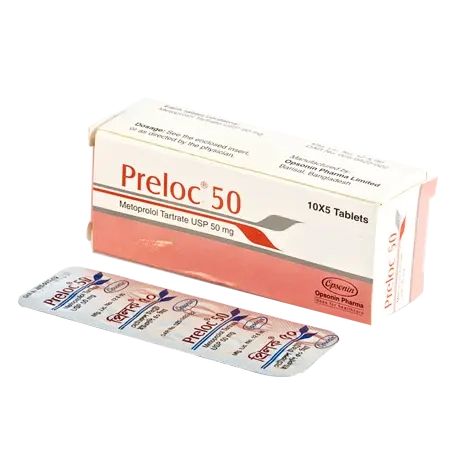
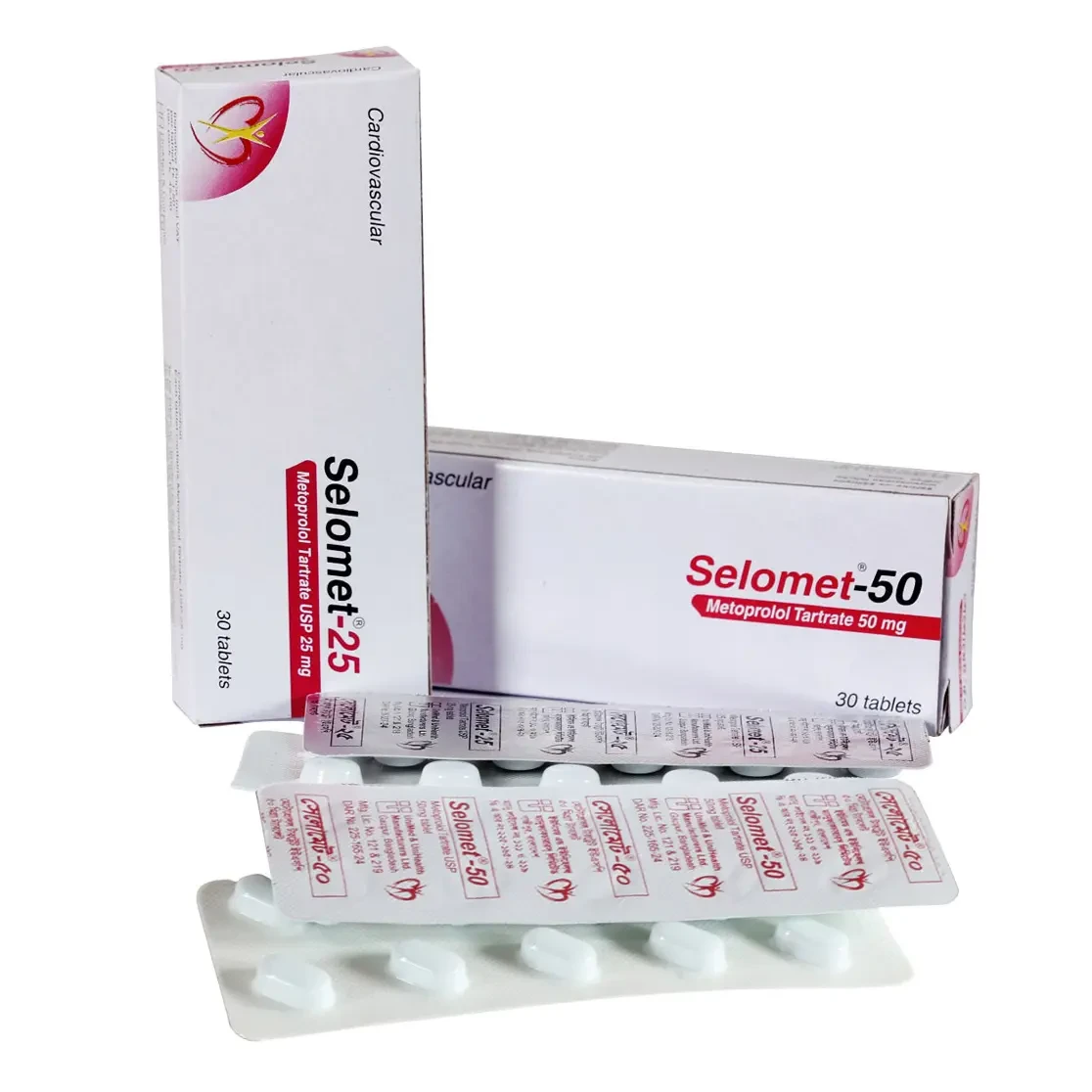
- Hypertension: Total daily dosage Metoprolol 100-400 mg to be given as a single or twice-daily dose. The starting dose is 100 mg (two Metoprolol-50 tablets) per day. This may be increased by 100 mg per day at weekly intervals. lf full control is not achieved using a single daily dose, a b.i.d. regimen should be initiated. Combination therapy with a diuretic or other antihypertensive agents may also be considered.
- Angina: Usually Metoprolol 50 mg (one Metoprolol-50 tablet) to 100 mg (two Metoprolol-50 tablets) twice or three times daily.
- Cardiac arrhythmias: Metoprolol 50 mg (one Metoprolol-50 tablet) b.i.d or t.i.d should usually control the condition. It is necessary the dose can be increased up to 300 mg per day in divided doses. Following the treatment of an acute arrhythmia with Metoprolol injection, continuation therapy with Metoprolol tablets should be initiated 4-6 hours later. The initial oral dose should not exceed 50 mg t.i.d.
- Hyperthyroidism: Metoprolol 50 mg (one Metoprolol-50 tablet) four times a day. The dose should be reduced as the euthyroid state is achieved.
- Myocardial infarction: Orally, therapy should commence 15 minutes after the last injection with 50 mg every 6 hours for 48 hours. Patients who fail to tolerate the full intravenous dose should be given half the suggested oral dose. Maintenance- The usual maintenance dose is 200 mg daily given in divided doses. Elderly’ There are no special dosage requirements in otherwise healthy elderly patients. Significant hepatic dysfunction: A reduction in dosage may be necessary.
- Hypertension: The usual initial dosage is 25 to 100 mg daily in a single dose, whether used alone or added to a diuretic.
- Angina Pectoris: The dosage of extended-release Metoprolol Succinate should be individualized. The usual initial dosage is 100 mg daily, in a single dose.
- Heart Failure: The recommended starting dose of sustained-release Metoprolol Succinate is 25 mg once daily for two weeks in patients with NYHA class II heart failure and 12.5 mg once daily in patients with more severe heart failure. The dosage may be increased at weekly (or longer) intervals until optimum blood pressure reduction is achieved. If treatment is to be discontinued, the dosage should be reduced gradually over a period of 1-2 weeks.
- Arrhythmias: By intravenous injection, up to 5 mg at a rate of 1-2 mg/minute, repeated after 5 minutes if necessary, total dose 10-15 mg.
- In surgery: By slow intravenous injection 2-4 mg at induction or to control arrhythmias developing during anaesthesia; 2 mg doses may be repeated to a maximum of 10 mg.
- Myocardial Infarction: Early intervention within 12 hours of infarction, by intravenous injection 5 mg every 2 minutes to a maximum of 15 mg, followed after 15 minutes by 50 mg by mouth every 6 hours for 48 hours; maintenance 200 mg daily in divided doses.