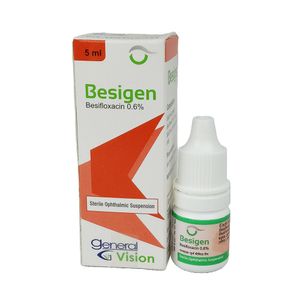
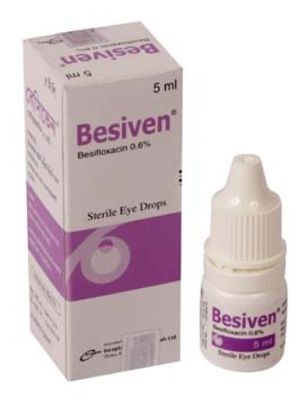
Introduction
Besibac Ophthalmic Solution 0.6% is a fourth generation fluoroquinolone-type opthalmic antibiotic for the treatment of bacterial conjunctivitis.
Uses
Besibac Ophthalmic Solution 0.6% is a fluoroquinolone antibiotic agent used for the treatment of bacterial conjunctivitis.
Treatment of bacterial conjunctivitis. Bacterial isolates that are susceptible to besifloxacin include: CDC coryneform group G; Corynebacterium pseudodiphtheriticum; Corynebacterium striatum; Haemophilus influenzae; Moraxella lacunata; Staphylococcus aureus; Staphylococcus epidermidis; Staphylococcus hominis; Staphylococcus lugdunensis; Streptococcus mitis group; Streptococcus oralis; Streptococcus pneumoniae; Streptococcus salivarius*
Associated Conditions
Pharmacodynamics
Besibac Ophthalmic Solution 0.6% tear concentrations were higher than MIC90 (minimum inhibitory concentration) values for common bacterial pathogens and sustained for 24 hours or longer. Mean residence time in the conjunctiva was 4.7 hours.
Mechanism of Action
Besibac Ophthalmic Solution 0.6% is a bactericidal fluroquinolone-type antibiotic that inhibits bacterial enzymes, DNA gyrase and topoisomerase IV. By inhibiting DNA gyrase, DNA replication, transcription, and repair is impaired. By inhibiting topoisomerase IV, decatenation during cell devision is impaired. Inhibiting these two targets also slows down development of resistance.
Absorption
Although ocular surface concentrations are high, average systemic concentrtions after three-times daily dosing was less than 0.5 ng/mL. This indicates that besifloxacin is not appreciably absorbed into the systemic and has a very low risk of systemic side effects.
Volume of Distribution
Not absorbed into the systemic
Protein Binding
None
Route of Elimination
N/A
Half Life
The average elimination half-life of besifloxacin in plasma following multiple dosing was estimated to be 7 hours.
Clearance
N/A
Toxicity
LD50, rat: >2000 mg/kg. The most common adverse reaction reported in 2% of patients treated with besifloxacin was conjunctival redness.
Food Interactions
No interactions found.
Dosage
Pediatric Use: The safety and effectiveness of Besibac Ophthalmic Solution 0.6% in infants below one year of age have not been established. The efficacy of Besibac Ophthalmic Solution 0.6% in treating bacterial conjunctivitis in pediatric patients one year or older has been demonstrated in controlled clinical trials.
Geriatric Use: No overall differences in safety and effectiveness have been observed between elderly and younger patients.