Introduction
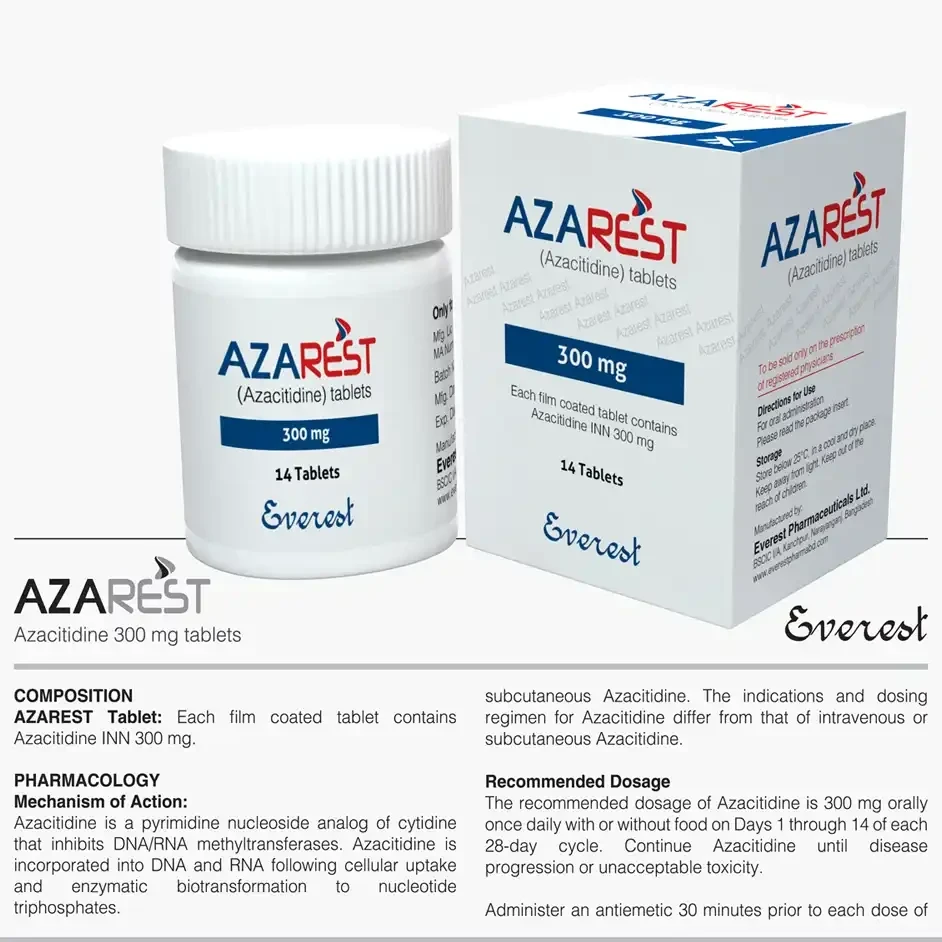
A pyrimidine nucleoside analogue that inhibits DNA methyltransferase, impairing DNA methylation. It is also an antimetabolite of cytidine, incorporated primarily into RNA. Azacytidine has been used as an antineoplastic agent.
Uses
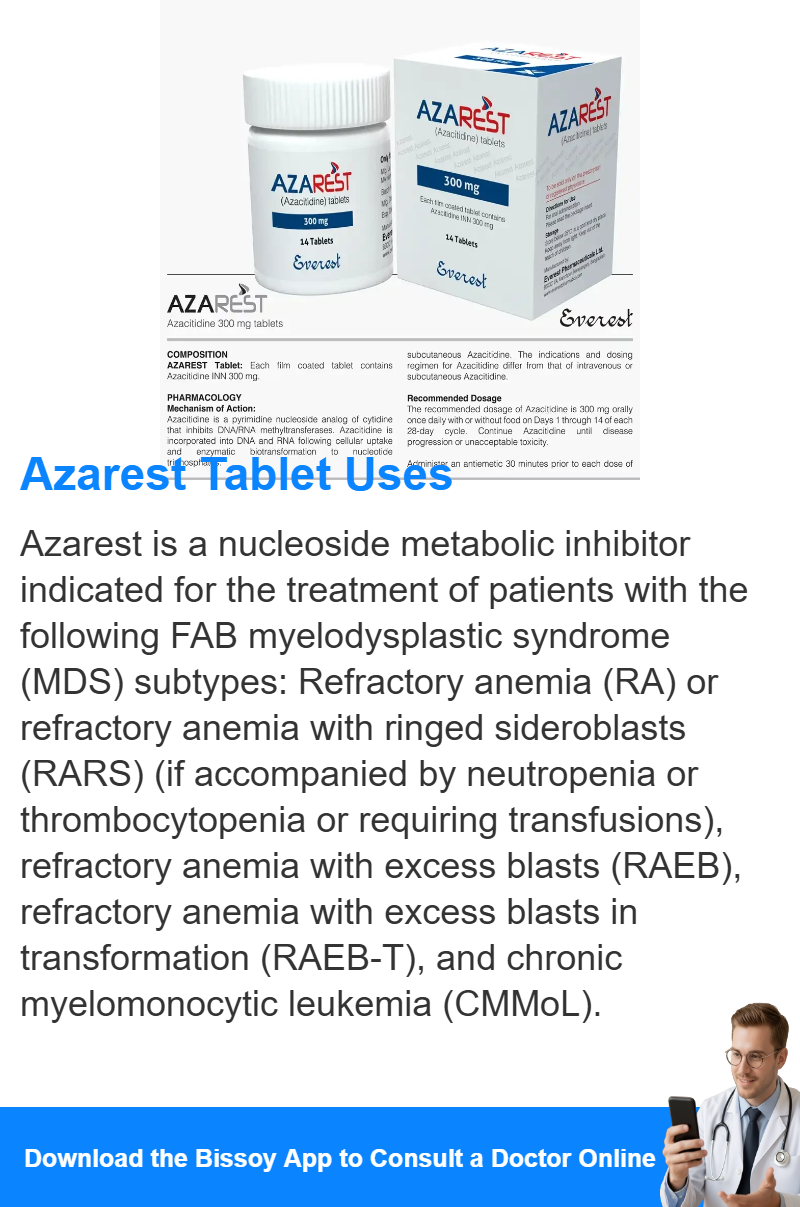
Azarest Tablet 300 mg is a pyrimidine nucleoside analogue used to treat certain subtypes of myelodysplastic syndrome.
For treatment of patients with the following French-American-British myelodysplastic syndrome subtypes: refractory anemia or refractory anemia with ringed sideroblasts (if accompanied by neutropenia or thrombocytopenia or requiring transfusions), refractory anemia with excess blasts, refractory anemia with excess blasts in transformation (now classified as acute myelogenous leukemia with multilineage dysplasia), and chronic myelomonocytic leukemia.
Associated Conditions
Pharmacodynamics
Azarest Tablet 300 mg is believed to exert its antineoplastic effects by causing hypomethylation of DNA and direct cytotoxicity on abnormal hematopoietic cells in the bone marrow. The concentration of azacitidine required for maximum inhibition of DNA methylation in vitro does not cause major suppression of DNA synthesis. Hypomethylation may restore normal function to genes that are critical for differentiation and proliferation. The cytotoxic effects of azacitidine cause the death of rapidly dividing cells, including cancer cells that are no longer responsive to normal growth control mechanisms. Non-proliferating cells are relatively insensitive to azacitidine. Upon uptake into cells, azacitidine is phosphorylated to 5-azacytidine monophosphate by uridine-cytidine kinase, then to diphosphate by pyrimidine monophosphate kinases and triphosphate by diphosphate kinases. 5-Azarest Tablet 300 mg triphosphate is incorporated into RNA, leading to the disruption of nuclear and cytoplasmic RNA metabolism and inhibition of protein synthesis. 5-Azacytidine diphosphate is reduced to 5-aza-deoxycytidine diphosphate by ribonucleotide reductase. The resultant metabolite is phosphorylated to 5-azadeoxycitidine triphosphate by nucleoside diphosphate kinases. 5-azadeoxycitidine triphosphate is then incoporated into DNA, leading to inhibition of DNA synthesis. Azarest Tablet 300 mg is most toxic during the S-phase of the cell cycle.
Mechanism of Action
Azarest Tablet 300 mg (5-azacytidine) is a chemical analogue of the cytosine nucleoside used in DNA and RNA. Azarest Tablet 300 mg may induce antineoplastic activity by inhibition of DNA methyltransferase at low doses and cytotoxicity through incorporation into RNA and DNA at high doses. Covalent binding to DNA methyltransferase results in hypomethylation of DNA and prevents DNA synthesis. As azacitidine is a ribonucleoside, it incoporates into RNA to a larger extent than into DNA. The incorporation into RNA leads to the dissembly of polyribosomes, defective methylation and acceptor function of transfer RNA, and inhibition of the production of protein, resulting in cell death.
Absorption
Azarest Tablet 300 mg is rapidly absorbed after subcutaneous administration. The bioavailability of subcutaneous azacitidine relative to IV azacitidine is approximately 89%, based on area under the curve.
Volume of Distribution
- 76 ± 26 L
Route of Elimination
Following IV administration of radioactive azacitidine to 5 cancer patients, the cumulative urinary excretion was 85% of the radioactive dose. Fecal excretion accounted for <1% of administered radioactivity over three days. Mean excretion of radioactivity in urine following SC administration of 14C-azacitidine was 50%.
Half Life
Mean elimination half-life is approximately 4 hours.
Clearance
- 167 +/- 49 L/h
Toxicity
One case of overdose with azacitidine was reported during clinical trials. A patient experienced diarrhea, nausea, and vomiting after receiving a single IV dose of approximately 290 mg/m2, almost 4 times the recommended starting dose.
Food Interactions
No interactions found.
Dosage
Repeat cycles every 4 weeks. After 2 cycles, may increase dose to 100 mg/m2 if no beneficial effect is seen and no toxicity other than nausea and vomiting has occurred. Patients should be treated for a minimum of 4 to 6 cycles. Complete or partial response may require additional treatment cycles.
Continue treatment as long as the patient continues to benefit. Patients should be monitored for hematologic response and renal toxicities, with dosage delay or reduction as appropriate.
Tablet: Administer Azarest Tablet 300 mg 300 mg orally once daily on Days 1 through 14 of each 28-day cycle. Administer an antiemetic before each dose for at least the first 2 cycles.
Pediatric Use: Safety and effectiveness in pediatric patients have not been established.