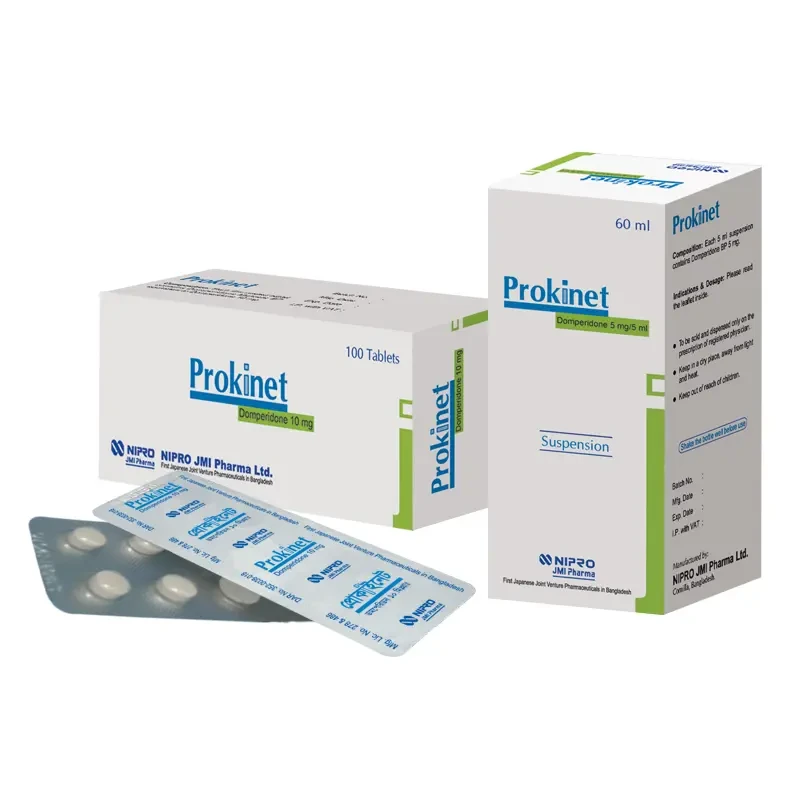
Domperidone maleate is a dopamine receptor antagonist used in the treatment of gastrointestinal disorders. It works by blocking dopamine receptors in the brain to reduce nausea and vomiting, as well as increasing gastric motility. It is available in the form of tablets, suspension and injections.
Domperidone maleate is used for the treatment of symptoms of nausea, vomiting and fullness due to slowed gastric emptying. It is also used for the prevention and treatment of gastroesophageal reflux disease (GERD). The drug works by blocking the dopamine receptor in the brain, which is responsible for nausea and vomiting. It also increases gastric motility and peristalsis, helping the stomach to empty more quickly. This reduces the sensation of fullness in the stomach and the symptoms of nausea and vomiting.
The effects of Domperidone maleate will begin to be felt within 30 minutes after the drug is taken. The effects of the drug may last up to 8 hours or longer, depending on the individual's response to the drug.
Domperidone maleate is well-absorbed following oral administration. When taken with food, the absorption of the drug is increased. Peak plasma concentrations occur within 1 to 2 hours after administration.
Domperidone maleate is metabolized in the liver and excreted in the urine. Approximately 50% of a dose is excreted unchanged in the urine. The remainder is metabolized into inactive metabolites.
Domperidone maleate is available for oral or intramuscular administration. The dose range is 10-20mg/day divided into 2-3 doses. The dose titration should be done gradually, starting at 10mg, and increasing if necessary. The usual maximum dose is 20 mg/day.
Common side effects of Domperidone maleate include abdominal cramps, diarrhea, dizziness, dry mouth, headache, nausea, nervousness, restlessness, sleep problems, sweating, and vomiting. Other serious side effects include increased risk of cardiac arrhythmia, low blood pressure, and QT prolongation.
Domperidone maleate has a low level of toxicity. Overdose of the drug is unlikely to result in serious effects, however, symptoms such as agitation, confusion, and hallucinations may occur. If overdose is suspected, seek prompt medical attention.
Domperidone maleate should be used with caution in patients with liver or kidney impairment, as well as in pregnant and breastfeeding women. It should also be used with caution in patients with cardiac arrhythmia, low blood pressure, or QT prolongation. Patients should also be monitored for increased risk of QT prolongation if they are prescribed this drug concomitantly with other drugs known to cause QT prolongation.
Domperidone maleate can interact with certain other drugs. These include antacids, beta-blockers, calcium channel blockers, anti-arrhythmics, and other drugs known to prolong the QT interval. If interactions are suspected, a healthcare professional should be notified.
Domperidone maleate is contraindicated in patients with liver or kidney impairment, as well as in patients with cardiac arrhythmia, low blood pressure, or QT prolongation. It should also be used with caution in pregnant and breastfeeding women.
Domperidone maleate can interact with other drugs, such as antacids, beta-blockers, calcium channel blockers, anti-arrhythmics, and other drugs known to prolong the QT interval. If interactions are suspected, a healthcare professional should be notified.
Domperidone maleate can interact with certain foods, such as dairy products, foods high in caffeine, and alcohol. Alcohol consumption should be avoided or minimized when taking this medication. Eating a light meal or snack before taking the medication can reduce side effects.
Domperidone maleate is considered to be safe for use during pregnancy, but should only be taken under the advice and supervision of a healthcare professional. There is a possibility of the drug crossing the placenta, so caution is advised before taking this medication during pregnancy.
Domperidone maleate is excreted into human milk, but the concentrations are very low. Therefore, the drug is considered to be safe for use in breastfeeding women, but it should be taken only under the advice and supervision of a healthcare professional.
An acute overdose of Domperidone maleate is unlikely to cause serious effects. Symptoms of an acute overdose may include agitation, confusion, and hallucinations. If overdose is suspected, seek prompt medical attention.
Domperidone maleate is contraindicated in patients with known hypersensitivity to the drug. It is also contraindicated in patients with liver or kidney impairment, as well as in patients with cardiac arrhythmia, low blood pressure, or QT prolongation.
Domperidone maleate should be taken as directed by a healthcare professional. The dosage should be adjusted according to the severity of the symptoms and response to the drug. The usual dose range is 10-20 mg/day, divided into 2-3 doses. The drug should be taken with food, and dosage should be titrated gradually, starting at 10 mg.
Domperidone maleate should be stored at room temperature away from light, moisture, and heat. It should be kept out of reach of children and pets.
The volume of distribution of Domperidone maleate is estimated to be 17-23L/kg.
The half-life of Domperidone maleate is estimated to be between 4-7 hours.
The clearance of Domperidone maleate is estimated to be between 1.44-1.91L/h/kg.
See in details version Avomit Tablet 10 mg also Avomit Tablet 10 mg in bangla
Dr. Md. Hedayet Ali Khan
Burn, Plastic, Hand, Micro & Cosmetic Surgeon
Plastic Surgery Doctor in Dhaka