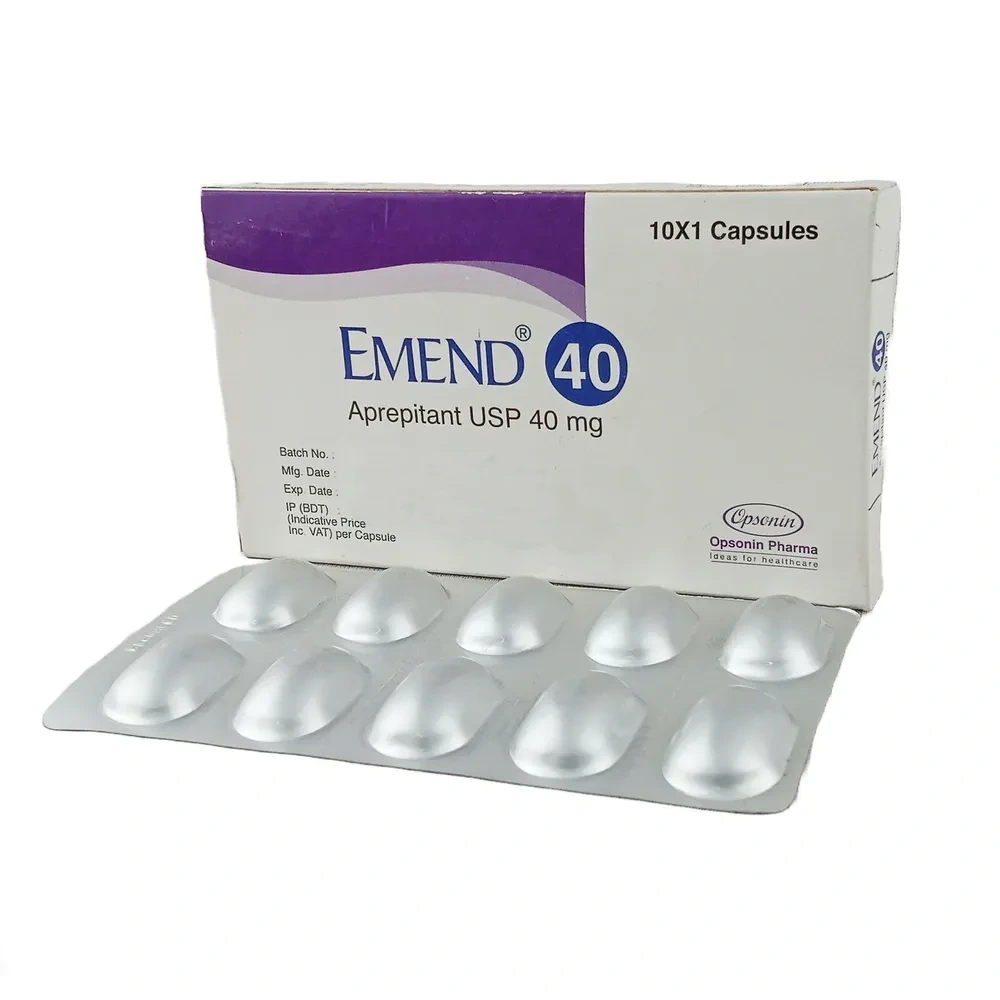
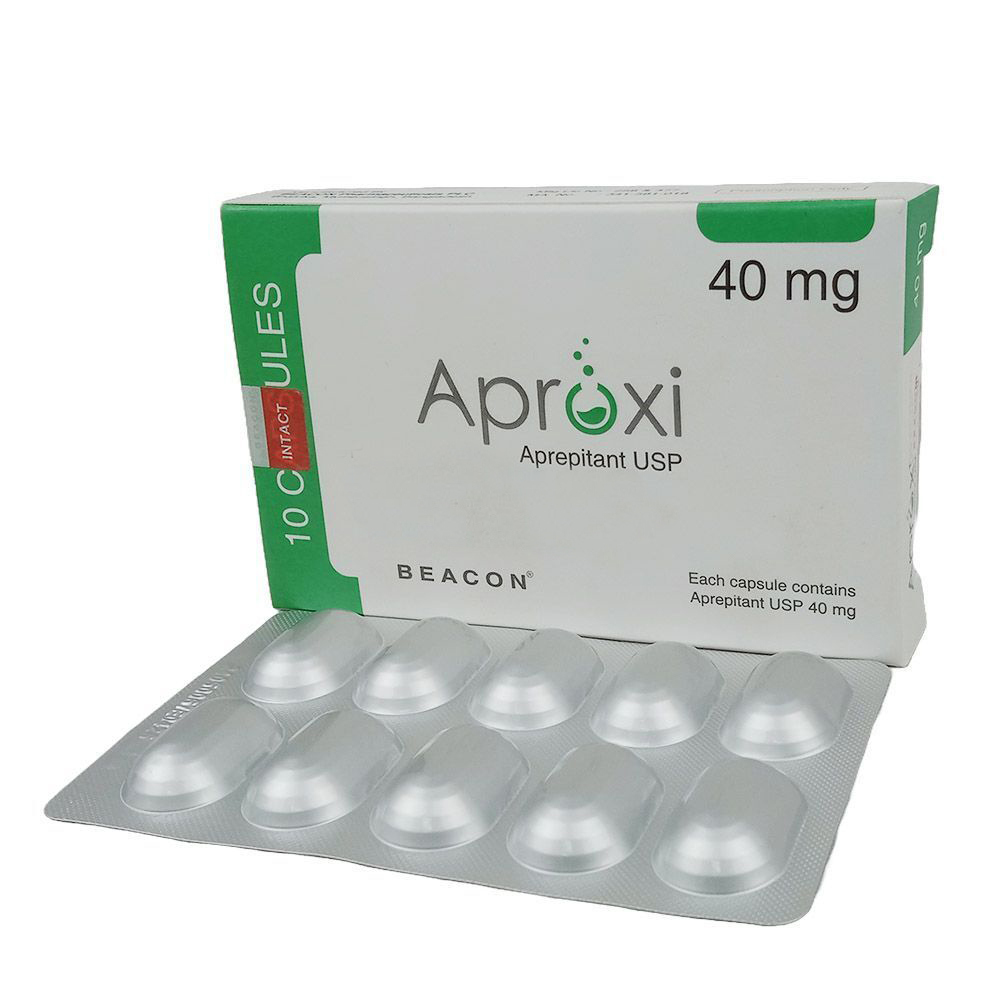
Introduction
Apridex Capsule 40 mg, an antiemetic, is a substance P/neurokinin 1 (NK1) receptor antagonist which, in combination with other antiemetic agents, is indicated for the prevention of acute and delayed nausea and vomiting associated with initial and repeat courses of highly emetogenic cancer chemotherapy. Apridex Capsule 40 mg is a selective high-affinity antagonist of human substance P/neurokinin 1 (NK1) receptors. Apridex Capsule 40 mg has little or no affinity for serotonin (5-HT3), dopamine, and corticosteroid receptors, the targets of existing therapies for chemotherapy-induced nausea and vomiting (CI NV).
Uses
Apridex Capsule 40 mg is a substance P/neurokinin 1 receptor antagonist used to treat nausea and vomiting caused by chemotherapy and surgery.
For the prevention of nausea and vomiting associated with highly emetogenic cancer chemotherapy, including high-dose cisplatin (in combination with other antiemetic agents).
Associated Conditions
Pharmacodynamics
Apridex Capsule 40 mg, an antiemetic, is a substance P/neurokinin 1 (NK1) receptor antagonist which, in combination with other antiemetic agents, is indicated for the prevention of acute and delayed nausea and vomiting associated with initial and repeat courses of highly emetogenic cancer chemotherapy. Apridex Capsule 40 mg is a selective high-affinity antagonist of human substance P/neurokinin 1 (NK1) receptors. Apridex Capsule 40 mg has little or no affinity for serotonin (5-HT3), dopamine, and corticosteroid receptors, the targets of existing therapies for chemotherapy-induced nausea and vomiting (CI NV).
Mechanism of Action
Apridex Capsule 40 mg has been shown in animal models to inhibit emesis induced by cytotoxic chemotherapeutic agents, such as cisplatin, via central actions. Animal and human Positron Emission Tomography (PET) studies with Apridex Capsule 40 mg have shown that it crosses the blood brain barrier and occupies brain NK1 receptors. Animal and human studies show that Apridex Capsule 40 mg augments the antiemetic activity of the 5-HT3-receptor antagonist ondansetron and the corticosteroid ethasone and inhibits both the acute and delayed phases of cisplatin induced emesis.
Absorption
The mean absolute oral bioavailability of aprepitant is approximately 60 to 65%.
Volume of Distribution
- 70 L
Protein Binding
Protein binding is reported to be >95%.
Route of Elimination
Apridex Capsule 40 mg is eliminated primarily by metabolism; aprepitant is not renally excreted. Apridex Capsule 40 mg is excreted in the milk of rats. It is not known whether this drug is excreted in human milk.
Half Life
9-13 hours
Clearance
- Apparent plasma cl=62-90 mL/min
Food Interactions
- Take with or without food. The absorption is unaffected by food.
Dosage
Chemotherapy-Induced Nausea and Vomiting:
** The following regimen should be used for the prevention of nausea and vomiting associated with highly emetogenic cancer chemotherapy-
- Day 1: Apridex Capsule 40 mg 125 mg orally, Dexamethasone 12 mg orally, 5-HT3 antagonist (Ondansetron): 24 mg 30 minutes before the start of chemotherapy.
- Day 2: Apridex Capsule 40 mg 80 mg orally, Dexamethasone 8 mg orally
- Day 3: Apridex Capsule 40 mg 80 mg orally, Dexamethasone 8 mg orally
- Day 4: Dexamethasone 8 mg orally
** The following regimen should be used for the prevention of nausea and vomiting associated with moderately emetogenic cancer chemotherapy:
- Day 1: Apridex Capsule 40 mg 125 mg orally, Dexamethasone 12 mg orally, 5-HT3 antagonist (Ondansetron): one 8 mg tablet 30 minutes before chemotherapy followed by an 8 mg dose 8 hours later.
- Day 2: Apridex Capsule 40 mg 80 mg orally, 5-HT3 antagonist (Ondansetron): 8 mg tablet twice a day
- Day 3: Apridex Capsule 40 mg 80 mg orally, 5-HT3 antagonist (Ondansetron): 8 mg tablet twice a day.