Introduction
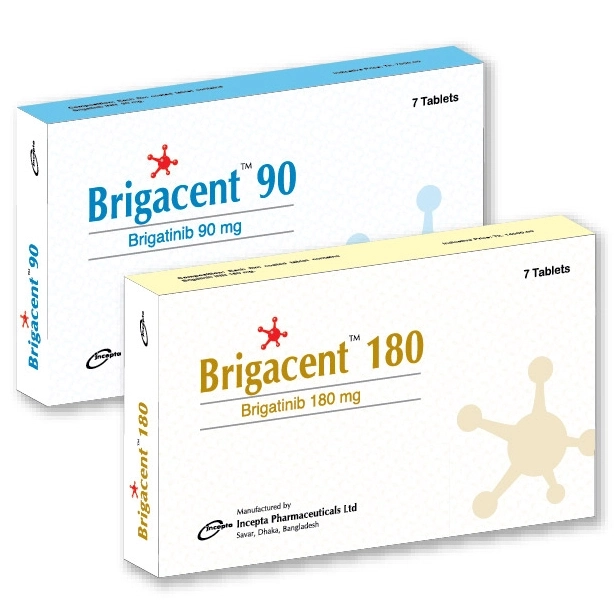
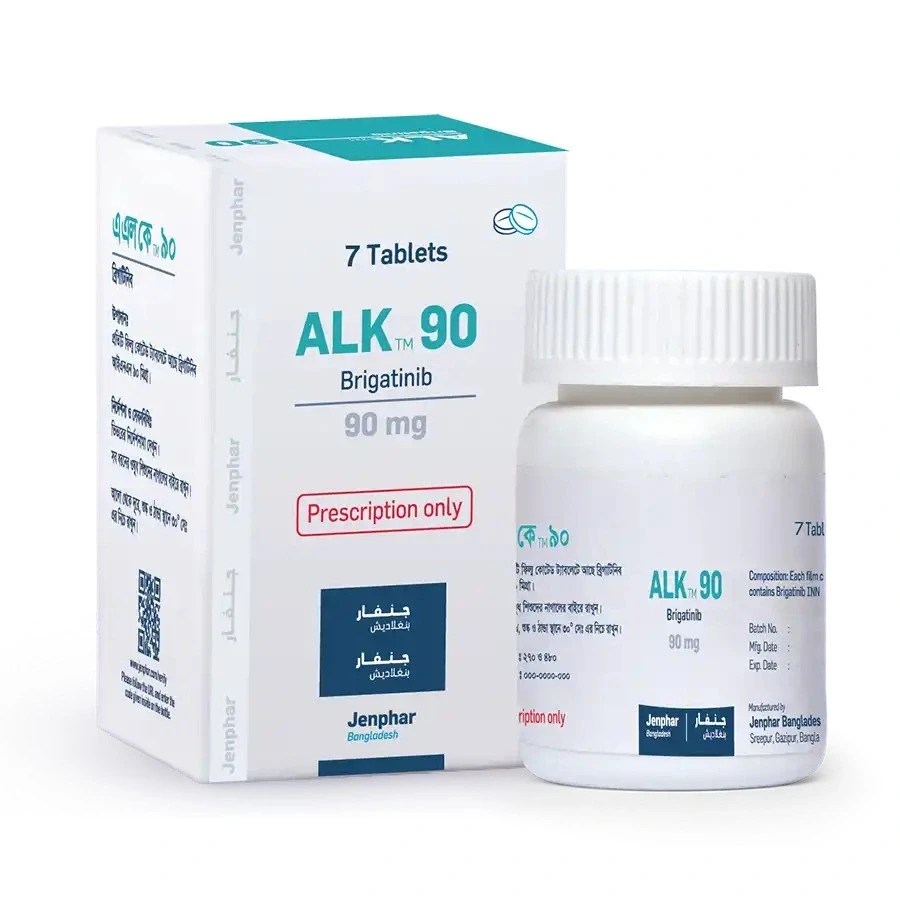
Alunib Tablet 90 mg, originally named AP26113, is a reversible dual inhibitor of anaplastic lymphoma kinase (ALK) and epidermal growth factor receptor (EGFR). It presents selectivity against the mutant forms of EGFR compared to the wild-type. It also exhibits selectivity against 9 different Crizotinib-resistant mutants of the EML4-ALK fusion gene, which is a pivotal player in the transformation of susceptible lung parenchyma. Alunib Tablet 90 mg was developed by Ariad Pharmaceuticals, a subsidiary of Takeda Pharmaceutical Company Limited, and FDA-approved on April 28, 2017.
Uses
Alunib Tablet 90 mg is an anaplastic lymphoma kinase inhibitor used to treat anaplastic lymphoma kinase positive metastatic non small cell lung cancer.
The anaplastic lymphoma kinase positive, metastatic non-small cell lung cancer (ALK+ NSCLC), represents only 3-5% of the NSCLC cancer cases, but the ALK mutation, overexpression and presence in several oncogenic fusion proteins in solid and hematologic tumors have pointed out the importance as well as its potential as a cancer therapy target. The ALK-related cases of NSCLC are associated with the presence of the fusion gene EML4-ALK which fused the ALK protein with the echinoderm microtubule-associated protein like-4 whose original function is the correct formation of microtubules. The presence of the aberrant fusion protein results in abnormal signaling that provokes increased cell growth, proliferation and survival. Crizotinib is indicated for the treatment of such cases but the presence of ALK kinase domain mutations confer resistance to the treatment. Thus, brigatinib is indicated for the treatment of patients with ALK+ NSCLC with intolerance to Crizotinib.
Associated Conditions
Pharmacodynamics
Brigitanib inhibits proliferation and in vitro viability of cells expressing the fusion protein EML4-ALK as well as 17 crizotinib-resistant ALK mutants. Its action is expanded to cells expressing EGFR deletions, ROS1-L2026M, FLT3-F691L and FLT3-D835Y. Brigitanib presents a dose-dependent inhibition of tumor growth, tumor burden and prolonged survival in mice EML4-ALK xenograft models. Time course of Alunib Tablet 90 mg and exposure-response studies are still unknown.
Mechanism of Action
Brigitanib acts as a tyrosine kinase inhibitor with activity against multiple kinases including ALK, ROS1, insulin-like growth factor 1 receptor and against EGFR deletions and point mutations. It acts by inhibiting ALK phosphorylation and the activation of downstream signaling proteins.
Absorption
Administration of brigatinib at a concentration of 90 mg generates a Cmax of 552 ng/ml and AUC of 8165 ng h/ml while the administration of 180 mg presents a Cmax of 1452 ng/ml and AUC of 20276 ng h/ml. It has a dose proportional exposure with an accumulation ratio on the range of 1.9 to 2.4. Following oral administration of brigatinib, the Tmax is presented in a range from 1 to 4 hours. Consumption of a high-fat meal compared to overnight fasting reduces Cmax by 13% without presenting an effect on AUC.
Volume of Distribution
The apparent volume of distribution at steady state is 153 L.
Protein Binding
66% of brigatinib dose is bound to plasma proteins, which gives a blood-to-plasma concentration ratio of 0.69.
Route of Elimination
The elimination of brigatinib is divided in 65% in feces and 25% in urine. From the elimination in both compartments, the unchanged for of brigatinib represented 41% of the total in feces and 86% in urine.
Half Life
The half-life of brigatinib at steady-state was 25 hours.
Clearance
After oral administration of180 mg of brigatinib, the apparent oral clearance at steady-state is 12.7 L/h.
Toxicity
Treatment with brigatinib generated not mutagenic chromosomal damage. Testicular toxicity, reported as lower weight of seminal vesicles and prostate gland, testicular tubular degeneration and lower weight as well as reduced size of testes with evidence of hypoespermatogenesis.
Food Interactions
- Avoid grapefruit products. Grapefruit inhibits CYP3A metabolism, which may increase the serum concentration of brigatinib.
- Avoid St. John's Wort. This herb induces the CYP3A metabolism of brigatinib and may reduce its serum concentration.
- Take with or without food.
Dosage
- 90 mg orally once daily for the first 7 days;
- If 90 mg is tolerated during the first 7 days, the dose should be increased to 180 mg orally once daily.
Pediatric Use: The safety and efficacy of Alunib Tablet 90 mg in pediatric patients have not been established.