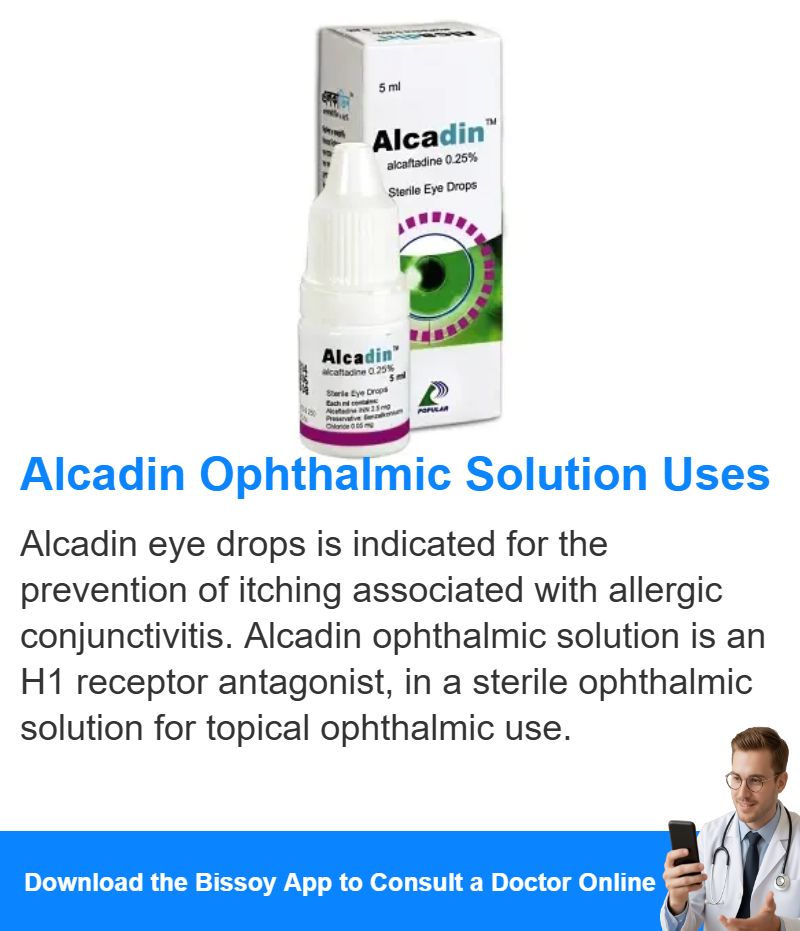
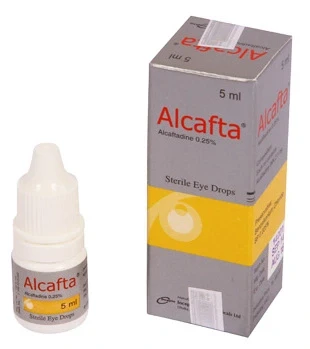
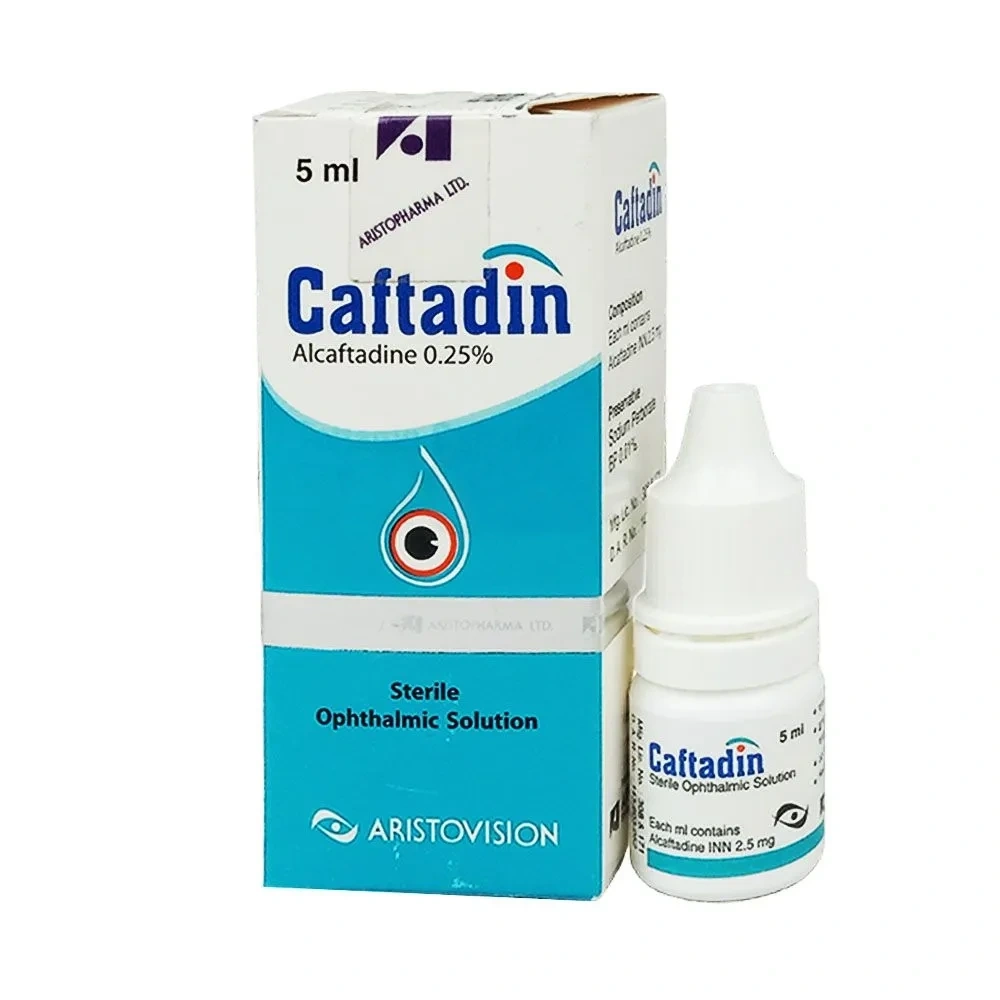
1. What is Alcadin Ophthalmic Solution 0.25%?
Alcadin Ophthalmic Solution 0.25% is an antihistamine medication used as an ophthalmic solution to prevent itching of the eyes caused by allergic conjunctivitis. It is an H1 histamine receptor antagonist that also exhibits some activity against H2 and H4 receptors, reducing allergic symptoms like itching and redness. Approved by the FDA in July 2010, it is marketed under the brand name Lastacaft as a 0.25% eye drop solution and is available both by prescription and over-the-counter (OTC).
2. What class of drug is Alcadin Ophthalmic Solution 0.25%?
Alcadin Ophthalmic Solution 0.25% belongs to the class of ophthalmic antihistamines and decongestants. It works primarily as an H1 receptor antagonist, blocking histamine’s effects in the eyes, and has additional mast cell-stabilizing properties that help prevent the release of allergy mediators, making it a dual-action agent for ocular allergies.
3. How does Alcadin Ophthalmic Solution 0.25% work?
Alcadin Ophthalmic Solution 0.25% prevents allergic symptoms by:
- Blocking histamine receptors: It inhibits H1 receptors (primarily), and to a lesser extent H2 and H4, reducing itching and redness.
- Stabilizing mast cells: It prevents histamine release, decreasing inflammation.
- Inhibiting eosinophils: It reduces chemotaxis and activation of these allergy-related cells.
This multi-action approach provides rapid and sustained relief from ocular itching.
4. What conditions does Alcadin Ophthalmic Solution 0.25% treat?
Alcadin Ophthalmic Solution 0.25% is indicated for:
- Allergic conjunctivitis: Preventing itching due to pollen, ragweed, grass, animal dander, or dust mites.
It is not used for other eye conditions like infections, glaucoma, or contact lens-related irritation unless specifically directed by a doctor.
5. Is Alcadin Ophthalmic Solution 0.25% used for anything other than allergic conjunctivitis?
Its primary FDA-approved use is for allergic conjunctivitis itching prevention. Off-label, it might be explored for other ocular allergic conditions, but there’s no widespread evidence for this, and such use would require physician oversight.
6. How is Alcadin Ophthalmic Solution 0.25% taken?
Alcadin Ophthalmic Solution 0.25% is administered as an eye drop (0.25% solution). The typical dose is one drop in each affected eye once daily. Wash hands before use, tilt the head back, pull down the lower eyelid, and instill the drop without touching the dropper tip to the eye or any surface.
7. What is the typical dosage for adults?
For adults, the standard dosage is one drop of Alcadin Ophthalmic Solution 0.25% 0.25% in each affected eye once daily. This applies to both prescription and OTC use, with no more frequent administration recommended unless directed by a healthcare provider.
8. What is the dosage for children?
For children aged 2 years and older, the dose is the same as for adults: one drop in each affected eye once daily. Safety and efficacy are not established for children under 2, so use in this age group requires a doctor’s approval.
9. Can Alcadin Ophthalmic Solution 0.25% be taken with food?
Since Alcadin Ophthalmic Solution 0.25% is an eye drop applied topically to the eyes, food intake does not affect its use or absorption. It acts locally, with minimal systemic absorption, so timing with meals is irrelevant.
10. What should I do if I miss a dose?
If you miss a dose, apply it as soon as you remember unless it’s nearly time for the next dose. Skip the missed dose if it’s close to the next scheduled dose, and do not double up, as this could increase irritation without added benefit.
11. How quickly does Alcadin Ophthalmic Solution 0.25% work?
Alcadin Ophthalmic Solution 0.25% provides rapid relief, with effects on itching noticeable within 3 minutes of application after an allergen challenge. Peak plasma levels occur within 15 minutes, and its action can last up to 16 hours, supporting once-daily dosing.
12. What are the common side effects?
Common side effects include:
- Eye irritation: Mild burning, stinging, or redness upon instillation.
- Itching: Temporary increase in ocular itching.
- Non-ocular effects: Headache, nasopharyngitis, or flu-like symptoms (less common).
These are usually mild and resolve quickly.
13. What are the serious side effects?
Serious side effects are rare but include:
- Allergic reactions: Rash, swelling (face/tongue/throat), or breathing difficulty.
- Severe eye symptoms: Persistent pain, vision changes (unlikely but reportable).
Seek medical help immediately if these occur.
14. Why does Alcadin Ophthalmic Solution 0.25% cause eye irritation?
Eye irritation (burning/stinging) may occur due to the solution’s preservatives (e.g., benzalkonium chloride) or the drug’s local action on sensitive ocular tissues. This is typically transient and not a sign of harm.
15. Can Alcadin Ophthalmic Solution 0.25% cause allergic reactions?
Yes, though rare, allergic reactions like rash or swelling can occur, particularly in those sensitive to Alcadin Ophthalmic Solution 0.25% or its components (e.g., benzalkonium chloride). Discontinue use and seek help if severe symptoms arise.
16. Who should not take Alcadin Ophthalmic Solution 0.25%?
It’s contraindicated for:
- Allergy: To Alcadin Ophthalmic Solution 0.25% or any ingredient in the solution.
Caution is advised in children under 2, and it’s not for contact lens-related irritation.
17. Is Alcadin Ophthalmic Solution 0.25% safe during pregnancy?
It’s Category B—animal studies (rats, rabbits) show no fetal harm at high doses, but human data are limited. Use only if clearly needed, weighing benefits against potential risks with a doctor’s advice.
18. Can I take Alcadin Ophthalmic Solution 0.25% while breastfeeding?
It’s unknown if Alcadin Ophthalmic Solution 0.25% passes into breast milk or affects infants. Given its low systemic absorption, risk is likely minimal, but consult a doctor to balance benefits and potential infant exposure.
19. Does Alcadin Ophthalmic Solution 0.25% interact with other medications?
No significant drug interactions are documented. It’s not metabolized by CYP450 enzymes and has low systemic absorption, reducing interaction risks. However, separate other eye drops by 5 minutes.
20. Can I drink alcohol while using Alcadin Ophthalmic Solution 0.25%?
Alcohol doesn’t interact with Alcadin Ophthalmic Solution 0.25% due to its topical application and minimal systemic effects. Drinking won’t affect its efficacy, though alcohol may worsen allergy symptoms indirectly.
21. Does Alcadin Ophthalmic Solution 0.25% cause weight gain?
No, it doesn’t affect metabolism or cause weight gain. Its action is localized to the eyes, with negligible systemic impact.
22. Can Alcadin Ophthalmic Solution 0.25% be used at night?
Yes, it can be used at night or any consistent time daily. Its 16-hour duration means timing is flexible, though evening use might align with peak allergy exposure for some.
23. How long do I need to use Alcadin Ophthalmic Solution 0.25%?
Use continues as long as allergy symptoms persist or during allergen exposure (e.g., pollen season). Stop if symptoms resolve, but consult a doctor if needed beyond a few weeks.
24. Can Alcadin Ophthalmic Solution 0.25% be stopped suddenly?
Yes, stopping poses no withdrawal risk since it’s not habit-forming. Symptoms may return if allergens remain present.
25. Does Alcadin Ophthalmic Solution 0.25% affect blood sugar?
No, it has no effect on blood sugar due to its topical nature and minimal systemic absorption.
26. Can Alcadin Ophthalmic Solution 0.25% cure allergies?
No, it prevents and relieves symptoms (e.g., itching) but doesn’t cure the underlying allergy, which requires allergen avoidance or immunotherapy.
27. What should I avoid while using Alcadin Ophthalmic Solution 0.25%?
Avoid:
- Contact lenses: If eyes are red, or wait 10 minutes after use if not red (due to benzalkonium chloride).
- Touching the dropper: To prevent contamination.
28. Can Alcadin Ophthalmic Solution 0.25% cause fatigue?
Fatigue isn’t a common side effect. Any tiredness might relate to allergies, not the drug, given its local action.
29. Is Alcadin Ophthalmic Solution 0.25% safe for elderly patients?
Yes, studies show no safety or efficacy differences in the elderly versus younger adults. Use as directed.
30. Does Alcadin Ophthalmic Solution 0.25% affect the liver?
No significant liver effects are expected. It’s metabolized by non-CYP enzymes to a carboxylic acid metabolite, with minimal systemic impact.
31. Can Alcadin Ophthalmic Solution 0.25% be used in children?
Yes, it’s safe for children 2 years and older at one drop daily per eye. Under 2, safety isn’t established.
32. What’s the maximum dose of Alcadin Ophthalmic Solution 0.25%?
The maximum is one drop per eye once daily (0.25% solution). Higher doses aren’t recommended or studied.
33. Can Alcadin Ophthalmic Solution 0.25% cause dizziness?
Dizziness isn’t a reported side effect. Its topical use limits systemic effects that could cause this.
34. How is Alcadin Ophthalmic Solution 0.25% different from other antihistamine eye drops?
Compared to olopatadine or ketotifen, Alcadin Ophthalmic Solution 0.25% offers broader receptor antagonism (H1, H2, H4) and faster onset (3 minutes). It’s dosed once daily versus twice for some alternatives.
35. Can Alcadin Ophthalmic Solution 0.25% prevent redness?
Yes, it reduces conjunctival redness alongside itching, with clinical significance shown at 0.25% within 7–15 minutes.
36. Does Alcadin Ophthalmic Solution 0.25% affect cholesterol?
No, it has no impact on cholesterol due to its localized action.
37. Can Alcadin Ophthalmic Solution 0.25% be used with other eye drops?
Yes, but administer other eye drops at least 5 minutes apart to avoid dilution or interaction.
38. What tests should I get while using Alcadin Ophthalmic Solution 0.25%?
No routine tests are needed for short-term OTC use. For prolonged use, an eye doctor might check for efficacy or side effects.
39. Can Alcadin Ophthalmic Solution 0.25% cause depression?
No, it’s not linked to depression or mood changes due to its topical application.
40. Is Alcadin Ophthalmic Solution 0.25% addictive?
No, it’s not addictive or habit-forming.
41. Can Alcadin Ophthalmic Solution 0.25% be diluted?
No, it’s pre-formulated at 0.25%. Diluting it could reduce efficacy—use as provided.
42. Does Alcadin Ophthalmic Solution 0.25% cause hair loss?
No, hair loss isn’t a reported side effect.
43. Can Alcadin Ophthalmic Solution 0.25% be used for infections?
No, it’s not for bacterial, viral, or fungal eye infections—only allergic conjunctivitis.
44. What’s the half-life of Alcadin Ophthalmic Solution 0.25%?
The carboxylic acid metabolite’s half-life is about 2 hours after ocular use. The parent drug’s levels drop below detection by 3 hours.
45. Can Alcadin Ophthalmic Solution 0.25% cause blurred vision?
Temporary blurring may occur right after instillation but resolves quickly. Persistent issues warrant a doctor’s visit.
46. Does Alcadin Ophthalmic Solution 0.25% affect exercise?
No direct effect, though relieved symptoms might improve comfort during activity.
47. Can Alcadin Ophthalmic Solution 0.25% be used with contact lenses?
Not if eyes are red. Otherwise, remove lenses before use and wait 10 minutes before reinserting due to preservative absorption risk.
48. Is Alcadin Ophthalmic Solution 0.25% expensive?
OTC versions cost $15–$30, while prescription prices vary by insurance. Generics may be cheaper.
49. Can Alcadin Ophthalmic Solution 0.25% cause eye pain?
Mild stinging is common, but persistent pain isn’t expected—consult a doctor if it occurs.
50. How should Alcadin Ophthalmic Solution 0.25% be stored?
Store at room temperature (15–25°C or 59–77°F), away from heat and moisture, tightly closed. Use until the expiration date after opening.