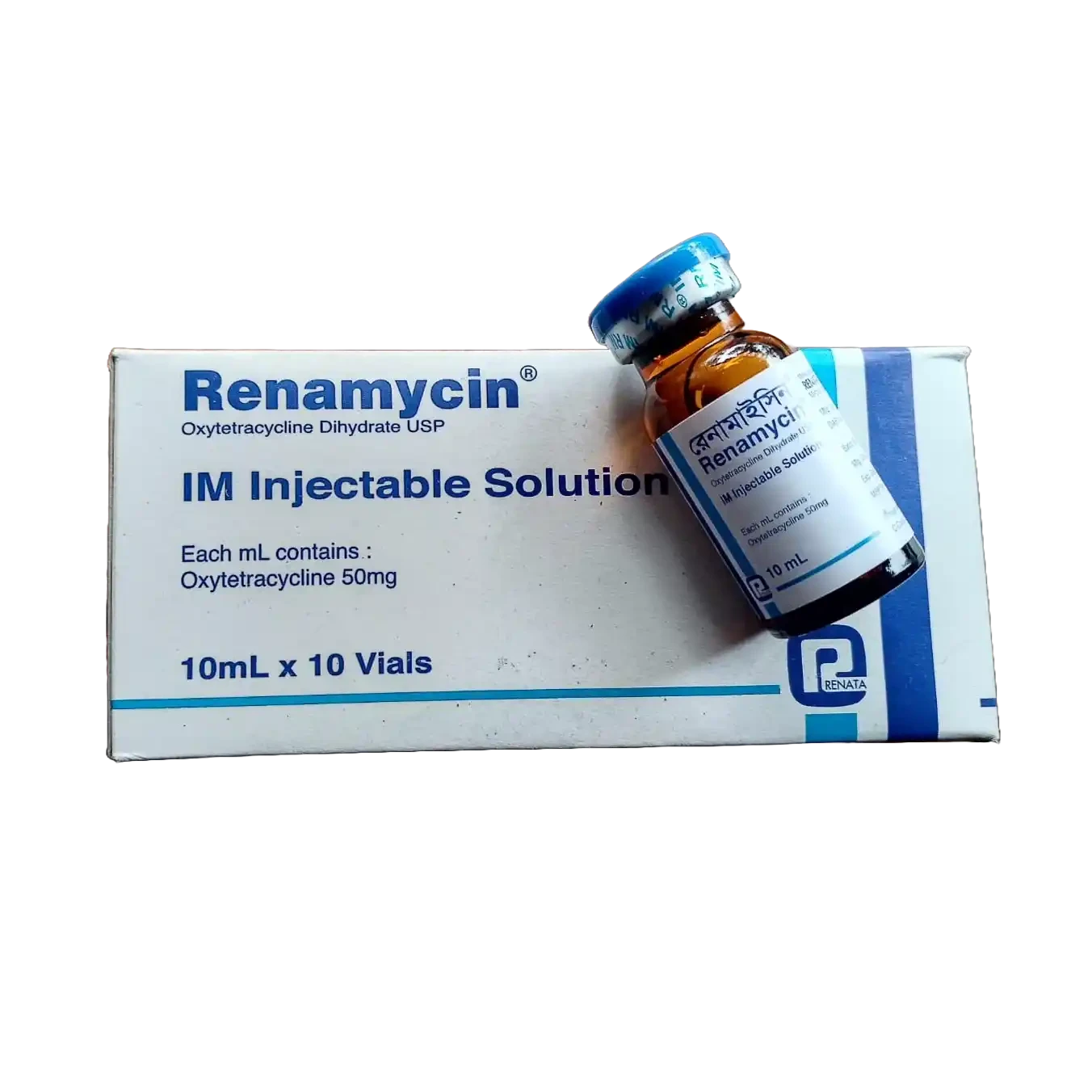
Introduction
A tetracycline analog isolated from the actinomycete streptomyces rimosus and used in a wide variety of clinical conditions.
Uses
Oxytetracycline is a tetracycline antibiotic used to treat a wide variety of susceptible bacterial infections.
Oxytetracycline is indicated for treatment of infections caused by a variety of Gram positive and Gram negative microorganisms including Mycoplasma pneumoniae, Pasteurella pestis, Escherichia coli, Haemophilus influenzae (respiratory infections), and Diplococcus pneumoniae.
Associated Conditions
Pharmacodynamics
Oxytetracycline is known as a broad-spectrum antibiotic due to its activity against such a wide range of infections. It was the second of the tetracyclines to be discovered. Oxytetracycline, like other tetracyclines, is used to treat many infections common and rare. Its better absorption profile makes it preferable to tetracycline for moderately severe acne, but alternatives sould be sought if no improvement occurs by 3 months.
Mechanism of Action
Oxytetracycline inhibits cell growth by inhibiting translation. It binds to the 30S ribosomal subunit and prevents the amino-acyl tRNA from binding to the A site of the ribosome. The binding is reversible in nature. Oxytetracycline is lipophilic and can easily pass through the cell membrane or passively diffuses through porin channels in the bacterial membrane.
Absorption
Readily absorbed following oral administration.
Toxicity
Adverse effects may include stomach or bowel upsets and rarely allergic reactions. Very rarely severe headache and vision problems may be signs of dangerous intracranial hypertenion.
Food Interactions
- Avoid milk and dairy products. Take at least 1 hour before or two hours after consuming dairy products.
- Take separate from meals. Take at least one hour before or two hours after a meal.
Dosage
Cattle and Buffalo 50-100 kg-
- Preventive: ½ caplet
- Curative: 1 caplet
- Disease of the respiratory tract and others: 2-4 caplets
- Preventive: ½-2/3 caplet
- Curative: 1 caplet
- Disease of the respiratory tract and others: 1 caplet
- Preventive: 1 caplet
- Curative: 1-1½ caplet
- Disease of the respiratory tract and others: 2 caplets
- Preventive: 1½-2 caplets
- Curative: 2-3 caplet
- Disease of the respiratory tract and others: 3-4 caplets
- Disease of the respiratory tract and others:½ caplet
Oxytetracycline powder:
Treatment: Oxytetracycline powder as 100 mg/kg body weight or 1 gm per 2.5 litre drinking water for 3-5 consecutive days or 50 gm per 100 kg feed for 7 consecutive days.
Prevention/Growth Promotion: Oxytetracycline powder as 50 mg/kg body weight or 1 gm per 5 litre drinking water for 3-5 consecutive days or 35 gm per 100 kg feed for 7-10 consecutive days.
Calves:
- Treatment: 40 mg Oxytetracycline per kg body weight for 3-5 consecutive days.
- Prevention/ Growth Promotion: 20 mg Oxytetracycline powder per kg body weight for 7-10 consecutive days.
Honey Bees: 0.5 gm Oxytetracycline powder per colony. Usually 3 dustings are required at 4-5 days interval.
Long-Acting Injectable Solution:
- Cattle, Buffaloes, Sheep, Goat & Deer: Single dose treatment of 1 ml per 10 kg body weight. (or, 20 mg per kg body weight) by IM route.
- Poultry & Rabbit: Single dose treatment of 0.25 ml per kg body weight (or, 50 mg per kg body weight) by subcutaneous route. Severe infections may require re-treatment at 3 to 5 days following initial injection. Or, as advised by the veterinary physician