Introduction
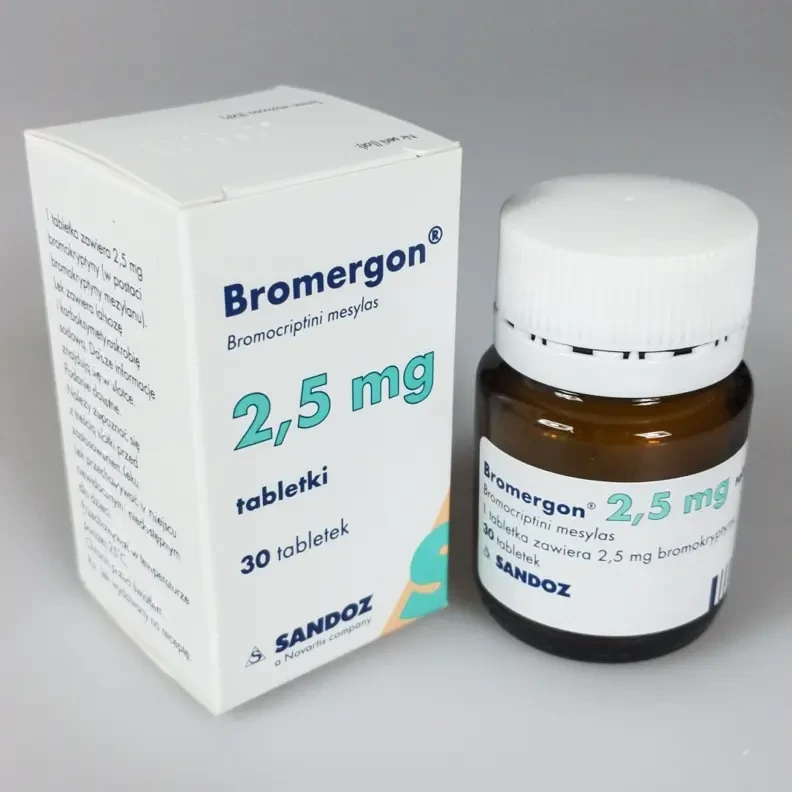
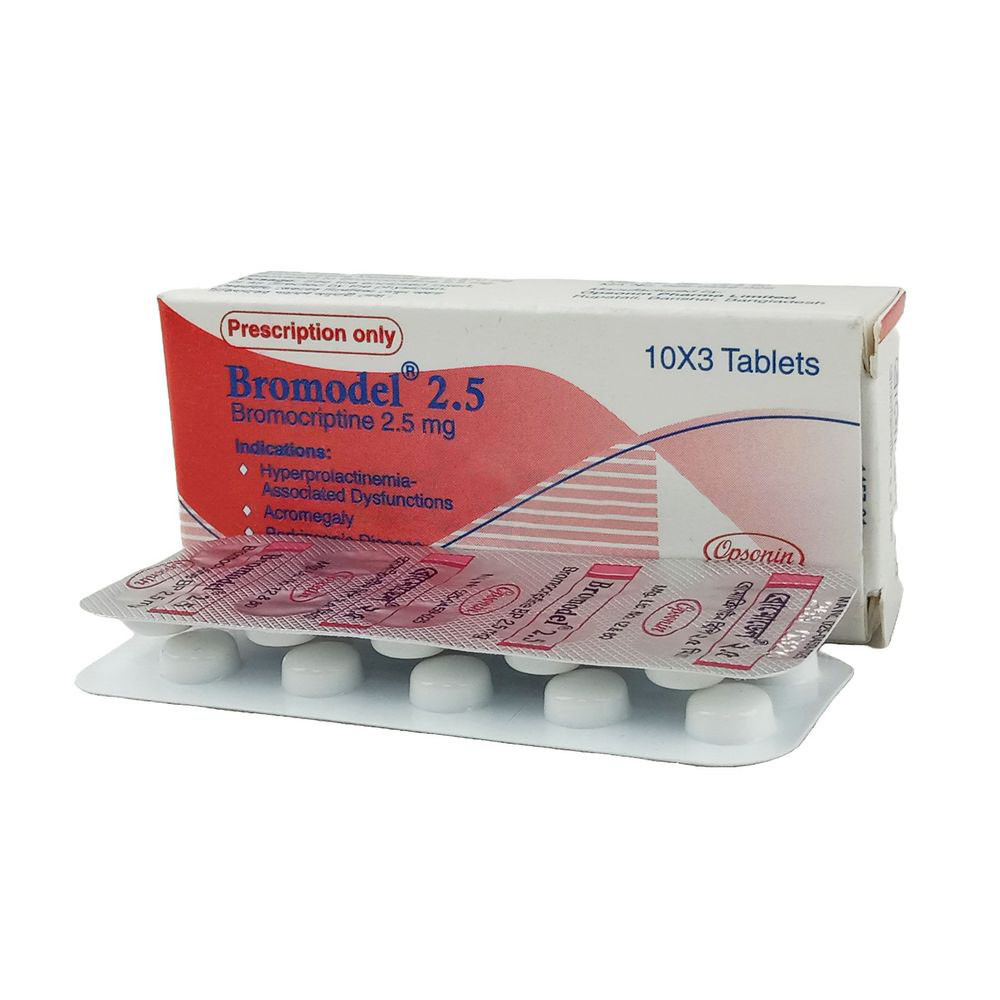
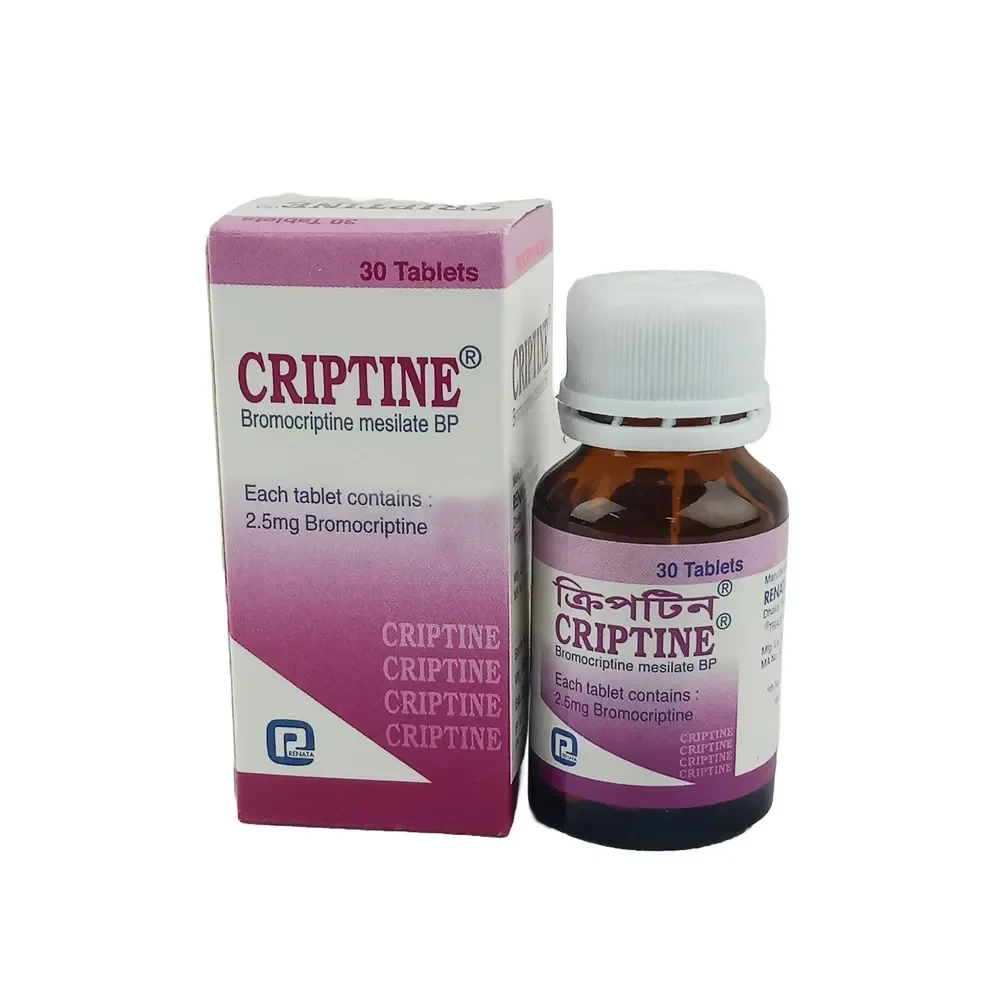
Bromocriptine mesylate is a semisynthetic ergot alkaloid derivative with potent dopaminergic activity. It is indicated for the management of signs and symptoms of Parkinsonian Syndrome. Bromocriptine also inhibits prolactin secretion and may be used to treat dysfunctions associated with hyperprolactinemia. It also causes sustained suppression of somatotropin (growth hormone) secretion in some patients with acromegaly. Bromocriptine has been associated with pulmonary fibrosis.
Uses
Bromocriptine is a dopamine D2 receptor agonist used for the treatment of galactorrhea due to hyperprolactinemia and other prolactin-related conditions, as well as in early Parkinsonian Syndrome.
For the treatment of galactorrhea due to hyperprolactinemia, prolactin-dependent menstrual disorders and infertility, prolactin-secreting adenomas, prolactin-dependent male hypogonadism, as adjunct therapy to surgery or radiotherapy for acromegaly or as monotherapy is special cases, as monotherapy in early Parksinsonian Syndrome or as an adjunct with levodopa in advanced cases with motor complications. Bromocriptine has also been used off-label to treat restless legs syndrome and neuroleptic malignant syndrome.
Associated Conditions
Pharmacodynamics
Bromocriptine stimulates centrally-located dopaminergic receptors resulting in a number of pharmacologic effects. Five dopamine receptor types from two dopaminergic subfamilies have been identified. The dopaminergic D1 receptor subfamily consists of D1 and D5 subreceptors, which are associated with dyskinesias. The dopaminergic D2 receptor subfamily consists of D2, D3 and D4 subreceptors, which are associated with improvement of symptoms of movement disorders. Thus, agonist activity specific for D2 subfamily receptors, primarily D2 and D3 receptor subtypes, are the primary targets of dopaminergic antiparkinsonian agents. It is thought that postsynaptic D2 stimulation is primarily responsible for the antiparkinsonian effect of dopamine agonists, while presynaptic D2 stimulation confers neuroprotective effects. This semisynthetic ergot derivative exhibits potent agonist activity on dopamine D2-receptors. It also exhibits agonist activity (in order of decreasing binding affinity) on 5-hydroxytryptamine (5-HT)1D, dopamine D3, 5-HT1A, 5-HT2A, 5-HT1B, and 5-HT2C receptors, antagonist activity on α2A-adrenergic, α2C, α2B, and dopamine D1 receptors, partial agonist activity at receptor 5-HT2B, and inactivates dopamine D4 and 5-HT7 receptors. Parkinsonian Syndrome manifests when approximately 80% of dopaminergic activity in the nigrostriatal pathway of the brain is lost. As this striatum is involved in modulating the intensity of coordinated muscle activity (e.g. movement, balance, walking), loss of activity may result in dystonia (acute muscle contraction), Parkinsonism (including symptoms of bradykinesia, tremor, rigidity, and flattened affect), akathesia (inner restlessness), tardive dyskinesia (involuntary muscle movements usually associated with long-term loss of dopaminergic activity), and neuroleptic malignant syndrome, which manifests when complete blockage of nigrostriatal dopamine occurs. High dopaminergic activity in the mesolimbic pathway of the brain causes hallucinations and delusions; these side effects of dopamine agonists are manifestations seen in patients with schizophrenia who have overractivity in this area of the brain. The hallucinogenic side effects of dopamine agonists may also be due to 5-HT2A agonism. The tuberoinfundibular pathway of the brain originates in the hypothalamus and terminates in the pituitary gland. In this pathway, dopamine inhibits lactotrophs in anterior pituitary from secreting prolactin. Increased dopaminergic activity in the tuberoinfundibular pathway inhibits prolactin secretion making bromocriptine an effective agent for treating disorders associated with hypersecretion of prolactin. Pulmonary fibrosis may be associated bromocriptine’s agonist activity at 5-HT1B and 5-HT2B receptors.
Mechanism of Action
The dopamine D2 receptor is a 7-transmembrane G-protein coupled receptor associated with Gi proteins. In lactotrophs, stimulation of dopamine D2 receptor causes inhibition of adenylyl cyclase, which decreases intracellular cAMP concentrations and blocks IP3-dependent release of Ca2+ from intracellular stores. Decreases in intracellular calcium levels may also be brought about via inhibition of calcium influx through voltage-gated calcium channels, rather than via inhibition of adenylyl cyclase. Additionally, receptor activation blocks phosphorylation of p42/p44 MAPK and decreases MAPK/ERK kinase phosphorylation. Inhibition of MAPK appears to be mediated by c-Raf and B-Raf-dependent inhibition of MAPK/ERK kinase. Dopamine-stimulated growth hormone release from the pituitary gland is mediated by a decrease in intracellular calcium influx through voltage-gated calcium channels rather than via adenylyl cyclase inhibition. Stimulation of dopamine D2 receptors in the nigrostriatal pathway leads to improvements in coordinated muscle activity in those with movement disorders.
Absorption
Approximately 28% of the oral dose is absorbed; however due to a substantial first pass effect, only 6% of the oral dose reaches the systemic circulation unchanged. Bromocriptine and its metabolites appear in the blood as early as 10 minutes following oral administration and peak plasma concentration are reached within 1-1.5 hours. Serum prolactin may be decreased within 2 hours or oral administration with a maximal effect achieved after 8 hours. Growth hormone concentrations in patients with acromegaly is reduced within 1-2 hours with a single oral dose of 2.5 mg and decreased growth hormone concentrations persist for at least 4-5 hours.
Protein Binding
90-96% bound to serum albumin
Route of Elimination
Parent drug and metabolites are almost completely excreted via the liver, and only 6% eliminated via the kidney.
Half Life
2-8 hours
Toxicity
Symptoms of overdosage include nausea, vomiting, and severe hypotension. The most common adverse effects include nausea, headache, vertigo, constipation, light-headedness, abdominal cramps, nasal congestion, diarrhea, and hypotension.
Food Interactions
- Avoid alcohol.
- Take with food. Food reduces irritation.
Dosage
Hyperprolactinemic lndications: The initial dosage is 0.5 mg to 2.5 mg tablet daily. An additional 2.5 mg tablet may be added to the treatment regimen as tolerated as tolerated every 2-7 days until an optimal therapeutic response is achieved.Based on limited data in children of age 11 to 15 the initial dose is 0.5 to 2.5 mg tablet daily. Dosing may need to be increased as tolerated until a therapeutic response is achieved. The therapeutic dosage ranged from 2.5-10 mg daily in children with prolactin-secreting pituitary adenomas.
Acromegaly: The initial recommended dosage is 0.5 to 2.5 mg on retiring (with food) for 3 days. An additional 0.5 to 2.5 mg should be added to the treatment regimen as tolerated every 3-7 days until patient obtains optimal therapeutic benefit. The maximal dosage should not exceed 100 mg/day.
Parkinson's disease: The basic principle of bromocriptine mesilate therapy is to initiate treatment at a low dosage. The initial dose of Bromocriptine mesilate is 0.5 of a 2.5 mg tablet twice daily with meals. If necessary,the dosage may be increased every 14-28 days by 2.5 mg/day with meals.The safety of bromocriptine mesilate has not been demonstrated in dosages exceeding 100 mg/day.