Introduction
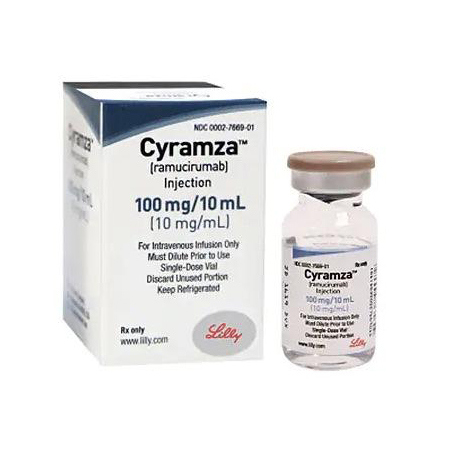
Ramucirumab is a human monoclonal antibody (IgG1) against vascular endothelial growth factor receptor 2 (VEGFR2), a type II trans-membrane tyrosine kinase receptor expressed on endothelial cells. By binding to VEGFR2, ramucirumab prevents binding of its ligands (VEGF-A, VEGF-C, and VEGF-D), thereby preventing VEGF-stimulated receptor phosphorylation and downstream ligand-induced proliferation, permeability, and migration of human endothelial cells. VEGFR stimulation also mediates downstream signalling required for angiogenesis and is postulated to be heavily involved in cancer progression, making it a highly likely drug target. In contrast to other agents directed against VEGFR-2, ramucirumab binds a specific epitope on the extracellular domain of VEGFR-2, thereby blocking all VEGF ligands from binding to it. Ramucirumab is indicated for us in advanced gastric or gastro-esophageal junction adenocarcinoma as a single agent or in combination with paclitaxel after prior fluoropyrimidine- or platinum-containing chemotherapy.
Uses
Ramucirumab is an antineoplastic agent and direct VEGFR2 (vascular endothelial growth factor receptor 2) antagonist that blocks the binding of natural VEGF ligands, which are secreted by solid tumors to promote angiogenesis and enhance tumor blood supply.
For use in advanced gastric or gastro-esophageal junction adenocarcinoma as a single agent or in combination with paclitaxel after prior fluoropyrimidine- or platinum-containing chemotherapy.
Associated Conditions
Mechanism of Action
Ramucirumab is a human monoclonal antibody (IgG1) against vascular endothelial growth factor receptor 2 (VEGFR2), a type II trans-membrane tyrosine kinase receptor expressed on endothelial cells. By binding to VEGFR2, ramucirumab prevents binding of its ligands (VEGF-A, VEGF-C, and VEGF-D), thereby preventing VEGF-stimulated receptor phosphorylation and downstream ligand-induced proliferation, permeability, and migration of human endothelial cells.
Volume of Distribution
5.5 L
Half Life
15 days
Clearance
0.014 L/hour
Toxicity
Ramucirumab packaging includes warnings for arterial thromboembolic events, hypertension, infusion-related reactions, gastrointestinal perforation, clinical deterioration in patients with cirrhosis, and reversible posterior leukoencephalopathy syndrome. The most common reactions observed in single-agent-treated patients at a rate of >10% and >2% higher than placebo were hypertension and diarrhea. The most common adverse reactions observed in patients treated with ramucirumab plus paclitaxel at a rate of of >30% and >2% higher than placebo plus paclitaxel were fatigue, neutropenia, diarrhea, and epistaxis.
Food Interactions
No interactions found.
Dosage
- Gastric Cancer: Administer Ramucirumab 8 mg/kg every 2 weeks as a single agent or in combination with weekly paclitaxel.
- Non-Small Cell Lung Cancer: Administer Ramucirumab 10 mg/kg every 2 weeks with daily erlotinib. Administer Ramucirumab 10 mg/kg on Day 1 of a 21-day cycle prior to docetaxel.
- Colorectal Cancer: Administer Ramucirumab 8 mg/kg every 2 weeks prior to FOLFIRI.
- Hepatocellular Carcinoma: Administer Ramucirumab 8 mg/kg every 2 weeks.