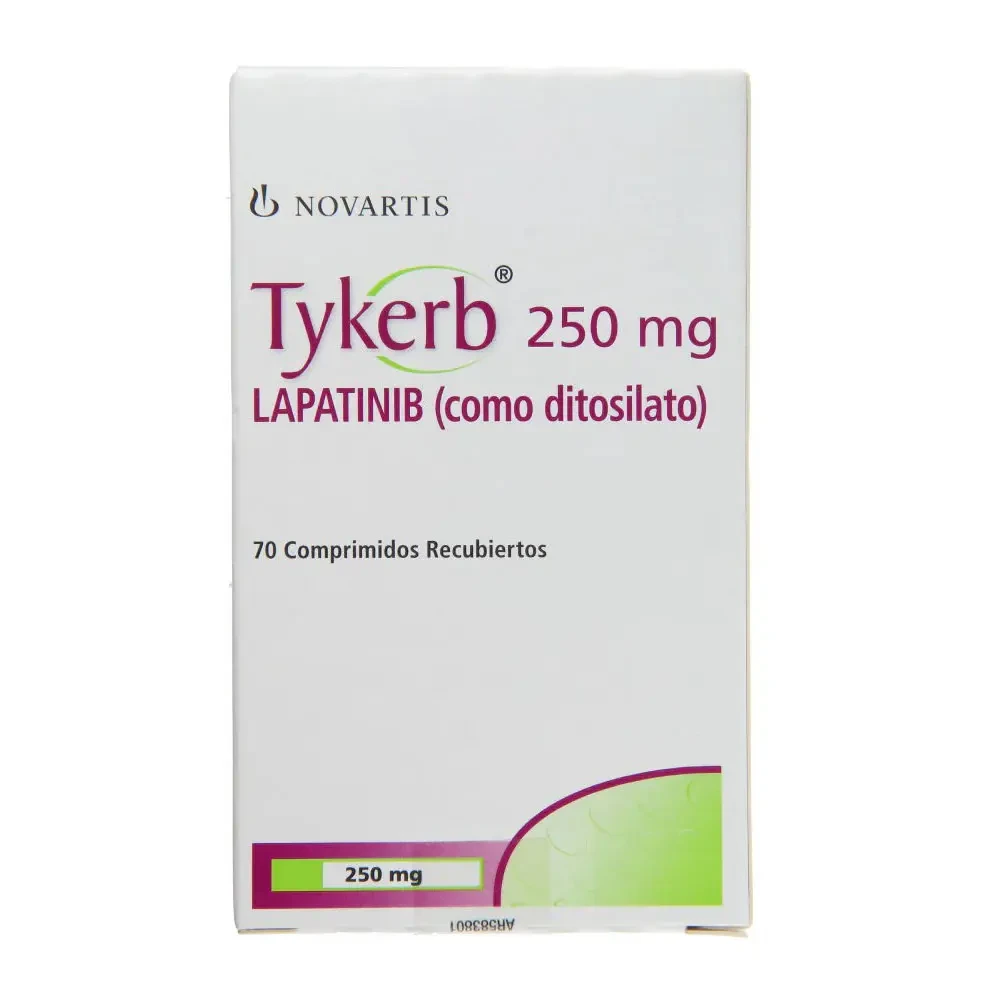
Introduction
Lapatinib is an anti-cancer drug developed by GlaxoSmithKline (GSK) as a treatment for solid tumours such as breast and lung cancer. Lapatinib is human epidermal growth factor receptor type 2 (HER2/ERBB2) and epidermal growth factor receptor (HER1/EGFR/ERBB1) tyrosine kinases inhibitor. It binds to the intracellular phosphorylation domain to prevent receptor autophosphorylation upon ligand binding.
Uses
Lapatinib is an antineoplastic agent and tyrosine kinase inhibitor used for the treatment of advanced or metastatic HER-negative breast cancer in patients who received prior chemotherapeutic treatments.
Indicated in combination with capecitabine for the treatment of patients with advanced or metastatic breast cancer whose tumors overexpress the human epidermal receptor type 2 (HER2) protein and who have received prior therapy including an anthracycline, a taxane, and trastuzuma.
Associated Conditions
Pharmacodynamics
Lapatinib is a small molecule and a member of the 4-anilinoquinazoline class of kinase inhibitors. An anti-cancer drug, lapatinib was developed by GlaxoSmithKline (GSK) as a treatment for solid tumours such as breast and lung cancer. It was approved by the FDA on March 13, 2007, for use in patients with advanced metastatic breast cancer in conjunction with the chemotherapy drug capecitabine.
Mechanism of Action
Lapatinib is a 4-anilinoquinazoline kinase inhibitor of the intracellular tyrosine kinase domains of both epidermal growth factor receptor (HER1/EGFR/ERBB1) and human epidermal growth factor receptor type 2 (HER2/ERBB2)with a dissociation half-life of ≥300 minutes. Lapatinib inhibits ERBB-driven tumor cell growth in vitro and in various animal models. An additive effect was demonstrated in an in vitro study when lapatinib and 5-florouracil (the active metabolite of capecitabine) were used in combination in the 4 tumor cell lines tested. The growth inhibitory effects of lapatinib were evaluated in trastuzumab-conditioned cell lines. Lapatinib retained significant activity against breast cancer cell lines selected for long-term growth in trastuzumab-containing medium in vitro. These in vitro findings suggest non-cross-resistance between these two agents.
Absorption
Absorption following oral administration of lapatinib is incomplete and variable.
Protein Binding
Highly bound (>99%) to albumin and alpha-1 acid glycoprotein
Route of Elimination
Lapatinib undergoes extensive metabolism, primarily by CYP3A4 and CYP3A5, with minor contributions from CYP2C19 and CYP2C8 to a variety of oxidated metabolites, none of which accounts for more than 14% of the dose recovered in the feces or 10% of lapatinib concentration in plasma.
Half Life
Single-dose terminal half life: 14.2 hours Effective multiple-dose half life: 24 hours
Toxicity
There has been a report of one patient who took 3,000 mg of lapatinib for 10 days. This patient had grade 3 diarrhea and vomiting on day 10.
Food Interactions
- Avoid grapefruit products. Grapefruit may reduce the CYP3A4 metabolism of lapatinib, increasing its serum levels.
- Take separate from meals. Take lapatinib at least 1 hour before or after eating, as lapatinib bioavailability is elevated by food.
Dosage
Hormone Receptor-Positive, HER2-Positive Metastatic Breast Cancer: The recommended dose of Lapatinib is 1,500 mg given orally once daily continuously in combination with Letrozole. When coadministered with Lapatinib, the recommended dose of Letrozole is 2.5 mg once daily. Lapatinib should be taken at least one hour before or one hour after a meal. The dose of Lapatinib should be once daily (6 tablets administered all at once); dividing the daily dose is not recommended.
Pediatric Use: The safety and effectiveness of Lapatinib in pediatric patients have not been established.