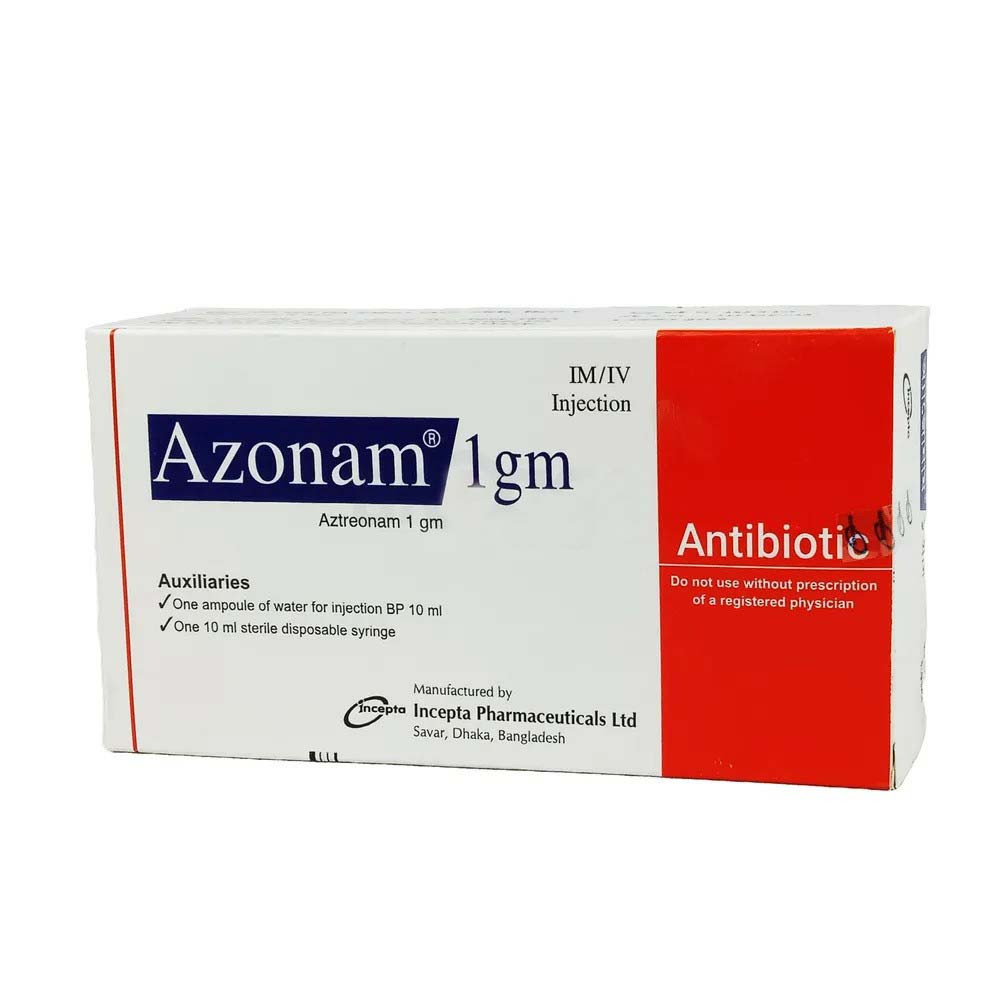
Introduction
A monocyclic beta-lactam antibiotic originally isolated from Chromobacterium violaceum. It is resistant to beta-lactamases and is used in gram-negative infections, especially of the meninges, bladder, and kidneys. It may cause a superinfection with gram-positive organisms.
Uses
Aztreonam is a beta-lactam antibiotic used to treat select aztreonam sensitive gram negative bacteria.
For the treatment of the following infections caused by susceptible gram-negative microorganisms: urinary tract infections, lower respiratory tract infections, septicemia, skin and skin-structure infections, intra-abdominal infections, and gynecologic infections.
Associated Conditions
Pharmacodynamics
Aztreonam is a monocyclic beta-lactam antibiotic (a monobactam) originally isolated from Chromobacterium violaceum. Aztreonam exhibits potent and specific activity in vitro against a wide spectrum of gram-negative aerobic pathogens including Pseudomonas aeruginosa. It has no useful activity against gram-positive bacteria or anaerobes, but has very broad spectrum against gram-negative aerobes, including Pseudomonas aeruginosa. This has given it the nickname "the magic bullet for aerobic gram-negative bacteria". Aztreonam, unlike the majority of beta-lactam antibiotics, does not induce beta-lactamase activity and its molecular structure confers a high degree of resistance to hydrolysis by beta-lactamases (such as penicillinases and cephalosporinases) produced by most gram-negative and gram-positive pathogens; it is, therefore, usually active against gram-negative aerobic microorganisms that are resistant to antibiotics hydrolyzed by beta-lactamases. It is active against many strains that are multiply-resistant to other antibiotics, such as certain cephalosporins, penicillin, and aminoglycosides. Aztreonam maintains its antimicrobial activity over a pH range of 6 to 8 in vitro, as well as in the presence of human serum and under anaerobic conditions.
Mechanism of Action
The bactericidal action of aztreonam results from the inhibition of bacterial cell wall synthesis due to a high affinity of aztreonam for penicillin binding protein 3 (PBP3). By binding to PBP3, aztreonam inhibits the third and last stage of bacterial cell wall synthesis. Cell lysis is then mediated by bacterial cell wall autolytic enzymes such as autolysins. It is possible that aztreonam interferes with an autolysin inhibitor.
Absorption
Less than 1% absorbed from the gastrointestinal tract following oral administration. Completely absorbed following intramuscular administration.
Volume of Distribution
- 12.6 L
Protein Binding
Serum protein binding averaged 56% and is independent of dose. Impaired renal function, 36 to 43%.
Route of Elimination
In healthy subjects, aztreonam is excreted in the urine about equally by active tubular secretion and glomerular filtration. Urinary excretion of a single parenteral dose was essentially complete by 12 hours after injection.
Half Life
The serum half-life of aztreonam averaged 1.7 hours (1.5 to 2.0) in subjects with normal renal function, independent of the dose. In elderly patients and in patients with impaired renal function, the mean serum half-life of aztreonam increased (4.7 to 6 hours and 2.1 hours, respectively).
Clearance
- 91 mL/min [healthy]
Food Interactions
No interactions found.
Dosage
Children: The recommended dosage for Mild to moderate infections (Over 1 week) and Moderate to severe infections (2 years or older) is 30 mg/kg and 50 mg/kg every 6 and 6 or 8 hourly respectively. Maximum recommended dose for adult is 8 g per day. Maximum recommended dose for pediatric patient is 120 mg/kg/day.
Pediatric use: Dosage information is not yet available for new born less than one week.